Posts

Should Massage Therapists Wade Into The Nutritional Arena?


Nutrition is a fascinating and important subject.

After sleep, diet is likely the most important factor affecting our health.

According to the most rigorous analysis of risk factors ever published—the Global Burden of Disease Study—the number one cause of death in the United States, and the number one cause of disability, is our diet.(1)

This is how important diet is.

Untitled design-6


Our collective knowledge in the area of nutrition continues to grow rapidly with thousands of studies published every year.

We know more about nutrition than at any other point in history, and yet paradoxically North Americans are at record overweight and obesity levels. And while these levels are finally slowing down, they have yet to actually level out or decline.(2)

I developed an intense interest in nutrition after watching the documentary Forks Over Knives in 2013.

This led to immediate and profound changes to my diet so that I could correct some personal health issues.

Since that time, I have found myself reading on the topic of nutrition almost daily. While this knowledge is extremely useful to me personally, offering nutritional advice is not within our scope of practice.

However, as you know, the topic can come up during an assessment or a treatment.

What can you say or do when this happens? This may depend on the scope of practice guidelines in your jurisdiction. Here is the scope of practice for massage therapists within the province of Ontario, Canada, where I work.

“The practice of Massage Therapy is the assessment of the soft tissue and joints of the body and the treatment and prevention of physical dysfunction and pain of the soft tissue and joints by manipulation to develop, maintain, rehabilitate or augment physical function, or relieve pain.” (Massage Therapy Act, 1991)

There is no mention of the words nutrition or diet, so one could safely say that this area therefore falls outside of our scope.

We can assess soft tissue dysfunction, but our treatment options are limited to ‘manipulation’. The only way that we could directly advise in nutrition is if we possess certifications in nutrition. In this case we have to take off our (figurative) massage therapy hat, and put on our nutrition hat.

While we cannot, and should not offer specific dietary advice, we can certainly inquire about our client’s dietary habits if they are experiencing delayed, or stalled healing.

For clients curious to learn more, we can suggest evidence-based resources, or we can refer to qualified professionals.

However, to be able to do this we need to have a basic understanding of nutrition ourselves. If there were two reasons for gaining extra knowledge in nutrition, I would list atherosclerosis and inflammation as two major factors.

We are all treating the effects of these conditions every day, and diet affects both of them.

Atherosclerosis

For body tissue to remain healthy, oxygen, nutrients, and cellular building blocks all need to be delivered to our soft tissue.

As well, cellular metabolites need to be removed from these tissues.

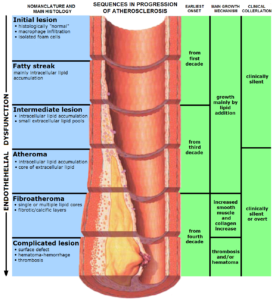
This role is performed by our circulatory and lymphatic systems. However, it might surprise you to learn that by age 10 nearly all children have fatty streaks in the arteries that deliver these nutrients to the body.(3)

These streaks are the first sign of atherosclerosis (the leading cause of death in the United States, and the second leading cause in Canada).

For people eating the standard North American diet, atherosclerotic plaques typically start forming in their 20s, and then become progressively worse with each successive decade.
Endo_dysfunction_Athero

The reason that nutrition is so important is that we now know, thanks to independent studies done by both Dean Ornish(4) and by Caldwell Esselstyn(5), that atherosclerosis is largely a diet-related disease.

Diet is so powerful that a healthful diet has been shown to actually reverse atherosclerosis.

Ornish et al. proved this using quantitative angiography on his test subjects. So, rather than accept that atherosclerosis as an inevitable consequence of aging, we now know that we do not need to see these sorts of degenerative changes happening in our (and our patients’) circulatory system.

To give you an idea of how profound these changes are, take a look at healthy vertebral arteries below (a), and then vertebral arteries clogged with atherosclerotic plaques (b).

It does not take a PhD in nutrition to realize that these blockages will result in radically altered nutrition to the soft tissue surrounding the spine.

http://www.ncbi.nlm.nih.gov/pubmed/19328027

http://www.ncbi.nlm.nih.gov/pubmed/19328027

In the coronary arteries, atherosclerosis can manifest as angina (or more seriously as coronary thrombosis), but these are not the only arteries affected.

In our extremities, atherosclerosis can manifest as numbness and tingling.

If blockage worsens, clients can experience intermittent claudication, an extremely debilitating condition.

Atherosclerosis has also been implicated in other conditions that we treat such as degenerative disk disease(6), disk herniation(7), sciatica(8), radiculopathy(9), and idiopathic back pain(10).

This should make all massage therapists stand up and pay attention to the role of diet as it relates to soft tissue dysfunction. If soft tissue is not receiving adequate blood flow, tissue health will suffer.

Inflammation

Atherosclerosis is actually an inflammatory disease of the arteries, but as you know, inflammation can occur anywhere in the body.

Many foods and dietary constituents have inflammatory effects on the body, and this sets the body up for a host of inflammatory conditions such as tendonitis, tenosynovitis, arthritis, plantar fasciitis, and other conditions that we treat on a daily basis.

Diet plays a key role in inflammation, either adding fuel to the fire, or helping to reduce inflammation.

Research into the field of the human gut bacteria is currently getting a lot of funding so there has been an abundance of research into this fascinating area, and it has become apparent that the gut is intimately involved in inflammation.

Dietary fibre is the primary food of our gut bacteria and fibre plays a key role in dampening inflammation(11).

This is only one example of how diet can promote or attenuate inflammation. Many foods have a pro-inflammatory effect, while others are anti-inflammatory.

I am sure that most of us have had the experience of chasing inflammation from one area of a client’s body to another. For example, a client might present with lateral epicondylitis. Then, before that issue is resolved, plantar fasciitis appears. Then, just when you get the previous issues resolved, idiopathic frozen shoulder mysteriously appears.

Once I gained an understanding of nutrition, puzzles like this were much easier to solve.

This is not to say that a client will necessarily change their diet once they learn its role in their health, but they do have a right to this information. Then they can make an informed decision, and the concept of informed choices is at the heart of health care and patient rights.

So, you can see how it would be beneficial for us to develop a basic understanding of nutrition as it relates to inflammation.

In Conclusion

For where I sit, I would say that there are likely more personal, rather than professional reasons for becoming more nutritionally literate.

The reason for this is due to our current scope of practice.

If you educate yourself on the topic of nutrition, you will learn a lot of valuable information that you (frustratingly) will not be able to directly incorporate into your daily practice.

However, having opened up the Pandora’s Box of nutrition, I would say personally that I never want to go back to a state of ignorance.

I got into the health field to better understand health and the human body, and understanding nutrition has give me for more power over my health than I could have ever imagined.

As a Massage Therapist, you are not required or expected to have a nutritional background. However, therapists in regulated provinces in Canada are well educated in physiology and pathology, so they possess the background information to appreciate understand the important role of nutrition in patient health. If you do take courses or educate yourself in this area, it will open new doors for you, but on the downside, you cannot offer direct nutritional advice as a Massage Therapist. However, with a proper nutritional knowledge base, you will know when either to refer to a nutritional professional, or where to direct your client to evidence-based nutrition resources.

I will leave the last word to Dr. Greger of NutritionFacts.org. Click on the link below to find out why you should care about this topic. Why You Should Care About Nutrition:

http://nutritionfacts.org/video/why-you-should-care-about-nutrition/

References:

  1. Murray CJ, Atkinson C, Bhalla K et al. The state of US health, 1990-2010: burden of disease, injuries, and risk factors. JAMA. 2013 Aug 14;310(6):591-608.
  2. http://stateofobesity.org/obesity-rates-trends-overview/
  3. J. P. Strong, H. C. McGill. The pediatric aspects of atherosclerosis. J Atheroscler Res 1969 9(3):251 – 265.
  4. Ornish D, Brown SE, Scherwitz LW, et al. Can lifestyle changes reverse coronary heart disease? The Lifestyle Heart Trial. Lancet. 1990 Jul 21;336(8708):129-33.
  5. Esselstyn. C.B., Gendy,G., Doyle, J. A way to reverse CAD? J Fam Pract. 2014 July;63(7):356-364
  6. L I Kauppila. Atherosclerosis and disc degeneration/low-back pain–a systematic review. Eur J Vasc Endovasc Surg. 2009 Jun;37(6):661-70.
  7. U G Longo, L Denaro, F Spiezia, F Forriol, N Maffulli, V Denaro. Symptomatic disc herniation and serum lipid levels. Eur Spine J. 2011 Oct;20(10):1658-62.
  8. P Leino-Arjas, L Kauppila, L Kaila-Kangas, R Shiri, S Heistaro, M Heliovaara. Serum lipids in relation to sciatica among Finns. Atherosclerosis. 2008 Mar;197(1):43-9. Epub 2007 Sep 7.
  9. P Leino-Arjas, L Kauppila, L Kaila-Kangas, R Shiri, S Heistaro, M Heliovaara. Serum lipids in relation to sciatica among Finns. Atherosclerosis. 2008 Mar;197(1):43-9. Epub 2007 Sep 7.
  10. L I Kauppila, R Mikkonen, P Mankinen, K Pelto-Vasenius, I Maenpaa. MR Aortography and Serum Cholesterol Levels in Patients With Long-Term Nonspecific Lower Back Pain. Spine (Phila Pa 1976). 2004 Oct 1;29(19):2147-52.
  11. Kuo SM The interplay between fiber and the intestinal microbiome in the inflammatory response. Adv Nutr. 2013 Jan 1;4(1):16-28.
 

Is The Use Of Oxygen A Placebo?

Forgetting to use it could be the difference between passing and failing a Sport First Responder test.

It has a wide range of uses in an emergency care setting, especially when dealing with your athletes in an acute injury or emergency.

Using supplemental oxygen therapy has been a major part of Sport First Responder courses over the years with various reasons for application including:

  • Shock prevention
  • Cardiac Arrest
  • Anaphylaxis
  • Carbon Monoxide poisoning
  • Asthma

However recently I have been hearing rumblings, the use of oxygen may be on it’s way out as an intervention and I recently worked with a sport med doctor who doesn’t use oxygen and downplayed its effectiveness.

But this practice is so hard grained into us, that with pretty much every patient we see in an emergency setting, they get oxygen.

But do we really need it in all cases?

Why The Use Of Oxygen

The biggest reason oxygen is used in these emergency scenarios is to prevent hypoxemia, which is a decreased level of oxygen in the blood, which then leads to hypoxia (oxygen supply which is insufficient to support life).

However there is also a risk of using too much oxygen which results in hyperoxia (too much oxygen in the system), if oxygen therapy is not used properly it can lead to complications, which also depends on the condition your patient is dealing with.

It turns out that hypoxia (which is determined by using a pulse oximeter) is the only evidence based reason to give oxygen to a patient.

The other reasons are based on the assumption that it will help prevent hypoxia and relief of symptoms in an emergency setting.

Shock

I’m sure we all remember what shock is from our time in college, but there is more than one type of shock and we should all be familiar with the various types.

Medical shock is the type we are mainly worried about as opposed to emotional or psychological shock resulting from a traumatic experience or an emotional event.

When someone is suffering from or going into shock, the body is redirecting blood to service the internal organs and keep them alive, which is why you will often see the persons skin turn pale, cool and clammy.

The extremities are not getting the blood supply they’re used to.

But within the classification of “medical shock” there are further classifications of types of shock:

  • Anaphylactic
    • life threatening allergy to a substance
  • Caridiogenic
    • failure of the heart to pump sufficient blood to the body, usually occurs with cardiac arrest
  • Hypovolemic
    • lack of blood in the body
  • Neurogenic
    • failure of the nervous system to control the size of blood vessels causing dilation, common with head and spine injuries
  • Respiratory
    • the lungs fail to get sufficient oxygen into the bloodstream, common with breathing emergencies, respiratory arrest
  • Septic
    • intake of a poison causes blood vessels to dilate

Within the license of a Sport First Responder we would treat all of these types of shock the same way, by putting the patient on oxygen at a 10L flow along with keeping them warm.

In the case of someone having a heart attack (caridogenic shock) there are studies showing the use of oxygen in the first 12 hours may be unwarranted, however would still be appropriate for the sport first responder or until the patient reaches the hospital.

But in some cases with angina attack, oxygen can help with pain relief.

This is also because in the stressful environment of being a first responder, to determine exactly when it is appropriate to administer oxygen (signs of dyspnea or heart failure), so would more efficient to give it to everyone until arrival at hospital.

Common breathing emergencies like breathlessness or asthma should only be treated with oxygen if there is hypoxia present, this is one of those areas where we have always put oxygen on a patient .

In dealing with traumatic injuries that would typically cause hypovolemic shock a study showed that only half of adult trauma patients actually required the use of oxygen in pre-hospital care, yet it was still being administered to everyone.

When it comes to using oxygen therapy for shock it looks like a bit of a mixed bag as to when it’s appropriate to use it and when it is not.

However our Sport First Responder guidelines at this point still say that oxygen should be used to either help prevent or to deal with shock.


Photo by: Offutt Air Force Base

Photo by: Offutt Air Force Base

Strokes, COPD And Other Emergencies

I know these aren’t typically seen in the Sport First Responder setting but it’s still important information to know in case you ever have to deal with it.

Again, these are all instances where oxygen would always be put on a patient having an emergency.

New research is showing us that it may not be the best approach.

In patients having an acute COPD (Chronic Obstructive Pulmonary Disease) we have always been told that high flow oxygen is the method to treat the situation.

Studies have shown that using reduced flow oxygen actually decreased the risk of mortality by 58% (1) and leads to worse clinical outcomes. (2)

Using oxygen with someone who is suffering a stroke is also coming under skepticism even though it too has always been promoted as an acute therapy. I’ve used it on patients several times because of the recommendations.

But newer studies are saying that unless there is hypoxia present, the use of oxygen should be avoided (although it is also referring to the first 24 hours of hospitalization).

The same article points out that unless hypoxia is present with a pregnant woman or someone experiencing breathlessness, oxygen should be avoided.

However there is still hope for our friend Oxygen.

Someone with carbon monoxide poisoning should still be given Oxygen. It reduces the level of carbon monoxide in the blood in 40 min compared to 4-5 hours just breathing regular air. 

Even though studies have started to question the use of oxygen in emergency settings, it is still imperative to stick to your local guidelines when responding to an emergency with your athletes. Most of the studies outlined in this post were based on the reading of gas exchange in the bloodstream using a pulse oximeter. Your average Sport First Responder probably doesn’t have one of these in their kit, so it is ALWAYS better to err on the side of caution. Another caveat for the use of oxygen (that I have seen first hand at emergency scenes) is distracting your patient. Having a mask on that is delivering oxygen brings some comfort to a patient, especially with breathing emergencies. I’m not sure it could be considered a placebo effect, but it definitely helps to calm a patient down. The point of this post wasn’t to tell you not to use oxygen anymore, you most certainly should. It was more just to make you aware that there could be changes coming down the road and the next time you re-certify, things might be a little different. In the meantime continue using your O2 cylinders and keep those athletes safe.


References:

1. Ntoumenopoulos G. Using titrated oxygen instead of high flow oxygen during an acute exacerbation of chronic obstructive pulmonary disease (COPD) saves lives. Journal Of Physiotherapy [serial on the Internet]. (2011), [cited September 12, 2016]; 57(1): 55. Available from: MEDLINE with Full Text.

2.Cameron L, Pilcher J, Weatherall M, Beasley R, Perrin K. The risk of serious adverse outcomes associated with hypoxaemia and hyperoxaemia in acute exacerbations of COPD. Postgraduate Medical Journal [serial on the Internet]. (2012, Dec), [cited September 12, 2016]; 88(1046): 684-689. Available from: CINAHL Complete.

The Therapeutic Side Of Relaxation

“You’re the best part of my month”, she said as she lay face down on my massage table.

I’ve heard words like this before, “ahhh…I am so relieved I had this massage booked” or “I’ve been looking forward to this allllll day”.

But this was different.

For some reason this time these words gave me goosebumps, they made my throat close. It was because she said it with feeling and sincerity.

She said it was a sigh and a sad voice.

The one hour she got to lie on my massage table was quite possibly the best hour of her month.

How do you feel and respond to someone telling you that you make their life better, even if it is only for one hour?

I simply replied, “I am honoured to be part of it.”

In my head and heart I was trying to decide if I should say anything more, urge her to talk or just stay quiet. Eventually she opened up herself and told me some of the more troubling things that had been going on in her life lately.

She clearly had a huge weight on her shoulders and was experiencing the dreaded six letter word…STRESS.

Stress Effects And Massage Therapy

How many times a day do you notice high stress written or circled on your health history intake form?

How often does a patient tell you they have been under a lot of stress lately, whether it be from work, home life or a combination?

How many people say they have been tired and stressed and then hurt themselves?

The term ‘stress’ has many definitions including three which are relevant to our profession:

  1. the physical pressure, pull, or other force exerted on one thing by another; strain.
  2. the action on a body of any system of balanced forces whereby strain or deformation results.
  3. a specific response by the body to a stimulus, as fear or pain, that disturbs or interferes with the normal physiological equilibrium of an organism.

You might remember from school that when we are ‘stressed out’ our body responds by releasing cortisol and pro-inflammatory cytokines, as well as ramping up our sympathetic nervous system.

And we all know the different effects which short and long term stress can have on us, both mentally and physically: difficulty sleeping, headaches, serious diseases such as heart disease and cancer, weight gain or loss, substance abuse, isolation, mood changes, and many more.

So what is our role as a massage therapist?

We are the health care professionals that can best provide a venue, a space and a significant amount of time that our patients can be quiet, relax and sometimes vent their issues.

One of my patients, who is a physiotherapist, recently said to me, “Massage therapists have all the skills and knowledge of other health care professionals, but you all have a hell of a lot more finesse”!

He further explained that while I’m helping him with his overuse injuries, he also felt amazing, calm and relaxed after each treatment as well.

He could find injury relief from a lot of practitioners, but always chose massage therapy.


Photo by: PeteLinforth

Photo by: PeteLinforth

Why A Relaxation Massage Is Still Therapeutic

The relaxation aspect of a massage is highly overlooked.

We are often so set on proving that we have the skills and knowledge to be world class health care professionals (which we are!)  and can mobilize, strengthen and stretch with the best of them.

All of these things I practice and love about our profession and am not trying to downplay at all.

However we maybe forget that many of our patient’s conditions have initially been caused, and are continually being aggravated, by some form of mental and emotional stress. In our time and effort to help our patient’s find more mobility and less pain, we can still provide an experience to decrease stress, even if it is only for one hour.

Specific, deep and therapeutic massage techniques can be applied in a relaxing way.

Massage strokes can be slower and more deliberate. Deeper, specific pressure can be eased into instead of suddenly applied. Mobility and range of motion techniques can be extremely beneficial, while also being relaxing.

When I taught at the massage therapy college I often tried to remind the students that some people go through a lot of stress in their day, in their week  and for some in their entire life. Our patients are not just a medical condition, a sore muscle or a chronic headache.

From infants to elderly, the effects of massage therapy on decreasing stress has been widely cited. Preterm babies receiving massage have been studied thoroughly and results have shown reduction in stress behaviours (significant crying, low quality and quantity of sleep, low feeding response) and a decrease in time spent in neonatal intensive care. Studies have also shown levels of  cortisol decrease significantly while both serotonin and dopamine increased post relaxation massage in adults with depression, chronic pain, cancer and during pregnancy. Life, and science, shows us every day that stress can lead to serious and scary conditions. Massage therapists can not only provide relief from pain and immobility but can also help alleviate stress. In a busy world we could all benefit from lying on a massage table for one stress free hour! Don’t forget that you may be the best part of someone’s month.

Chain Of Command In Sports Massage

When I first started in the fire service, I didn’t fully understand why we had chiefs, captains and lieutenants, this thing we call “chain of command”.

All I knew was there were people telling me what to do and I’d better listen.

As I progressed it became more clear why this was necessary and how it applied to what we were doing.

I never gave it much thought outside of the fire service but have now come to understand how “chain of command” is applicable and necessary in sports and working with teams as a Massage Therapist.

While it can be a bit tough to understand (and some may find it insulting) there is a purpose and very good reason behind having chain of command in place. It is also important to understand how to work within it if you are going to be successful working with teams.

You may not always agree with how this type of organization works but if you want to work effectively and be part of the team, you have to work in accordance with the team principles.

Here’s why and how to do it.

Principles Behind This Organization Style

If you’re already working with teams you might be familiar with this, but if not it’s important to understand the structure.

Businesses, organizations and emergency services all operate under this kind of functional system in order to operate more efficiently and to work within it, you have to understand not only your role, but also the terminology behind it.

Here is some of the terminology, it may not be used extensively when working with a sport team, but the basics are the backbone of the way most organizations have things set up:

  • Chain Of Command
    • The formal line of authority, responsibility and communication.
  • Unity Of Command
    • A principle that each employee reports directly to one supervisor moving up the chain, ultimately all report to the main person in charge.
  • Span Of Control
    • The principle that establishes the maximum number of people or functions that any one supervisor can control, it’s typically three to seven but five is considered optimum.
  • Division Of Labour
    • This is the process of dividing larger jobs into small jobs to make them more manageable and efficient.

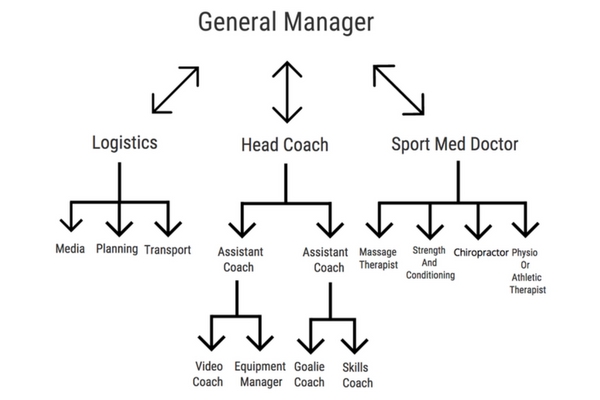
Below is how an organizational chart could look for a large team (obviously I picked hockey).

*This is just an example, not necessarily how any one team is set up.


Sport Massage Chain of Command


As you can see, the General Manager would ultimately be in charge with Logistics, Head Coach and Sport Med Doctor all reporting directly to him/her.

They would each then oversee their own group who would report to them.

In our case, the Sport Med Doctor would oversee the healthcare of the athletes with Massage, Strength, Chiro and AT all reporting directly to them, they would then convey the necessary information the the General Manager.

Remember, the above is just an example. It may be set up where the Massage Therapist reports to the Physio, who reports to the Doctor.

These lines of communication are essential in the function of any organization, since each person can only effectively manage five people (according to span of control).

Having things organized this way also gives the organization room to expand (or decrease) if necessary. For instance, the General Manager can add assistant GM’s as the organization expands giving them new branches of responsibilities and groups operating under them.

Understanding how you fit into these lines is essential, not only to your success, but to the teams success as well.

Know Your Role Jabroni!

Okay, so you’re not a jabroni, but it’s a good headline to get the point across.

If you’re selected to work in this kind of team environment, knowing your role is crucial.

The team probably even has a job description prepared for each person on the medical team, outlining each persons specific role. Not all the roles will be specifically medical.

Depending on your past relationship with a team or whether you’re brand new can define what your role will be, or how you can function within the role they define and the scope that is laid out for you.

Initially you may have a very minor role. The A.T, Physio or Sport Doctor may be the ones who do all of the assessment and refer athletes to you only when they deem necessary.

Don’t take this as a slight against you if this is how things start out!

The team may have things designed that way because of insurance concerns, or because of past experiences which are totally beyond your control. Don’t forget, there is a broad spectrum of massage therapy certifications out there in addition to the broad spectrum of experience these other healthcare professionals in working with Massage Therapists.

The job description given to you may have you assisting equipment managers, helping with video, filling water bottles, or just cleaning up the dressing room.

Again, it’s not a slight against you or the profession, it’s just a role the team needs filled, so they might get you to help out by filling that role.

Now, the rest is up to you.

Personalities play a massive role in team sports. When you’re starting out be happy to fill whatever role it is they have designated for you. Leave the ego at the door. As you start to work more regularly with the team, your role can expand, it’s all about building that relationship (where have I heard that before?). As the trust builds between you and the other healthcare professionals in the group, so will your role and what you can do. It’s all part of being a team, not all jobs on the team are going to revolve around you doing soft tissue work on athletes. Nor is all the work for the other healthcare professionals going to solely revolve around healthcare for the athletes, it’s about pulling together for the greater good of the team. Like it or not there is still a hierarchy, these other therapists have more education than we do and may assume that we report to them, even though the team chain of command doesn’t display that. Back to those personalities, while some people will bring their ego and put it on display, that usually gets weeded out. You may just have to change your approach in dealing with people for the greater good of the team. If someones ego is getting in the way, it may be something you have to work around temporarily, but trust me it will be temporary.


Basic Communication Improvements For Massage Therapists

I always tell my students “when you get into the real world… you may be the best technical massage therapist but without great communication and listening skills you may not have the most successful practice”.

I remember when I was in Massage Therapy College, immersed in anatomy, physiology and manual skills (sometimes known as the hard skills) then once a week, we would go to a class where we worked on self-reflection, communication and listening skills (the so-called soft skills).

I know many of my classmates thought this class was a waste of time and completely irrelevant to the education they were now immersed in.

Me on the other hand, I love this stuff.

Over the years I have spent many hours in training and working on crisis lines, communication, conflict resolution courses and even peer counseling.

My passion for communication and listening came from, like many of us, a pretty tough childhood and teen years. When I was 12 years old a friend of mine took his own life.

Now (and to some extent then) in retrospect and had I known how, I may have been able to stop this tragedy. This event shaped my passion for listening and communication.

But this work requires a lifelong commitment with constant work and no matter how skilled you are, you may still miss things. This became all too real to me this January when at 4 am, my phone rang, it was news that another person close to me had taken their own life.

In retrospect, I could see the signs, but they were quite subtle. This is one of the reasons I am an advocate for communication and listening.

Now not all situations will be this intense but as healthcare professionals, we need to have superior skills in the areas of communication and listening and this is why I am writing blog posts on communication, starting with the basics.

Building Rapport With Massage Therapy Patients

One of those make it or break it skills for all Massage Therapists.

If a patient does not feel comfortable with you in the first 20 seconds it may hinder your ability to really help them.

Some of the things you can do to help build rapport are:

  • When you first meet the person look them in the eye.
  • Call them by name (sometimes it’s best to ask an elderly person permission to call them by their first name.)
  • I normally shake the person’s hand.
  • I always check if they need to use the washroom before we get started.
  • Invite them into the room.

Remember most of the communication is not the words, in fact more than 50% of communication happens in the body language and much is also connected to the tone or rhythm of the voice.

  • Be on time, nothing destroys rapport more than always being late.
  • Watch their face, do they look calm?
  • When you go to shake their hand do they pull away or do they move towards you?
  • Is their voice quiet and timid?
  • When you make eye contact do they hold your contact or look away?

The best way to build initial rapport is to meet them where they are.

Don’t hold eye contact too long if they are showing signs of being uncomfortable, give them space if they pull away and meet their tone and rhythm of voice with yours.

The Interview

Set up your treatment area so it’s calming but professional.

Remember the power differential, if you sit and talk to your patient (at eye level) it is less threatening and can make the person feel more comfortable in your presence.

Utilize the space between you and the patient, if you are too far away you will seem distant and uncaring, being too close might make the person feel defensive, I find 4 feet seems to be a good distance.

Take notes during the interview and special tests but do not allow your note taking to interfere with you being present with your patient.

  • Be professional at all times.
  • Be present at all times during the interview.
  • Use clear communication.
  • Avoid using slang and overusing of technical terms (or educate the patient so they understand).
  • When a patient says something important, paraphrase (repeat back what they said to you) so they know they have been heard.
  • Clarify what they have said so you understand what they meant.
  • Get a detailed history around their general health, details of the current issue and any pain related questions or physical limitations due to the condition.
  • Ask them what their goal for the treatment is.
  • Finally ask the patient what they would like you to address today (every so often I have a patient come in and describe many health concerns, then, when I ask, they request work on an unrelated problem).

The interview is your opportunity to recognize any contraindications that your patient may have, create a hypothesis for the condition you believe is affecting your patient and consider the level of special testing to either confirm or rule out your clinical reasoning around your patient’s complaint.

The Assessment

We as Massage Therapists are very well trained in assessment using range of motion, manual muscle testing and other various special tests to confirm or rule out conditions.

We have to remember that every patient is unique and just because the last three people had back pain due to trigger points in the gluts, it does not mean your next patient has the same issue.

A good assessment can narrow down the cause of the issue, help speed up recovery time and most importantly get our patients get back to their normal activities.

  • Consider a test that could confirm and a test that could rule out the condition you suspect.
  • Remember to ask permission before placing your hands on the patient.
  • Explain your special testing before you do it.
  • What you are testing for?
  • What a positive result will feel like?
  • Always test the unaffected side first.
  • Be honest with what you find.
  • Remember as a massage therapist it is not within our scope of practice to diagnose a condition, although we can state that the patient is presenting signs and symptoms consistent with a condition

A thorough assessment will help create confidence from your patients, reduce recovery times and help the profession by creating consistency in massage therapy treatments.

Photo by: StartupStockPhotos

Photo by: StartupStockPhotos

Create Your Treatment Plan

Now that you have the history and have done assessments, the next step is to create a treatment plan.

For this treatment, then for subsequent treatments and the home care exercises (stretching and strengthening) hydrotherapy and any changes to activities of daily living.

When you give patients a solid treatment plan they are more likely to trust you, follow the plan and recover more quickly.

This is where research and experience comes very handy, if you understand the condition and the length of time the patient has been affected by it you can start formulate a plan.

When my patients come in with an acute issue I normally start them off with one treatment per week for four weeks then we reassess and back off from there but this always depends on the condition.

  • Discuss the techniques you will be using and why.
  • Discuss the areas of the body you would like to work with and why you recommend working with these areas.
  • Discuss a pain scale or intensity scale.
  • Discuss the possible side effects or complications of the treatment.
  • Discuss the level of dress.
  • Get consent to treat.

I always check in and regain consent when I am about to work with a more sensitive area like the gluts, lateral rotators, abdomen or the adductors (especially with new patients).

We are also required to monitor the intensity of treatment with the patient, so I always check in to ensure the treatment is not too intense (I am 240 pounds and have very strong hands), some patients may not tell you it’s too much unless you ask.

Before you leave the room to allow the patient privacy to dress down and get on the table, remember to discuss the level of dress and how to get on the table between the sheets with their face in the headpiece.

Don’t assume they understand the routine.

I have heard stories of more than one RMT returning to the room only to find the patient naked on top of the blanket.

Knock on the door before you re-enter the room, this way you can be sure the person had enough time to get on the table.

There is a debate in the world of massage if we should talk during the treatment or not.

I always say the difference between getting a massage and getting a massage therapy treatment is the fact that we educate the patient. After I know a patient and if they prefer I will talk a lot less during a treatment. Remember to keep your conversation within your scope of practice. Many of my students have asked me why I should be concerned about what I say or how I say it in my practice. We have to take into consideration the dynamic of the session and balance of power in a treatment. The patient (in many circumstances) is naked or nearly naked on the table (covered by sheets and a blanket) we, as the therapist, are pretty much towering above them speaking down to them. The patient (depending on the treatment) may be in a very relaxed or semiconscious state and these facts could possibly put the patient in a little too open state and cause them to believe what we say without question. At the end of the treatment,  give everyone some form of home care and ask permission to send a follow up email with pictures, videos and details of the stretching and strengthening exercises.

How Does Foam Rolling Work?

Foam rolling is very popular.

Athletic trainers use it as a part of the warm-up. Physical therapists use it as part of their treatment strategy, often to improve extensibility of “short” tissues.

There is very limited evidence about what benefit, if any, foam rolling confers.

But there are a few studies showing it leads to short term increases in range of motion that are not accompanied by strength loss (this is interesting because stretching interventions tend to show increased range of motion that are associated with a loss of strength and power).

The purpose of this article is not to question whether foam rolling is effective for anything.

I’m willing to assume it works in some way for some people. It is hard for me to believe that so many intelligent trainers such as Mike Boyle would be singing its praises unless it was good for something. So I’ll give it the benefit of the doubt for purposes of this article.

The question for this post is the following: if foam rolling can actually reduce pain or improve mobility, what is the mechanism?

I do not find the common explanations very convincing.

But there is one (less commonly heard) explanation which I really like. Here’s my critical analysis of the different theories for why foam rolling works, including my favorite one.

1. Does Foam Rolling “Improve Tissue Quality”?

This is one we hear quite frequently, usually without any specifics as to which “qualities” are at issue.

I think some people imagine that foam rolling can smooth out bumps in their tissues like a rolling pin over pizza dough.

To be fair, this explanation is usually intended for lay people and not scientists, so we can cut some slack about the lack of specifics. Perhaps the qualities to be improved involve the presence of fascial adhesions or trigger points.

I’ll address those claims specifically below.

2. Does Foam Rolling Lengthen Or “Melt” Fascia? 

For some reason people just tend to assume that foam rolling works by changing the fascia.

I honestly have no idea why.

A foam roller puts pressure on all the other tissues in the body, and they all communicate with the CNS, which controls how we move and feel. Isn’t the CNS the most obvious place to look for changes after foam rolling?

No, it always has to be the fascia.

But fascia is tough stuff.

Sure it has some interesting adaptive properties, but at the end of the day its purpose is to form a solid structure for the body. Is it really plausible that we can significantly change our structure just by leaning on a foam roller a little bit?

We must be made of stronger stuff than that.

If fascia started to break down, or elongate, or “melt” every time it felt a little sustained pressure, we would be pretty fragile creatures. Every time we sat on a rock our posterior chain would lengthen.

So for me the idea that foam rolling lengthens or melts some important structural stuff in our body does not pass the common sense test, and more importantly, the research does not support this idea either.

There are a few research studies (here and here) which try to determine the degree of pressure necessary to cause permanent deformation in mature human connective tissue.

The upshot is that if you want permanent change, you better be prepared (as Paul Ingraham notes) to “get medieval.”

Steam roller maybe, foam roller, no.

It’s not going to happen in any of the places where the roller is most commonly applied, which are usually the strongest parts of the body – the ITB band, lumbar fascia, plantar fascia, etc.

 3. Does Foam Rolling Break Up Fascial Adhesions?  

Maybe a foam roller can’t lengthen the IT band, which is stronger than steel, but could it break up some little fascial adhesions that prevent sliding between different muscle groups?

One of the studies I referenced above show that manual pressure might be enough to deform nasal fascia.

Now I don’t see many people foam rolling their nose, but maybe there are tiny little adhesions between large muscles groups that are as weak and deformable as nasal fascia. Again this seems highly speculative to me.

How do we know where these adhesions are, or what angle will help break them?

A foam roller is a blunt non specific instrument that delivers force in a diffuse manner into the tissue.

Smash!

Part of the job of fascia is to diffuse force, so it would be hard to target a specific point here. Also, the angle of pressure is always straight in. The foam roller would have limited ability to provide the kind of precise oblique force that might be able to slide one layer of tissue with respect to the other.

Another problem I have with the idea that foam rolling breaks up fascial adhesions is that the effects are often temporary.

People do some foam rolling, they feel better for a while, and then tomorrow or even later that same day, they feel the need to roll the same area again. If the mechanism of effect is breaking fascial adhesions, then why do we need to repeat the process? Did the fascia knit itself back together again?

The temporary nature of the results strongly suggests a nervous system mediated mechanism for efficacy, not a structural one.

3.  Does Foam Rolling Get Rid Of Trigger Points?

Many foam rolling proponents explain that proper procedure involves finding a “trigger point” and staying on that point for a while.

Is foam rolling a way to treat trigger points?

It should be noted that the term trigger point means different things to different people. For some it just means a sore spot, but for others it refers to a specific pathology.

The technical definition involves several elements such as a hyperirritable nodule within a palpably taut band that elicits a twitching response to snapping palpation. Trigger points are thought to be caused by some sort of metabolic crisis in the muscle cells which causes chemical irritation in the local area and for some unknown reason refer pain to other areas when pressed.

Trigger points are controversial to say the least.

There is substantial debate as to whether they even exist. Whether they can be reliably identified is another debate. And whether they can be effectively treated is another.

There are many recommended treatments – stretching, post-isometric relaxation, sticking needles into them, pressing on them, etc. I definitely don’t have the time or anything approaching the knowledge to address all these debates.

But given all these uncertainties, I’m disinclined to believe that foam rolling works by getting rid of a trigger point. There are just too many unanswered questions here.

The experts in trigger point therapy will tell you that not every sore spot is a trigger point, that not all trigger points are clinically relevant, and that their identification and treatment takes practice and expertise.

So I don’t think shotgun fascia smashing with a foam roller is a plausible trigger point treatment (assuming they exist and can be treated with pressure.)

4. Does Foam Rolling Work By Proprioceptive Stimulation?

I often hear claims that foam rolling works by proprioceptive enhancement – stimulating mechanoreceptors in the muscles and/or fascia, such as golgi tendon organs, or muscle spindle fibers, or ruffinis, or pacinis, or Pacinos or DeNiros.

This could have some beneficial effect of encouraging relaxation of muscular or fascial tone, or causing the brain to reorganize its sensory or movement maps in the local area. I think this is a very plausible explanation and definitely on the right track.

But I doubt it is the main mechanism which explains why people like to foam roll.

If stimulating these mechanoreceptors explains the claimed benefits of foam rolling, then why wouldn’t you just stretch and move around, and get probably even more stimulation to these organs, but within the context of functional movements?

Can the foam roller, which doesn’t really provide that much movement or stretch to the target muscle or fascia, provide more proprioceptive stimulation then functional movements like the squat, lunge or reach?

I think not.

Perhaps what foam rolling has to offer over movement is novel proprioceptive stimulation. I think novelty is great and of huge potential benefit. It helps get the brain’s attention, which is what you need to do if you want the brain to change. But here’s something else that you need to do.

You need to provide the brain with information that is relevant to something that the brain cares about.

The brain cares about how to move your body through functional patterns such as squats, lunges and hip hinges.

How is the information derived from foam rolling relevant to these tasks?

The brain is not interested in information just because it’s novel. The information must also help it solve movement problems. Why would the nervous system be interested in how it feels to have a lacrosse ball jammed into your butt?

5. Does Foam Rolling Work By Diffuse Noxious Inhibitory Control?

This is my favorite explanation.

And this is probably the mechanism with which readers will have the least familiarity.

Here’s a description of what it is, how it works, and why I think it’s the major reason for the potential efficacy of foam rolling (and many other forms of manual therapy).

Diffuse noxious inhibitory control (DNIC) is one of several varieties of “descending modulation”, by which the brain adjusts the “volume” on nociception (danger signals which originate in the body).

DNIC means that the brain inhibits nociceptive signals from traveling up the spinal cord to the brain. DNIC is reliably triggered by a sustained nociceptive input, such as immersing your hand in cold water.

The inhibition is diffuse – it suppresses nociception not just from the local area, but distant areas as well.

In other words, if your leg hurts, and you stick your hand in icewater for a while, the resulting DNIC will cause both the hand and the leg to hurt less.

This dynamic of fighting pain in one area by creating it in another likely explains the success of many therapies, and is sometimes called counterirritation. The effect is temporary of course.

How powerful is the effect of DNIC?

Very powerful.

When a soldier loses a limb in battle, he will often feel no pain so long as the emergency persists, and DNIC is a major reason.

David Butler refers to DNIC as the “drug cabinet in the brain.” Here’s a video where he explains this idea in a little more detail, including the fact that some of the drugs in the brain are stronger than morphine.


Pain expert Lorimer Moseley views descending modulation and DNIC as a way for the brain to “second-guess” the periphery about the threat posed by a particular stimulus.

For example, if the periphery is communicating information suggesting there is a large amount of mechanical threat in a particular area, the brain, which has access to a wealth of additional information about what is actually going on in the periphery, may decide that the problem is not so serious, and therefore inhibit the transmission of nociceptive signals to the brain.

There is significant research showing that many chronic pain conditions such as fibromyalgia, irritable bowel syndrome, and TMJ are characterized by relative failure of the DNIC mechanism.

The effectiveness of DNIC in suppressing pain is highly dependent on the expectation that the counterirritant will have an analgesic affect.

In this interesting study, researchers immersed the hands of participants in cold water, shocked them with an electric blast to the sural nerve, and then measured the level of nociceptive activity in the spine, as well as the self-reported pain level.

Importantly, the participants were divided into two groups.

The first group, called the “analgesia group”, was told that the cold water immersion would reduce the amount of pain they felt from the shock.

The other group, called the “hyperalgesia group” was told the opposite – that the cold water immersion would make the pain in the leg worse.The analgesia group experienced 77% less pain, and less spinal cord nociceptive activity than the hyperalgesia group, who experienced almost no reductions in pain or spinal cord nociceptive activity.

In other words, expectation of relief was a huge factor in determining whether DNIC worked.

Now let’s put this all together.

DNIC is a powerful but temporary way to reduce pain in one area by creating pain in another. It depends on a decision by the brain to ignore danger signals from the body.

Expectation of benefit from the irritating stimulus plays a strong role.

There are several aspects of foam rolling that are very consistent with the hypothesis that its main benefit is achieved by creating DNIC. Rule number one in foam rolling is to find a sore spot and stay on it for some time. 

You need to create some pain.

Of course, the pain is often a “good pain”, which is exactly the type of feeling that would correlate with the brain’s conclusion that the irritation is somehow beneficial – which is what gets DNIC going.

Foam rolling often creates pain relief, not just in the area of pressure, but in other areas as well. People also tend to feel more freedom of motion, which could easily be explained by suppression of nociceptive activity, which tends to create muscle guarding, stiffness, and compensatory patterns of movement.

Further, the results of foam rolling are often temporary and need to be repeated (and often repeated harder the next time – are people becoming addicted to the drug cabinet in the brain?), this suggests a CNS mediated mechanism.

So here is the story I tell about foam rolling.

You put a foam roller into your butt and create some significant nociceptive signalling.

The brain receives it and says something like: “OK, the butt is telling me that there is some danger down there right now. But I happen to know that this is a therapeutic situation because my trainer said so. So, let’s send some drugs down the spinal cord to block all this talk about danger. And, we’ll make this feel like a “good” pain, not an injury.”

The drugs reduce pain and thereby improve movement temporarily.

Make sense?

Practical Implications On Foam Rolling

Now some people will read this and say “well who cares about how it works, all I care about is that it works.”

And in some sense that is fine, but this lack of curiosity ignores the potential improvements one might make to a therapeutic regime by understanding the real mechanism of effect.

If foam rolling really works by nothing other than DNIC, then perhaps it would be easier to get the same effect by just pinching yourself or putting your hand in ice water. Or maybe this would mess with expectations, which we know are important to get the effect.

Here’s another interesting question that arises from the consideration that foam rolling may work purely on the basis of DNIC.

If the results are only temporary, can there be any progressive benefit?

I think the answer is: it depends.

Pain relief and improved movement open a window of opportunity that one might climb through. If you are feeling better only for an hour, this provides enough time to train movements that would not normally be accessible, learn new skills, develop new capacities, and reduce the perceived threat associated with certain movements.

This could have permanent benefit.

But of course if you just sit on the couch, the benefits would probably be temporary.

Here’s another question I have in regard to foam rolling. If the major reason it works is release of the drug cabinet in the brain, then can one become addicted?

I have no real evidence of this, but I swear I’ve seen a disturbing pattern. Someone gets relief from a foam roller, and then graduates to the lacrosse ball, and then to the wooden ball, until they are bruising themselves with steel in an effort to get that fix!

Avoiding this type of situation is one reason it’s a good idea to know why something works.