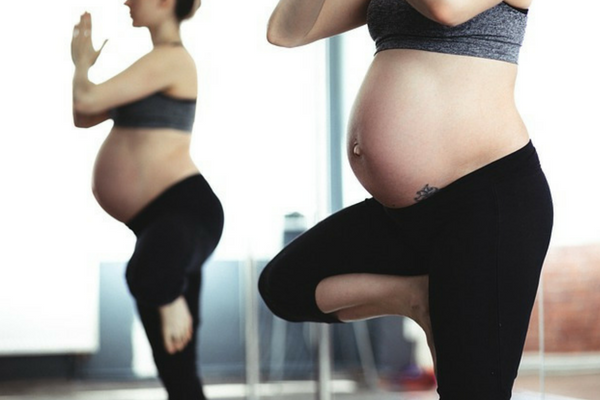
Back Pain And Pregnancy
Many women think back pain during pregnancy is very normal.
With the literature reporting as many as 72% of women experiencing pain(1), it seems extremely common. Women seek out relief through physical therapy, chiropractic care, massage therapy or sometimes can’t find any relief at all.
But would you know what is safe and what isn’t if a pregnant client came into your practice?
As healthcare providers, we took an oath to do no harm.
When we receive a client that is pregnant, we should be fully aware that everything we do to mom, we are doing to the baby. A recent Clinical Practice Guideline was published that reviewed all the literature regarding pelvic girdle pain in pregnancy and has some great guidelines from diagnosis to treatment.(2)
Understand What Is Causing The Pain
According to Vleeming et al (3) “Pelvic Girdle Pain arises in relation to pregnancy, trauma, arthritis and osteoarthritis.
Pain is experienced between the posterior iliac crests and gluteal fold, particularly in the vicinity of the sacroiliac joint. The pain may radiate in the posterior thigh.” The sacroiliac joints are the posterior point of load transfer of the pelvic girdle. Changes in the ability to transfer load may occur during pregnancy due to increase in laxity from hormonal influence or poor coordination and muscle control now that the abdominal muscles are stretched and no longer at their preferred length tension curve.(4)
Pain can persist into the postpartum period for 25% of people with 10% still having pain 1-2 years later.(5) It’s important to note that patients with a history of previous low back pain or pelvic girdle pain, previous pelvic trauma, increased BMI, hip/lower extremity dysfunction and pelvic floor dysfunction are at higher risk for developing pelvic girdle pain during pregnancy. A correlation with work dissatisfaction and lack of belief in improvement also exists.(6)
Therefore it extremely important to get an accurate and thorough past medical and social history.
Pain in the low back, buttock, possibly radiating down the leg sounds like a lot of things, doesn’t it? Sciatica, greater trochanteric bursitis, facet dysfunction, lumbar disc derangement. It is important to do a good differential diagnosis to make sure your patient’s complaints are pelvic girdle pain.
It is important to do a good differential diagnosis to make sure your patient’s complaints are pelvic girdle pain.
Testing to rule out lumbar disc involvement, hip dysfunction (including transient osteoporosis and labral tears), and any other serious disease or psychological factors should be performed.(3) Specific testing can also be done to diagnosis pelvic girdle pain.
Literature tends to agree that clustering tests yield the highest specificity and positive likelihood ratios, although which tests should be involved varies amongst the literature. Combining the active straight leg raise for load transfer, posterior pelvic pain provocation test (P4)/thigh thrust, FABERs for posterior concurrent pain, lunge test and manual muscle testing of the hip appear to have the highest likelihood ratios. Postural changes do not appear to be indicative of the development of or the intensity of pelvic girdle pain.(7,8)

Photo by: Sara Neff
Choosing Your Intervention
What does the literature say about treating pelvic girdle pain?
Well, a lot of the evidence for intervention is conflicting or weak. Poorly controlled studies or studies where the population and interventions vary greatly makes it difficult to do a true meta-analysis of intervention. So we need to go back to what we know and what is safe for both our patient and her baby. Both the American College of Obstetrics and Gynecology (ACOG) and the Society of Obstetrics and Gynecologists of Canada (SOGC) recommend regular exercise during a healthy pregnancy.
I recently wrote a post about the importance of activity during pregnancy. However, the literature is conflicting regarding therapeutic exercise for treatment of pelvic girdle pain. Much research has looked simply at group exercise compared to ergonomic/postural education, acupuncture or no intervention.
The research investigating specific therapeutic exercise has been inconclusive.
A recent systematic review concluded that there is no conclusive evidence to support exercise as a standard treatment for low back pain or PGP after determining only 2 studies to be of “good” quality.(9) Other individual studies have found stabilization exercises to significantly reduce generalized back pain compared to no intervention.(10) However, there are no studies that first classified patients (based on a differential diagnosis of the region) and then specifically treated based on the clustered tests. The clinical practice guideline recommends clinicians consider the use of exercise in the antepartum patient because it is low risk and the RCT and studies have been non-specific.(2) There is also a call for more studies.
So what about manual manipulation/therapy/massage?
Normal movement in all directions is advocated in our moms.(2) This can include soft tissue mobilization, myofascial release, massage, muscle energy technique or even manipulation. Studies have shown that adverse effects from high-velocity thrusts are rare, although several are documented.(11)
Every practitioner needs to decide their level of comfort when treating pregnant women. Personally, I do not manipulate my pregnant women. I feel they rarely need it, and I can accomplish the same goal with less aggressive manoeuvres. Manual therapy continues to be a hotly contested intervention in the therapy world. There is much discussion regarding what system and how we are actually affecting our patient’s pain and the pregnant population is no different. The evidence for long-term pelvic girdle pain relief is weak, however, clinicians may consider manual intervention. There is little to no adverse effects reported from manual therapy and may help back specific function2.
Overall the evidence is strong for predisposing factors and differential diagnosis. Conversely, our intervention evidence remains weak and conflicting at best. More research is needed! However, we can definitely do more intervention than we traditionally thought. An accurate diagnosis is important as is the patient belief system. If you have those two things, you’ll be in good shape.
References
- Albert HB, Godskesen M, Westergaard JG. Incidence of four syndromes of pregnancy-related pelvic joint pain. Spine. 2002;27;2831-2834
- Clinton, Susan C.; LaCross, Jennifer. Pelvic Girdle Pain in the Antepartum Population. Journal of Women’s Health Physical Therapy . July 2017 41(2):100-101
- Vleeming A, Albert HB, Ostgaard HC, Sturesson B, Stuge B. European guidelines for the diagnosis and treatment of pelvic girdle pain. Eur Spine J. 2008; 17(6):794-819
- Vleeming A, Stoechart R, Volers ACW et al. Relationship between form and function in the sacroiliac joint: part 1: clinical anatomical aspects. Spine 1990; 15:130-132
- Albert HB, Godskesen M, WEstergaard JG. Prognosis in four syndromes of pregnancy-related pelvic pain. Acta Obstet Gynecol Scand 2001; 80:505-510
- Kanakaris NK, Roberts CS, Giannoudis PV Pregnancy-related pelvic girdle pain: an update. BMC Medicine. 2001; 9 (1):15
- Albert HB, Godskesen M, Westergaard JG. Evaluation of clinical tests used in classification procedures in pregnancy-related pelvic joint pain. European Spine Journal. 2000;9:161-166
- Cook C, Massa L, Harm-Ernandes I et al. Inter-rater reliability and diagnostic accuracy of pelvic girdle pain classification. J Manipulative Phys Ther. 2007; 30(4):252-258
- Lilos S, Young J. The effects of core and lower extremity strengthening on pregnancy-related low back and pelvic girdle pain: A systematic review. J Women’s Health. 2012;36(3):116-124
- Kluge J, Hall D, Louw Q, Therone G et al. specific exercises to treat pregnancy-related low back pain in a South African population. Int J Gynaecol Obstet. 2011;113(3):187-191
- Khorsan R, Hawk C, Lisi AJ, et al. Manipulative therapy for pregnancy and related conditions: A Systematic Review. Obstet Genecol Survey. 2009;64(6):416-427

Valerie has been a physical therapist and athletic trainer for 18 years and currently works in a hospital-based clinic in Seattle, WA. Valerie started her career working with athletes and researching the female athlete. Early in her career, she started working with pregnant clients and found a new love for Women’s and Men’s Health. She now has dedicated her career to treating patients with chronic pain, complaints during and after pregnancy, and pelvic floor dysfunction. Valerie teaches for the APTA and holds an adjunct professor position at Texas Woman’s University, teaching woman’s health curriculum.


- How to Screen if the Cervical Spine is Impacting Shoulder Pain. (Yes it’s in Your Scope!) - August 20, 2019
- She Added Massage And That Made Migraines Unbelievably Better - February 4, 2019
- Is Pain Really A Math Equation? - January 29, 2019



Trackbacks & Pingbacks
[…] themtdc.com […]
Comments are closed.