Why Massage Is Like Chicken Sexing

I’ve written before on my blog about how manual therapists can develop some very questionable ideas about exactly how they are helping their clients. Like thinking they can manipulate energy fields, chakras, chi or cerebral spinal fluid patterns. Interestingly, my own observation is that many therapists who believe the craziest things actually get some pretty good results! How could this happen? How could they get good results without knowing how they do it?

There are probably very many good explanations. I thought of a new one while reading an excellent book called Incognito, by neuroscientist David Eagleman.

The theme of the book is that most of the activity of the brain is completely inaccessible to our consciousness. The brain is thinking and solving problems all the time, and our conscious selves basically have no control over these processes or even knowledge of them. We become aware of answers to problems long after our subconscious brain has been working them out.

The conscious brain is like a CEO who is handed a final product that has been slaved over by thousands of workers for years. The CEO might have provided some general guidance for the basic process (and might even take all the credit afterwards) but he or she knew nothing about 99% of the actual work that went into making the product.

So when problems are being solved and things are being figured out, the conscious brain is often the last to know. Which brings me to the topic of chicken sexing.

CHICKEN SEXING

When chicks are born, farmers often want to figure out which ones will be someday be laying eggs and which should be fattened for meat. Deciding whether a chick is male or female is much harder to do than you might imagine, because chicks are more androgenous than a 1980s pop star. So farmers hire special employees called chicken sexers to determine who’s a boy and who’s a girl.

The interesting thing is that many of the world’s best chicken sexers seem to have no real idea at all how they make the call. They just pick up a chick, look at its butt, then decide that it’s either male or female. When its time to train a new chicken sexer, they don’t give the trainee a procedure to follow or a set of criteria. They just tell the trainee to look at the chick’s butt, ask them to make the call, and then tell them if they are right or wrong. Sooner or later the trainee learns to make reliable decisions, but never develops any conscious understanding of how they do it.

CARD PICKING

Similar principles can be seen in a more controlled and scientific environment. In one interesting study, volunteers were asked to pick a card from one of two decks. Some cards were “good” and provided monetary rewards while others were “bad” and caused losses. Further, one deck contained more bad cards then the other. The question for researchers was: when would the players learn which deck to pick from?

It took players about twenty five draws before they stated a preference for one deck over the other. But their unconscious brains figured things out much quicker. How do we know? Because the researchers monitored physiological data from the players’ skin to determine the state of their autonomic nervous systems (the “fight or flight” system.) After as few as thirteen picks, players were showing some anticipatory fear prior to choosing a card from the bad deck. In other words, they were already getting an accurate idea about which deck was bad, before they had any conscious awareness of having that knowledge.

BACK RUBBING

I think that many massage therapists are kind of like chicken sexers. Their unconscious brains figure out what makes clients feel better without ever gaining any conscious awareness of how they do it.

A massage therapist needs to make many decisions every minute. Where do you push, how hard, at what angle, at what frequency, for how long, and with what part of your body? Many therapists will deny that they have any specific criteria for answering these questions, or even that they consciously consider them at all. They just start working and their hands seem to have a mind of their own.

And if you ask them what they are doing, they might not be able to give any kind of specific explanation. Whenever I asked my Rolfing teachers what they were doing when they were giving a demonstration, they usually said something like: “I’m having a conversation with the shoulder”; or “I’m listening to the hip” or something similarly ambiguous. They really didn’t know exactly what they were doing or why. But they were definitely doing something right, because when they put their hands on you, you knew right away they were experts.

CONSCIOUS INCOMPETENCE

The lack of conscious awareness over the actual methods used in a massage session might have some advantages. When you are learning a new skill, you need some level of conscious attention to perform the skill. But once you get good at it, the unconscious takes control, and at this point, too much conscious involvement can hurt performance. This is why you can sabotage your skills with too much self conscious analysis. Imagine trying to hit a pressure putt in golf while thinking about whether you breathe out at the point of contact.

This reminds me that Ida Rolf (the creator of Rolfing) and Moshe Feldenkrais, (the creator of the Feldenkrais method) each recommended that their students avoid an analytical mindset during sessions. Rolf sometimes admonished students that they were too “in their head.” Feldenkrais stated that in order to be optimally effective during a session, he had to think as much as possible in terms of creative imagery as opposed to formal logic. Even though both Rolf and Feldenkrais were trained scientists, and each proposed scientific explanations for why their methods worked, each wanted to get as far as possible from their scientific and analytical minds during a session.

I think part of what they were doing was making sure that their unconscious brains were in charge of the session, because most of the knowledge of “what works” was stored there, inaccessible to the conscious brain. They didn’t want their conscious minds to interfere with the process.

I think this goes along way towards explaining why many therapists seem to have no idea why their therapy works, why they are attracted to explanations which are magical as opposed to scientific, and why some are even hostile to very idea of applying science to massage at all.

To put it another way, I think that it is in the large gap between knowledge and awareness that magical thinking creeps in.

What Do Massage Therapy Associations Do For You?

“What do massage therapy associations even do?” I get this question all the time.

We’re not an insurance company, although we do offer insurance, and we’re not a union, although we do represent Massage Therapists. We’re not lobbyists, although we do promote massage therapy to government and stakeholders, and we’re not a money grab because we put every single penny back towards working for you.

We’re an association.

We’re a group of like-minded individuals with a common goal.

So why would you want to give your hard earned money to your professional association? What’s the benefit for you? What do you get for your money? In addition to the obvious benefits like preferred rates for insurance, continuing education opportunities, networking opportunities, access to research, and referral services, we provide insight and guidance, programs and services, tools and resources. But there is a much larger long-term benefit.

We Advocate For You

Advocacy, in its most basic form, means to speak in favour of something.

So, your association speaks in favour of the profession of massage therapy. We promote massage therapy as a part of primary health care to government, the insurance industry, the general public, and other stakeholders. We make people aware of what it is that massage therapists can do, how well you do it, and why it works. We make sure that massage therapy is an important part of the healthcare landscape.

We work for you.

Advocacy is often seen as “big picture work”. Sometimes it’s complicated and often takes a long time, but it also has a direct and practical impact on your career as an RMT. It impacts how you practice, how patients find you, and how you’re viewed. It’s not only your professional association that can make a difference – you can too.

There are really two ‘yous’ when it comes to advocacy. There is the ‘smaller you’ and the ‘larger you’. The ‘smaller you’ is each individual health professional (that’s you!). You demonstrate a commitment to professional practice, ongoing education and continuous improvement. You are the health professional that people point to and say “they are the reason that massage therapy is a valuable health care profession”. You are dedicated to your profession and are able to easily articulate why you have chosen massage therapy and why it works.

The day-to-day interactions with patients and the way you present yourself professionally are ways that you advocate for the profession – perhaps without even knowing you’re doing it. This is advocacy on an individual level and is incredibly important.

It is, in fact, the basis of all advocacy.

The ‘larger you’ is all Massage Therapists combined. It is a “coming together” as an association with a common purpose. It is team work, co-operation and collaboration combined, and that team work has the power to make a real difference. A large group with a common goal can do things that individuals can’t. Doors are open for associations that are not open for individuals. Together, the ‘larger you’ has a louder voice.

The “larger you”, the association, amplifies that voice and directs it towards the appropriate people and organizations. We get the right message to the people who are in a position to make change happen. There’s power in numbers, and numbers get people in a position of power to take notice.

A rising tide lifts all boats. Whatever the association achieves for Massage Therapists will affect you whether you’re a member of the association or not. I get it – it’s easier to save your money, put your head down, and do your job. But as part of the association, you get a say in the way the wind is blowing and how the boat is steered. When you’re not a part of the association, you’re along for the ride whether you like it or not.

Associations reach out to their members to get feedback. We want to know what you need, when you need it and how we can make it happen.

Most, if not all, RMTs think we should have access to extended healthcare benefits. They want to be respected as a primary health care provider. They expect and deserve to earn a suitable income.

Massage therapy associations are the groups that make sure massage therapy is a viable, respected and accessible profession. We want to make it easier for Massage Therapists to do their jobs. You already know how to get a patient back to optimal health. Our job is to make sure that you can provide your professional healthcare services and earn a living so that you can continue to do so.

Photo by: RMTBC

Increasing Credibility Of Our Profession

Massage therapy associations are run by a board of your peers, chosen by you, who identify the issues and trends that will impact the profession and what we should do about it.

The board does extensive research to ensure they are representing the profession and the issues that are current to the day. They talk with members – the people these decisions will directly affect – and determine the way to position the profession for maximum success and the steps that should be taken in order to achieve the vision for the profession.

Massage therapy associations are run by Massage Therapists, for Massage Therapists. We keep a finger on the pulse of the profession and the landscape in which it operates.

Massage therapy associations work for the profession, and massage therapy regulatory bodies are primarily concerned with the public interest. Although these two groups may seem to be opposites, they are really two sides of the same coin. We both work in the best interest of the patient by making sure they are able to access massage therapy receive proper and appropriate care from Massage Therapists.

Both the association and the college must communicate with each other to work towards our separate mandates and our common goals. We both want Massage Therapists to be able to positively contribute to the health of Canadians.

RMTs are working with doctors, physiotherapists and chiropractors, in palliative care, and in hospitals – situations that may not have seemed possible in the early years of the profession. Massage therapy is now seen more often as a valuable healthcare option, which was made possible through years of advocacy undertaken by associations.

I suppose that provides an example of the answer to that frequently asked question ‘what do massage therapy associations even do?’ Associations determine the direction this profession should be heading, determine what we need to do to get it there, and then we actually do it.

The credibility of the profession has increased dramatically over the past few decades, thanks in part to the work of associations. Massage therapy remains the most utilized paramedical benefit in Canada behind drugs and vision care.

But we still have work to do.

Advocacy takes time. To make a significant change takes time. Developing the argument with the inescapable conclusion that massage therapy is an effective and critical piece of the healthcare puzzle is how we spend a large part of our time.

But this is time well spent.

It will ensure that massage therapy is and remains a solid and respected part of the health care landscape. It will ensure that you are appropriately rewarded for your time and effort. It will bring new patients to you because they will be aware of what massage therapy is and how it can help them, and it will ensure that you remain valued as a healthcare professional.

Canada is searching for solutions to the impending healthcare crisis. Massage Therapists are a part of that solution. It is the dedication and passion of Massage Therapists, which can be amplified by professional associations, which ensures massage therapy can remain an important part of health care. In your own community, and through your day-to-day professional life, you can advocate for the profession by the way you practice and the way you communicate that practice.As the larger you, your professional association is part of the important conversations, the important decisions, and the necessary actions now and in the future. Check out what your association is doing about the issues that affect you and your profession. It’s your profession and your association.

Taking Advancement Of The Profession Into Our Own Hands

What do you get when you have a group of PT’s, MT’s and Trainers from the US, Canada, New Zealand and Australia drinking beer in a hot tub?

A lengthy discussion on what’s wrong with our profession.

And I use the term “our” profession even though all of us have a different scope of practice, because to my surprise, we’re all facing the same issues. At every level there is an issue with education, regulatory bodies, our peers and even some associations.

You see the problem in all of these industries is a lack of change.

The schools have too much invested within themselves to make changes that would help improve the profession. They are still stuck in research from 20-30 years ago, and well, change is difficult.

The regulatory bodies are concerned (as well they should be, as it’s their role) about protecting the public. All too often they err on the side of caution and ignore new developments in research and practice, which in turn harms the profession. And when I say harms the profession, I find it shocking just how badly it can harm the profession. This is exactly what I love to hear.  

Little did I know the extent it was happening in our industry until the above conversation.

When regulatory bodies ignore things like mental health and the biopsychosocial approach, but still promote and teach research and science that is long outdated, not only do we suffer as therapists but unfortunately so does the public, which these regulatory bodies are supposed to be protecting.  By their very definition they need to adopt new standards or they are strongly in breach of their core duty.

As the frustration grows among therapists who are trying to do right by their patients (and their profession), it is beginning to become apparent that we have no choice.

It’s time to take things into our own hands.

Creating CEC’s

Where this can be a bit of a problem, is the lack of therapists who want to get involved. Like it or not we are a fairly apathetic group. We tend to get lost in just going to work doing our treatments and shutting down at the end of the day. Then we are usually scrambling at the end of the year to fulfill our CECs.

I’m not saying there is anything wrong with that (well actually I guess I am), I used to be one of those therapists. I wouldn’t bother going to a college or an association AGM, wouldn’t bother to vote on anything, and would take whatever CEC’s came to town, just to fill the quota. But as time went on, started to realize change was needed, not only in myself but also in the profession.

Since it’s apparent that nothing is going to change when it comes to entry to practice standards, if we want change it’s going to be up to us.  The best way to change our profession and influence practice standards is to have a critical mass of therapists lobbying and demanding change.

This can be a bit tricky.

Since entry to practice won’t change, we look to continuing education to help shape our careers. Tania Velasquez wrote a great piece on Modalities vs Concepts and not getting caught up in the modality empires. Now, there’s nothing wrong with learning a new modality, in fact through most regulatory bodies it’s encouraged. However what we need to do, is be careful not to get caught up in the bias’ that usually go with some of those classes and make sure they’re backed by sound research and encourage critical thinking. Part of the problem is that there aren’t a lot of courses that encourage this.

So, what do we do in cases like this?

It’s time to start developing our own. If we truly care about the advancement of our profession, it’s high time we start breaking the mold of what is being offered and rely on each other to develop continuing education. Over the past couple of years (and I’ve wrote about it on here) I’ve started attending more conferences for my CECs instead of just hands on manual courses. For each conference I’ve been to, it has been amazing to meet like minded therapists from, not only different countries, but also different backgrounds and certification levels who all want to improve their profession.

And the beauty of it all…they’re all willing to work together.

We all have different strengths that would lend itself to quality CEC courses. In the last two weeks alone I’ve had discussions with other therapists on possibilities for courses on motivational interviewing, pain science introduction, DNM, assessment and of course first aid. The more we can collaborate and work together to develop the education happening after college, the bigger change we can make in bettering ourselves and the profession.


Photo by: Unsplash

Mentorship

There are a few ways we can make this happen.

Typically when we think of a mentor, we think of a one on one coaching type dynamic. While this is a great option and should be highly sought after, it can also be difficult to find an agreement that works for both parties.

Our local association encourages a mentorship program in which a more experienced therapist takes a less experienced practitioner and gives them tips and advice when starting out. This is a great way for a new grad to learn the ropes and build confidence. However if this is something you’re thinking of, there should be compensation (I don’t know if our association encourages that or not) given to the mentor. Years of experience and of course their time should only be given away if they choose to allow that, but it would be a wise investment on the part of a new grad.

Online there are several ways to gain mentorship. Joining several of the Facebook groups out there, you can learn a ton just by watching the comments and interaction among other therapists. But just like anything else, you have to choose wisely. Just like when choosing your CEC course, make sure the group(s) you decide to follow are quality and backed by research and science, or at least promote those two topics.

You can also create meet-ups in your area, to see if other therapists would like to get together and just talk shop. I’ve learned more from going out for a couple pints with other practitioners to pick their brain about what they’re good at (and probably forgot a lot of it) than I can ever pay back to them. You’d be amazed if you just put a request out how many therapists would be willing to do this. But don’t keep it to just Massage Therapists, meet up with ATs, Chiros, Physios and Personal Trainers, they all have knowledge you can learn from.

Blogs. Start following some good quality blogs, there are a ton out there! However the same caution I talked about earlier should be applied when deciding which ones to follow. Find the ones who cite quality research, give advice and focus on patient centred care. I’ve been fortunate enough to meet some of the bloggers that I follow and every time have been amazed at their humility. While some of them charge for products on their sites, they are usually quite willing to give away lots of free content. If you can use some of their paid content as CECs all the better (and easier) for you to learn from.

As therapists, there is no end to the amount of things we can learn. But we do have a choice in what we learn. Shaping your career and profession is all of our responsibility, not to be left up to the regulatory bodies. When you go take new courses that give you quality information, there is also a responsibility on your part to share that information in your community with other practitioners. There are some therapists out there doing some pretty amazing things, but we can make greater change as a group than we can flying solo.

Motivational Interviewing In Your Clinic

A great deal of our work as therapists involves helping people to make changes in order to get better outcomes, be it for general health and well-being, reductions in pain, or increases in mobility.

Our training and education means that we know a lot about what people need to do to achieve these outcomes. We are smart and we know it! We assume the patients coming in to see us, know that too. So it should be simple right, we tell them all the things that they need to know, and they go away and do it. But here lies the problem, no one really wants to be told what to do.

Take for example the person who has recently had a heart attack but is also a smoker. They are very likely to be informed of the fact that continuing to smoke is going to contribute to poor health outcomes including increasing the risk of another heart attack. With such a frightening near death experience, one might assume that being given sufficient information, combined with the fear of the experience would be enough to make someone stop smoking.

However the studies tend to tell us that only about half the people in this situation will actually quit smoking! (1) Mind blowing isn’t it? What this and many other studies in similar fields of healthcare continue to show us is that information and fear are not enough to change behaviour, no matter how dire the consequences. (2)

Changing Our Approach For Better Outcomes

Self management forms a big part of the picture in managing all chronic diseases. As we start to view pain with a more modern and science based understanding, our approach to treating it should start to shift away from trying to “fix” the patient and towards an empowering model of care that encourages the patient to take their health into their own hands.

Sounds easy doesn’t it?,  but many of us have been experiencing as practitioners what an uphill battle this is. Particularly in our western culture where there is an understanding around medicine being able to “fix” everything, so that the mere presence of pain is viewed as being “wrong”, and the understanding that as a consumer based system,  you just have to pay for the “thing” (manual therapy/ acupuncture/ surgery/ injections etc) and it will be done to you and will be effective.

Unfortunately, we know it doesn’t work like that.

Single modality approaches for treating any pain condition, but particularly chronic pain, are largely unhelpful in the long term and science tells us that adopting an active approach is far more likely to lead us to better outcomes. (3)

In treating pain and getting people to adopt behavioral change, some of the information we provide to help, might be of a therapeutic neuroscience education (TNE), explaining pain, pain education approach. Along the lines of what we see in situations like smoking cessation, weight loss and exercise programs, providing the information doesn’t always translate through to the outcomes we might hope.

That is not to say that we don’t use it.

The research tells us it has value (4-7) , we just understand that it is one part of the process, the information and context a person might use when deciding on taking a multidisciplinary and active approach to treating their pain.

Motivational Interviewing

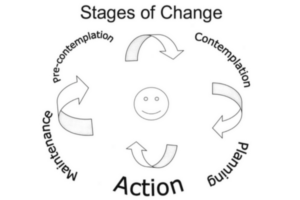
Motivational interviewing is a cognitive behavioral technique that helps patients to identify behaviors that may be preventing them from achieving optimal management of a chronic condition. It has been used in many healthcare settings which require behavioral change for better outcomes such as addiction medicine, oral-health self care, smoking cessation, weight loss, medication compliance and diabetes self management. It identifies a cycle that people tend to go through (and often go back around and around) in processing a change in behaviour.(2)


The process of motivational interviewing is one that provides structure around helping a person to find their own motivation, the idea being that if a person has made the choice for themselves they are far more likely to follow through with change, compared to when it is something that has been forced upon them.

It is a process that requires first establishing a level of rapport with the person and then helping them to identify what behaviors they would like to change. Within the approach there are some specific techniques that can help the practitioner to elicit in the patient a better understanding of what his or her thought processes are in relation to the problem. Then through a process of reflective listening and open ended style questioning, helping the person to identify how important the change is to them and how confident they are in being able to make those changes. From there a structured, but collaborative approach can address the barriers to change, identify measures of support and create a plan to move forward that fits with the patient’s own motivation.

The best thing about motivational interviewing is its accessibility. It is a process that has been used in industries other than just psychology, (sales and human resources to name a few). This means that it is easy to learn about it and that applying it in the clinic is not an “all or nothing principle”.

You can start to learn about some of the elements and apply them straight away – the easiest way is to refine your listening and reflecting skills and resist the urge to jump in straight away and tell people what they “should” be doing. There are lots of resources available in the form of short courses, blog post summaries, books and journal articles. So if you are feeling motivated, get your google on and work out what your next best step is to start delving into some motivation interviewing skills! (2)


References:

1. van Berkel TF, van der Vlugt MJ, Boersma H. Characteristics of smokers and long-term changes in smoking behavior in consecutive patients with myocardial infarction. Prev Med 2000, Dec;31(6):732-41.
2. Bundy C. Changing behaviour: Using motivational interviewing techniques. J R Soc Med 2004;97 Suppl 44:43-7.
3. O’Keeffe M, Purtill H, Kennedy N, Conneely M, Hurley J, O’Sullivan P, et al. Comparative effectiveness of conservative interventions for nonspecific chronic spinal pain: Physical, behavioral/psychologically informed, or combined? A systematic review and meta-analysis. J Pain 2016, Jul;17(7):755-74.
4. Louw A, Diener I, Butler DS, Puentedura EJ. The effect of neuroscience education on pain, disability, anxiety, and stress in chronic musculoskeletal pain. Arch Phys Med Rehabil 2011, Dec;92(12):2041-56.
5. George SZ, Childs JD, Teyhen DS, Wu SS, Wright AC, Dugan JL, Robinson ME. Brief psychosocial education, not core stabilization, reduced incidence of low back pain: Results from the prevention of low back pain in the military (POLM) cluster randomized trial. BMC Med 2011;9:128.
6. Van Oosterwijck J, Meeus M, Paul L, De Schryver M, Pascal A, Lambrecht L, Nijs J. Pain physiology education improves health status and endogenous pain inhibition in fibromyalgia: A double-blind randomized controlled trial. Clin J Pain 2013, Oct;29(10):873-82.
7. Moseley GL. Evidence for a direct relationship between cognitive and physical change during an education intervention in people with chronic low back pain. European Journal of Pain 2004, Feb;8(1):39-45.

Is Massage Moving Fluids And Causing Dehydration?

I recently listened to a presentation which talked about online arguments and how to handle things appropriately.

One of the points brought up by the presenter is to make sure you actually give credit to a person for putting themselves out there and being vulnerable. Whether the person makes a comment, writes an article or is just sharing information, it is important to recognize their effort.

A week or two ago an article was being circulated arguing that said getting a massage if you’re hungover is probably a bad idea and will make you feel worse because of the massage contributing to dehydration. While the writer made a great effort to inform people, the information isn’t exactly accurate and sadly is something still being taught in our massage education system.

Like so many of the other myths out there, we have to change our understanding and more importantly our patients understanding of what massage does and doesn’t do.

Is Massage Moving Fluid?

We’ve heard so much over the years about how massage increases circulation.

When I first started working in hockey, there was a player on the team who had a major health scare. He had blood clots in his lungs as a result of a Deep Vein Thrombosis and was put on blood thinners as a result. Once the clots were remedied, he went back to playing hockey but had to remain on the blood thinners. According to what we had been taught in school, this would have been a contra-indication to getting a massage. Being a worried student, I asked one of my teachers if a massage would increase his circulation enough to be a concern? His answer was profoundly simple – “no more than playing hockey would.”

That simple answer changed everything for me.

When we look into the research available concerning massage and blood flow, the results are again staggeringly simple. What do most people come in to get massage for? To relax!

Study(1) after study shows that getting a massage actually decreases blood pressure and heart rate. Other studies have shown that massage post exercise actually impairs blood flow and removal of lactic acid (another one of those wonderful myths), not increase it. While focused on the effects of sport massage, another study showed that massage did not increase femoral artery blood flow, but did increase skin temperature and skin blood flow to the area being treated (in this case the anterior quads). This showed a possibility of muscle blood flow being diverted to the skin, but also shows limited possibility of any metabolic change. Or the increase in skin temperature, could just be conduction of heat from the therapists hands?

One review on the subject points out that while some studies support the idea of massage increasing local blood flow it would also depend on the type of stroke used. The squeezing effect of some massage strokes could help to promote venous return (due to effect on skeletal muscle pump), but also points out the same strokes could temporarily occlude arteries causing a temporary reduction of blood flow, which would in turn cause an increase in blood flow when the pressure is released.

Overall there is not much evidence to support the idea of massage increasing circulation, or moving fluids around and certainly doesn’t increase it more than the effort it took for the patient walking into your clinic.

Photo by: RMTBC

Dehydration

There are a few ways to become dehydrated

  1. Sweating too much (exercise, hot temperature).
  2. Diarrhea or vomiting. 
  3. Urinating too much (i.e.: breaking the seal when you’re out drinking). 
  4. Fever. 
  5. And of course, just not drinking enough fluid.

Now, if someone is coming in after a night out on the town and are a bit (or a lot) hungover, they are probably already a bit dehydrated because alcohol is a diuretic, which in turn causes you to pee a lot. Then water loss is greater than water gain, and if body mass is reduced by 2% because of fluid loss, this causes mild dehydration. When blood volume decreases because of the fluid loss, blood pressure decreases, the kidneys and various nerve impulses trigger the thirst centre in the hypothalamus, telling us to drink fluids.

The other things that stimulate thirst:

  1. Your mouth is dry from decreased amount of saliva.
  2. Baroreceptors in the heart and blood vessels detect lower blood pressure.

I know what you’re thinking: “you just wrote a paragraph on how massage lowers blood pressure and now you’re telling me lower blood pressure causes dehydration!”

Not so fast.

The baroreceptors are sensing lower blood pressure and increasing thirst not dehydration. If your patient had been out drinking the night before, they’re already behind the eight ball as far experiencing some level of dehydration, so their blood pressure is probably already down to some degree because of the decrease in blood osmolarity. When we look at the mechanisms that actually cause dehydration, there is nothing happening in a massage that is causing sweat, diarrhea, urinating or fever. Nor is it possible for a massage to decrease body mass by 2% (otherwise we’d all be a lot busier!). Plus if a treatment could drop blood pressure that much, every person we treat would need to drink after their treatment.

While your patient probably wasn’t feeling great when they came in, a massage isn’t necessarily going to make them feel all that much better because their body is basically telling them they’re an idiot from the night before (my body has said this to me several times). The massage isn’t going to make them any more dehydrated than if I was at my buddies place and his kids were climbing on my back while I laid on his couch. But neither one is going to make me feel all that pleasant. So while it is nice to give your patients that bottle or glass of water after their treatment, can we do it just cause it’s nice, feels good and is good for them? And can we please stop telling them it’s because they’re dehydrated or the massage has released toxins that need flushing out?

References:

  1. Alan David Kaye, Aaron J. Kaye, Jan Swinford, Amir Baluch, Brad A. Bawcom, Thomas J. Lambert, and Jason M. Hoover. The Journal of Alternative and Complementary Medicine. March 2008, 14(2): 125-128. doi:10.1089/acm.2007.0665.


Massage May Provide Short-Term Neck Pain Relief, BUT….


My Facebook feed was recently flooded with multiple shares of a summary of massage therapy research findings for various health problems from the Association of Massage Therapists (AMT). Because of my interest in musculoskeletal pain and dealing with clients having such pains regularly, I took a closer look at the studies cited for neck and shoulder pain.

Among the systematic reviews and meta-analyses cited, two of them are Chinese reviews, one Canadian, and one Cochrane Review, which was authored by American and Canadian researchers. While three of the reviews find massage therapy to have short-term pain relief effects and one review found “moderate evidence” of massage therapy on decreasing neck pain — stated on AMT’s summary — there is more to the story that made me question the strength of the evidence.

While all of the reviews found that massage therapy has immediate pain relief and any long-term benefits is unknown, there are a few problems the authors encountered.

Massage Definition Is Too Broad

In the review by Kong et al., the authors identified many types of massage therapy among 12 eligible studies reviewed: Swedish, Chinese massage, Thai massage, slow-stroke back massage, manual pressure release, and myofascial band therapy.(1) Likewise, the Cochrane Review addressed a similar problem, “e.g. Traditional Chinese massage, ischaemic compression, self-administered ischaemic pressure using a J-knob cane, conventional Western massage and occipital release.”(2)

The Ottawa review stated, “It was difficult to determine the effects of type and dosage of massage because the RCTs employed different techniques, durations, and treatment protocols. Most studies of massage therapy combined various techniques, which were likely applied differently by each therapist.”(3)

 The problem is that we don’t know for sure which type of massage is more or less beneficial than another type of massage for treating neck pain. Do I need to do kneading, skin stretching, Thai massage? Should I use the J-knob cane? Because we cannot readily identify what works better, we need to be careful when deciding what technique to use — not because it’s our favorite modality, but because the client or patient perceives it as beneficial.

Massage Is No Better Than Most “Active Therapies”

When compared to other types of treatments, massage isn’t better — or worse. Among 13 eligible randomized-controlled trials, Cheng and Huang found that “Although [massage therapy] did not show significant immediate effects on pain relief compared with active therapies, [massage] showed superior immediate effects on pain relief versus traditional Chinese medicine.”(4) However, they reported that it is no better than traction (n=3) and acupuncture (n=2) and other manual therapies (n=2) had better pain relief than massage.

Kong et al. and the Ottawa review found similar results.(1,3) The former concluded that massage therapy “does not show better effects than other active therapies on pain relief.” There was no evidence indicating that massage was effective in improving functional status of neck and shoulder pain.

The Cochrane Review, however, is more critical — as it should be with Cochrane Reviews. The authors stated, “There is no difference in pain intensity, physical function and quality of life when massage is compared with other therapies such as manual therapy, acupuncture, education, exercise and multimodal intervention. However, studies that compare one active treatment versus another active treatment require larger sample sizes than studies that compare an active treatment with a placebo. Thus, it is impossible to determine whether the ‘no difference’ findings in the studies comparing active treatment with active treatment reflect true equivalence or merely sample sizes too small to detect a difference.”(4)

The Review also found no differences when different massage therapy techniques were compared among each other. They also added this little gem: “Even when statistical significance was found, such as an improvement in pain with the combination of ischaemic compression and passive stretch compared with individual treatment, the lack of replicability of the study precludes making a statement about the effectiveness of one massage technique over another.”(4)

In other words, we should not make broad statements saying that one type of massage is better than another type of massage or treatment. And we should take these results with the likely possibility that they could be wrong should better evidence disconfirm these findings, which is something we should all consider when reading and interpreting research.

Massage Therapy Is Better Than Inactive Therapies

But that’s great news, isn’t it? Umm…not really. Patients who receive massage therapy obviously feel better than those receiving “standard” medical care or are on the wait-list. This was reported in all four reviews.

There are two problems with this thinking:

First, having some degree of socialization will elicit some change of pain perception, often for the better. So someone in pain who is interacting with another person will likely have a greater reduction in pain than those who receive no or minimum care. 

For example, a randomized sham-control study of Reiki found that cancer patients with who were treated by a real Reiki Master had no better outcome than those treated by an actor pretending to be a Reiki Master, who simply mimicked the moves. However, both groups reported to feel better and have less pain than those receiving standard care. The authors concluded, “The findings indicate that the presence of [a registered nurse] providing one-on-one support during chemotherapy was influential in raising comfort and well-being levels, with or without an attempted healing energy field.” (5)

Another study in acupuncture also found similar results where real acupuncture was no better than fake acupuncture in alleviating knee pain for patients with osteoarthritis, but these two groups had better pain relief than those receiving standard care.(6)

The second problem is that we don’t know how well the trials were blinded in the reviews. Control groups that are not blinded during the selection may likely experience higher levels of pain, knowing that they aren’t receiving a massage or another type of care. Cheng and Huang reported, “There were serious flaws in blinding methods of most Chinese RCTs. It is difficult to blind the patients and impossible to blind the therapists, but blinded assessors and concealed allocation must attempt to make up for the lack of blinding. However, some Chinese RCTs did not perform these compensated methods. Thus, these studies could not be considered to be of high quality.”(4)

Small Sample Fallacy

Few of the selected studies had more than 100 subjects, which makes these studies to be more prone to the small sample fallacy. Smaller samples increases the odds of getting a false positive or a false negative because the samples do not accurately reflect on the actual population examined.(7) They can also over-estimate an association between two or more variables and may not reflect on the true effect due to their low statistical power.(8,9) Publication bias, selective data analysis, and selective reporting of outcomes are more likely to affect such studies, as well as poor experimental setup. Therefore, systematic reviews are only as good as the quality of the trials examined.

On publication bias, Buttons et al reported, “A ‘negative’ result in a high-powered study cannot be explained away as being due to low power, and thus reviewers and editors may be more willing to publish it, whereas they more easily reject a small ‘negative’ study as being inconclusive or uninformative. The protocols of large studies are also more likely to have been registered or otherwise made publicly available, so that deviations in the analysis plans and choice of outcomes may become obvious more easily. Small studies, conversely, are often subject to a higher level of exploration of their results and selective reporting thereof.”(9)

Philosophy professor Kevin DeLaplante of the Critical Thinking Academy gave a few examples of how the small sample fallacy in research could misinform national policies and cost us billions of dollars.

The Good News

Given the examination of the evidence on neck and shoulder pain, I wonder what other things the AMT’s summary of massage research isn’t telling us. If we read the full research papers, would we find similar problems for low back pain and pain relief of cancer patients?

While there are problems with current massage research, such as low-quality of evidence, this does not mean that we should not perform massage therapy for those suffering from neck and shoulder pain. What we should consider are the limitations of what massage can do and what we may say to our patients or clients. Short-term pain relief may provide patients and clients a positive mood change, which may decrease their sensitivity in their nervous system or their catastrophication of pain.

It may help them sleep better, encourage them to move more, and give them optimism that they do not have to live with pain for life. They should be well-informed about what massage therapy can do and cannot do for them, just as we massage professions should be informed about what the massage research really says.

References:

  1. Kong LJ, Zhan HS, Cheng YW, Yuan WA, Chen B, Fang M. Massage Therapy for Neck and Shoulder Pain: A Systematic Review and Meta-Analysis. Evidence-based Complementary and Alternative Medicine : eCAM. 2013;2013:613279. doi:10.1155/2013/613279.
  2. Patel KC, Gross A, Graham N, Goldsmith CH, Ezzo J, Morien A, Peloso PMJ. Massage for mechanical neck disorders. Cochrane Database of Systematic Reviews 2012, Issue 9. Art. No.: CD004871. DOI: 10.1002/14651858.CD004871.pub4
  3. Cheng YH, Huang GC. Efficacy of Massage Therapy on Pain and Dysfunction in Patients with Neck Pain: A Systematic Review and Meta-Analysis. Evidence-based Complementary and Alternative Medicine : eCAM. 2014;2014:204360. doi:10.1155/2014/204360.
  4. Brosseau L et al. Ottawa Panel evidence-based clinical practice guidelines on therapeutic massage for neck pain. J Bodyw Mov Ther. 2012 Jul;16(3):300-25. doi: 10.1016/j.jbmt.2012.04.001. Epub 2012 May 9.
  5. Catlin A, Taylor-Ford RL. Investigation of standard care versus sham Reiki placebo versus actual Reiki therapy to enhance comfort and well-being in a chemotherapy infusion center. Oncol Nurs Forum. 2011 May;38(3):E212-20. doi: 10.1188/11.ONF.E212-E220.
  6. Suarez-Almazor ME1, Looney C, Liu Y, Cox V, Pietz K, Marcus DM, Street RL Jr. A randomized controlled trial of acupuncture for osteoarthritis of the knee: effects of patient-provider communication. Arthritis Care Res (Hoboken).2010 Sep;62(9):1229-36. doi: 10.1002/acr.20225.
  7. Kalla S. Statistical Significance And Sample Size. Explorable.
  8. Hackshaw A. Small studies: strengths and limitations. European Respiratory Journal. 2008 Nov; 32 (5) 1141-1143.doi: 10.1183/09031936.00136408.
  9. Button KS et al. Power failure: why small sample size undermines the reliability of neuroscience. Nature Reviews Neuroscience 14, 365-376 (May 2013) | doi:10.1038/nrn3475.