How A PEST Can Help With Psoriatic Arthritis

I looked at the intake form and felt a bit confused.

Back in college, we had weekly sessions that were called an “inreach” where we would treat people with very specific conditions.

Everything from Parkinsons to Multiple Sclerosis.

But this day, the intake form threw me off a bit.

“Psoriatic Arthritis”, but I thought Psoriasis was a skin condition, how did it become arthritis?

I wasn’t sure what to expect but the patient did a great job of explaining what happens with the condition and how massage therapy helped.

But I still didn’t get how a skin condition could become arthritis.

Psoriasis, The Connection To Arthritis And Assessment

The big connection between Psoriasis and Arthritis is inflammation.

In both instances the immune system is attacking the body (skin with psoriasis and joints with psoriatic arthritis) and can have active and remission stages.

But the two are not always linked to each other.

There are instances where the arthritis can set in long before the skin plaques do and vice-versa, about 80% of the time the skin disorder will come first. The arthritis may affect 6-42% of the people who have Psoriasis.

However there is an argument being made in regard to genetic studies saying the two diseases could be separate entities.(1)

Little did I know until researching for this post, there is actually five different types of Psoriatic Arthritis:

  1. Symmetric – on the same joints on both sides of the body.
  2. Asymmetric – can affect any joint.
  3. Distal Interphalangeal Predominant – affects the fingers and toes, close to the nail.
  4. Arthritis Mutilans – severe and deforming, affects the hands and feet, can also cause neck and lower back pain.
  5. Spondylitis – affects the spine.

Because patients can present with back pain, we have a real opportunity to help someone in the early stages of Psoriatic Arthritis. It is our job to try an interpret the difference between mechanical or inflammatory back pain.

Inflammatory back pain is chronic (lasts more than three months), so if we have a patient come in this is one of the red flags we can look at during our assessment to dig a little deeper and see what’s happening.

Fortunately people way smarter than me have come up with a way to figure this out!

It’s called the PEST tool (Psoriasis Epidemiology Screen Tool) and you can download what a copy looks like here.

It is recommended that anyone with Psoriasis gets tested once a year to see if they have developed Psoriatic Arthritis.

The PEST tool is a series of five questions:

  1. Have you ever had a swollen joint?
  2. Has a doctor ever told you that you have arthritis?
  3. Do your fingernails or toenails have holes or pits?
  4. Have you had pain in your heels?
  5. Have you had a finger or toe that was completely swollen and painful for no apparent reason?

They are given a score of 1 for each question they answer yes to, anything over a score of 3 can indicate the arthritis.

The patient is also given a picture of the body and told to circle any joints where they have felt discomfort.
Although those five questions can help to determine there is a problem, it doesn’t help as far as someone with inflammatory back pain.

So there are a few extra questions you can ask:

  1. Do you experience early morning stiffness that lasts more than 30 minutes?
  2. Have you had neck or back pain for more than 3 months?
  3. Does the pain wake you up early morning?
  4. Does it get better after exercise or movement?

Now of course we CANNOT diagnose any of this, but it is good information to know as part of our assessment, especially if we are seeing any patients who have Psoriasis.

If you decide to use the PEST tool and it raises some concerns, always make sure to refer the patient back to their doctor or a rheumatologist.

Photo by: stevepb

Photo by: stevepb

Treating Psoriatic Arthritis

It was a little tough (well for me it was at least) to find a lot of research involving massage therapy and specifically Psoriatic Arthritis, there’s plenty around the other various types of arthritis though.

Generally most of what I could find revolved around moderate pressure massage and the beneficial outcomes of this style of treatment.

We obviously don’t want to use deeper pressure techniques on a person dealing with an inflammatory disease as it would only make things worse.

Not surprisingly a number of articles also focused on the psychological benefits associated with treatment and also around educating the patient in conjunction with treatment.

With all we’ve been learning on pain science it makes sense that education and associated benefits with the psychological side of things would have a benefit to the patient with the pain associated with any one of the different types of arthritis.

One study talks about the toll fatigue has on patients dealing with Psoriatic Arthritis and how recommendations on sleep hygiene, exercise, goal setting, stress reduction and relaxation as a major benefit in coping with the disease. (2)

We all know how great a job massage therapy does of helping people relax!

Most of the other studies I found fell under the umbrella of physical therapy and it’s benefits (3) to helping with various forms of arthritis (yes there were more than the one I just cited, but most were saying the same thing), with movement being one of the bigger contributing factors. But one study specifically looked at the benefit of using joint mobs and exercise in treating carpometacarpal joint osteoarthritis and showed it beneficial in treating pain.(4) In most cases it is clear that more research is needed on the topic. Keeping in mind the contraindication of treating anyone who is experiencing a flare up with their arthritis, massage therapy can be beneficial in helping to treat this. Throw in some joint mobilizations with some active and passive range of motion and you’ll probably look like a rock star in helping out that patients that come in. Use the PEST tool as part of your assessment if you or your patient aren’t sure whether arthritis is setting in and it can go a long way, not only in understanding what’s going on but also their quality of life. But most of all hopefully you don’t have to get your patient to explain everything to you like I did!


References

  1. Boehncke W. Psoriasis and Psoriatic Arthritis: Flip Sides of the Coin?. Acta Dermato-Venereologica [serial on the Internet]. (2016, May), [cited October 3, 2016]; 96(4): 436-441. Available from: MEDLINE with Full Text.
  2. Waldron N. Care and support of patients with psoriatic arthritis. Nursing Standard [serial on the Internet]. (2012, Aug 29), [cited October 3, 2016]; 26(52): 35-39. Available from: CINAHL Complete.

  3. Vlak T. [Spondyloarthropathies–clinical evaluation and physical therapy]. Reumatizam [serial on the Internet]. (2004), [cited October 3, 2016]; 51(2): 29-33. Available from: MEDLINE with Full Text.

  4. VILLAFAÑE J, CLELAND J, FERNÁNDEZ-DE-LAS-PEÑAS C. The Effectiveness of a Manual Therapy and Exercise Protocol in Patients With Thumb Carpometacarpal Osteoarthritis: A Randomized Controlled Trial. Journal Of Orthopaedic & Sports Physical Therapy [serial on the Internet]. (2013, Apr), [cited October 3, 2016]; 43(4): 204-213. Available from: SPORTDiscus with Full Text.

 

Rethinking Your Professional Identity

What mental image might a person receive when you introduce yourself to them by saying “I am a physical therapist” (or massage therapist, or speech and language pathologist, or occupational therapist, or etc.)?

This short statement of identity may create a cascade of mental images to your audience (the potential client) which may influence your ability to work with them.

However, this image may have a detrimental effect on how you are able to impact others, from both the perspective of them as well as yourself.

This conversation began with a discussion I had with fellow CE provider Robert Gardner, regarding the suggestion that therapists “forget” that they are a Massage Therapist in order to see themselves as qualified and licensed to work beyond the “expected role”, or mental picture, of who they think they are.

Changing expectations is what I teach as part of my Foundations in Myofascial Release Seminar series and I have written about this in the past here. (Please note: for the sake of this discussion I refer to Massage Therapists, but the same holds true for PTs, OTs, and SLPs).

Myofascial release (MFR) is within the scope of practice of Massage Therapists, but is quite different from massage in many respects.

My version of MFR is done dry, with no lotions or oils.

It is typically performed with the client dressed in shorts and a tank top (or similar). Also, unlike most massage, one can and does spend long periods of time treating a small area of the body, with little need to treat all aspects, front and back.

I converted my mental image of myself from a PT, who typically works with exercise and heat/electrical modalities a few decades ago and have done a good job of altering client expectations even before they set foot in the doorway of my office.

I’ve done this conversion by constructing a website which does most of the work for me.

Check out the website for my private PT practice here to see what I am referring to.

I speak to the differences between how people may view PT in their minds and how I am different. I have a short “Sample Myofascial Release Session” available for potential clients to view, as well as photos throughout, which begin changing client’s expectations even before they contact me.

I distribute my New Patient Forms via a link from the website, which further educates the client. In short, my client comes reasonably prepared for the work I do, and my expectations for a session should nearly match their expectation.

Very few walk into my office wondering where all of the exercise equipment is hidden.

http://ryanhoyme.com/FREE/

http://ryanhoyme.com/FREE/

If you have trained with me or other instructors, how has your client education process changed?

Are you having difficulty with client conversions?

At the time of the first session, is it not the best time to educate your new client in the benefits of how your therapy is different from other Massage Therapists?

Not that it cannot be done, but why wait?

Think of all of the ways you reach your market; how do new clients find you? Use your website, brochures, business cards, and even word-of-mouth referrals to talk up how you are very different from other MTs…and with good reason. Give potential clients a “warning” that you do business different from the norm in massage therapy; but with great results.

If the Massage Therapist is to embrace myofascial release, expectations must change. It is within your scope of practice to use myofascial release (and similar) principles, but is it within your allowable expectations of yourself to do so?

Can you envision yourself in a different way?

Should Massage Therapists Wade Into The Nutritional Arena?


Nutrition is a fascinating and important subject.

After sleep, diet is likely the most important factor affecting our health.

According to the most rigorous analysis of risk factors ever published—the Global Burden of Disease Study—the number one cause of death in the United States, and the number one cause of disability, is our diet.(1)

This is how important diet is.

Untitled design-6


Our collective knowledge in the area of nutrition continues to grow rapidly with thousands of studies published every year.

We know more about nutrition than at any other point in history, and yet paradoxically North Americans are at record overweight and obesity levels. And while these levels are finally slowing down, they have yet to actually level out or decline.(2)

I developed an intense interest in nutrition after watching the documentary Forks Over Knives in 2013.

This led to immediate and profound changes to my diet so that I could correct some personal health issues.

Since that time, I have found myself reading on the topic of nutrition almost daily. While this knowledge is extremely useful to me personally, offering nutritional advice is not within our scope of practice.

However, as you know, the topic can come up during an assessment or a treatment.

What can you say or do when this happens? This may depend on the scope of practice guidelines in your jurisdiction. Here is the scope of practice for massage therapists within the province of Ontario, Canada, where I work.

“The practice of Massage Therapy is the assessment of the soft tissue and joints of the body and the treatment and prevention of physical dysfunction and pain of the soft tissue and joints by manipulation to develop, maintain, rehabilitate or augment physical function, or relieve pain.” (Massage Therapy Act, 1991)

There is no mention of the words nutrition or diet, so one could safely say that this area therefore falls outside of our scope.

We can assess soft tissue dysfunction, but our treatment options are limited to ‘manipulation’. The only way that we could directly advise in nutrition is if we possess certifications in nutrition. In this case we have to take off our (figurative) massage therapy hat, and put on our nutrition hat.

While we cannot, and should not offer specific dietary advice, we can certainly inquire about our client’s dietary habits if they are experiencing delayed, or stalled healing.

For clients curious to learn more, we can suggest evidence-based resources, or we can refer to qualified professionals.

However, to be able to do this we need to have a basic understanding of nutrition ourselves. If there were two reasons for gaining extra knowledge in nutrition, I would list atherosclerosis and inflammation as two major factors.

We are all treating the effects of these conditions every day, and diet affects both of them.

Atherosclerosis

For body tissue to remain healthy, oxygen, nutrients, and cellular building blocks all need to be delivered to our soft tissue.

As well, cellular metabolites need to be removed from these tissues.

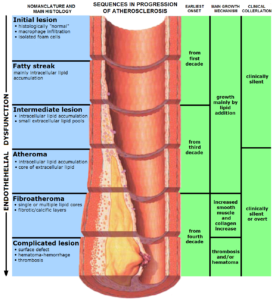
This role is performed by our circulatory and lymphatic systems. However, it might surprise you to learn that by age 10 nearly all children have fatty streaks in the arteries that deliver these nutrients to the body.(3)

These streaks are the first sign of atherosclerosis (the leading cause of death in the United States, and the second leading cause in Canada).

For people eating the standard North American diet, atherosclerotic plaques typically start forming in their 20s, and then become progressively worse with each successive decade.

Endo_dysfunction_Athero

The reason that nutrition is so important is that we now know, thanks to independent studies done by both Dean Ornish(4) and by Caldwell Esselstyn(5), that atherosclerosis is largely a diet-related disease.

Diet is so powerful that a healthful diet has been shown to actually reverse atherosclerosis.

Ornish et al. proved this using quantitative angiography on his test subjects. So, rather than accept that atherosclerosis as an inevitable consequence of aging, we now know that we do not need to see these sorts of degenerative changes happening in our (and our patients’) circulatory system.

To give you an idea of how profound these changes are, take a look at healthy vertebral arteries below (a), and then vertebral arteries clogged with atherosclerotic plaques (b).

It does not take a PhD in nutrition to realize that these blockages will result in radically altered nutrition to the soft tissue surrounding the spine.

http://www.ncbi.nlm.nih.gov/pubmed/19328027

http://www.ncbi.nlm.nih.gov/pubmed/19328027

In the coronary arteries, atherosclerosis can manifest as angina (or more seriously as coronary thrombosis), but these are not the only arteries affected.

In our extremities, atherosclerosis can manifest as numbness and tingling.

If blockage worsens, clients can experience intermittent claudication, an extremely debilitating condition.

Atherosclerosis has also been implicated in other conditions that we treat such as degenerative disk disease(6), disk herniation(7), sciatica(8), radiculopathy(9), and idiopathic back pain(10).

This should make all massage therapists stand up and pay attention to the role of diet as it relates to soft tissue dysfunction. If soft tissue is not receiving adequate blood flow, tissue health will suffer.

Inflammation

Atherosclerosis is actually an inflammatory disease of the arteries, but as you know, inflammation can occur anywhere in the body.

Many foods and dietary constituents have inflammatory effects on the body, and this sets the body up for a host of inflammatory conditions such as tendonitis, tenosynovitis, arthritis, plantar fasciitis, and other conditions that we treat on a daily basis.

Diet plays a key role in inflammation, either adding fuel to the fire, or helping to reduce inflammation.

Research into the field of the human gut bacteria is currently getting a lot of funding so there has been an abundance of research into this fascinating area, and it has become apparent that the gut is intimately involved in inflammation.

Dietary fibre is the primary food of our gut bacteria and fibre plays a key role in dampening inflammation(11).

This is only one example of how diet can promote or attenuate inflammation. Many foods have a pro-inflammatory effect, while others are anti-inflammatory.

I am sure that most of us have had the experience of chasing inflammation from one area of a client’s body to another. For example, a client might present with lateral epicondylitis. Then, before that issue is resolved, plantar fasciitis appears. Then, just when you get the previous issues resolved, idiopathic frozen shoulder mysteriously appears.

Once I gained an understanding of nutrition, puzzles like this were much easier to solve.

This is not to say that a client will necessarily change their diet once they learn its role in their health, but they do have a right to this information. Then they can make an informed decision, and the concept of informed choices is at the heart of health care and patient rights.

So, you can see how it would be beneficial for us to develop a basic understanding of nutrition as it relates to inflammation.

In Conclusion

For where I sit, I would say that there are likely more personal, rather than professional reasons for becoming more nutritionally literate.

The reason for this is due to our current scope of practice.

If you educate yourself on the topic of nutrition, you will learn a lot of valuable information that you (frustratingly) will not be able to directly incorporate into your daily practice.

However, having opened up the Pandora’s Box of nutrition, I would say personally that I never want to go back to a state of ignorance.

I got into the health field to better understand health and the human body, and understanding nutrition has give me for more power over my health than I could have ever imagined.

As a Massage Therapist, you are not required or expected to have a nutritional background. However, therapists in regulated provinces in Canada are well educated in physiology and pathology, so they possess the background information to appreciate understand the important role of nutrition in patient health. If you do take courses or educate yourself in this area, it will open new doors for you, but on the downside, you cannot offer direct nutritional advice as a Massage Therapist. However, with a proper nutritional knowledge base, you will know when either to refer to a nutritional professional, or where to direct your client to evidence-based nutrition resources.

I will leave the last word to Dr. Greger of NutritionFacts.org. Click on the link below to find out why you should care about this topic. Why You Should Care About Nutrition:

http://nutritionfacts.org/video/why-you-should-care-about-nutrition/

References:

  1. Murray CJ, Atkinson C, Bhalla K et al. The state of US health, 1990-2010: burden of disease, injuries, and risk factors. JAMA. 2013 Aug 14;310(6):591-608.
  2. http://stateofobesity.org/obesity-rates-trends-overview/
  3. J. P. Strong, H. C. McGill. The pediatric aspects of atherosclerosis. J Atheroscler Res 1969 9(3):251 – 265.
  4. Ornish D, Brown SE, Scherwitz LW, et al. Can lifestyle changes reverse coronary heart disease? The Lifestyle Heart Trial. Lancet. 1990 Jul 21;336(8708):129-33.
  5. Esselstyn. C.B., Gendy,G., Doyle, J. A way to reverse CAD? J Fam Pract. 2014 July;63(7):356-364
  6. L I Kauppila. Atherosclerosis and disc degeneration/low-back pain–a systematic review. Eur J Vasc Endovasc Surg. 2009 Jun;37(6):661-70.
  7. U G Longo, L Denaro, F Spiezia, F Forriol, N Maffulli, V Denaro. Symptomatic disc herniation and serum lipid levels. Eur Spine J. 2011 Oct;20(10):1658-62.
  8. P Leino-Arjas, L Kauppila, L Kaila-Kangas, R Shiri, S Heistaro, M Heliovaara. Serum lipids in relation to sciatica among Finns. Atherosclerosis. 2008 Mar;197(1):43-9. Epub 2007 Sep 7.
  9. P Leino-Arjas, L Kauppila, L Kaila-Kangas, R Shiri, S Heistaro, M Heliovaara. Serum lipids in relation to sciatica among Finns. Atherosclerosis. 2008 Mar;197(1):43-9. Epub 2007 Sep 7.
  10. L I Kauppila, R Mikkonen, P Mankinen, K Pelto-Vasenius, I Maenpaa. MR Aortography and Serum Cholesterol Levels in Patients With Long-Term Nonspecific Lower Back Pain. Spine (Phila Pa 1976). 2004 Oct 1;29(19):2147-52.
  11. Kuo SM The interplay between fiber and the intestinal microbiome in the inflammatory response. Adv Nutr. 2013 Jan 1;4(1):16-28.


Is The Use Of Oxygen A Placebo?

Forgetting to use it could be the difference between passing and failing a Sport First Responder test.

It has a wide range of uses in an emergency care setting, especially when dealing with your athletes in an acute injury or emergency.

Using supplemental oxygen therapy has been a major part of Sport First Responder courses over the years with various reasons for application including:

  • Shock prevention
  • Cardiac Arrest
  • Anaphylaxis
  • Carbon Monoxide poisoning
  • Asthma

However recently I have been hearing rumblings, the use of oxygen may be on it’s way out as an intervention and I recently worked with a sport med doctor who doesn’t use oxygen and downplayed its effectiveness.

But this practice is so hard grained into us, that with pretty much every patient we see in an emergency setting, they get oxygen.

But do we really need it in all cases?

Why The Use Of Oxygen

The biggest reason oxygen is used in these emergency scenarios is to prevent hypoxemia, which is a decreased level of oxygen in the blood, which then leads to hypoxia (oxygen supply which is insufficient to support life).

However there is also a risk of using too much oxygen which results in hyperoxia (too much oxygen in the system), if oxygen therapy is not used properly it can lead to complications, which also depends on the condition your patient is dealing with.

It turns out that hypoxia (which is determined by using a pulse oximeter) is the only evidence based reason to give oxygen to a patient.

The other reasons are based on the assumption that it will help prevent hypoxia and relief of symptoms in an emergency setting.

Shock

I’m sure we all remember what shock is from our time in college, but there is more than one type of shock and we should all be familiar with the various types.

Medical shock is the type we are mainly worried about as opposed to emotional or psychological shock resulting from a traumatic experience or an emotional event.

When someone is suffering from or going into shock, the body is redirecting blood to service the internal organs and keep them alive, which is why you will often see the persons skin turn pale, cool and clammy.

The extremities are not getting the blood supply they’re used to.

But within the classification of “medical shock” there are further classifications of types of shock:

  • Anaphylactic
    • life threatening allergy to a substance
  • Caridiogenic
    • failure of the heart to pump sufficient blood to the body, usually occurs with cardiac arrest
  • Hypovolemic
    • lack of blood in the body
  • Neurogenic
    • failure of the nervous system to control the size of blood vessels causing dilation, common with head and spine injuries
  • Respiratory
    • the lungs fail to get sufficient oxygen into the bloodstream, common with breathing emergencies, respiratory arrest
  • Septic
    • intake of a poison causes blood vessels to dilate

Within the license of a Sport First Responder we would treat all of these types of shock the same way, by putting the patient on oxygen at a 10L flow along with keeping them warm.

In the case of someone having a heart attack (caridogenic shock) there are studies showing the use of oxygen in the first 12 hours may be unwarranted, however would still be appropriate for the sport first responder or until the patient reaches the hospital.

But in some cases with angina attack, oxygen can help with pain relief.

This is also because in the stressful environment of being a first responder, to determine exactly when it is appropriate to administer oxygen (signs of dyspnea or heart failure), so would more efficient to give it to everyone until arrival at hospital.

Common breathing emergencies like breathlessness or asthma should only be treated with oxygen if there is hypoxia present, this is one of those areas where we have always put oxygen on a patient .

In dealing with traumatic injuries that would typically cause hypovolemic shock a study showed that only half of adult trauma patients actually required the use of oxygen in pre-hospital care, yet it was still being administered to everyone.

When it comes to using oxygen therapy for shock it looks like a bit of a mixed bag as to when it’s appropriate to use it and when it is not.

However our Sport First Responder guidelines at this point still say that oxygen should be used to either help prevent or to deal with shock.


Photo by: Offutt Air Force Base

Photo by: Offutt Air Force Base

Strokes, COPD And Other Emergencies

I know these aren’t typically seen in the Sport First Responder setting but it’s still important information to know in case you ever have to deal with it.

Again, these are all instances where oxygen would always be put on a patient having an emergency.

New research is showing us that it may not be the best approach.

In patients having an acute COPD (Chronic Obstructive Pulmonary Disease) we have always been told that high flow oxygen is the method to treat the situation.

Studies have shown that using reduced flow oxygen actually decreased the risk of mortality by 58% (1) and leads to worse clinical outcomes. (2)

Using oxygen with someone who is suffering a stroke is also coming under skepticism even though it too has always been promoted as an acute therapy. I’ve used it on patients several times because of the recommendations.

But newer studies are saying that unless there is hypoxia present, the use of oxygen should be avoided (although it is also referring to the first 24 hours of hospitalization).

The same article points out that unless hypoxia is present with a pregnant woman or someone experiencing breathlessness, oxygen should be avoided.

However there is still hope for our friend Oxygen.

Someone with carbon monoxide poisoning should still be given Oxygen. It reduces the level of carbon monoxide in the blood in 40 min compared to 4-5 hours just breathing regular air. 

Even though studies have started to question the use of oxygen in emergency settings, it is still imperative to stick to your local guidelines when responding to an emergency with your athletes. Most of the studies outlined in this post were based on the reading of gas exchange in the bloodstream using a pulse oximeter. Your average Sport First Responder probably doesn’t have one of these in their kit, so it is ALWAYS better to err on the side of caution. Another caveat for the use of oxygen (that I have seen first hand at emergency scenes) is distracting your patient. Having a mask on that is delivering oxygen brings some comfort to a patient, especially with breathing emergencies. I’m not sure it could be considered a placebo effect, but it definitely helps to calm a patient down. The point of this post wasn’t to tell you not to use oxygen anymore, you most certainly should. It was more just to make you aware that there could be changes coming down the road and the next time you re-certify, things might be a little different. In the meantime continue using your O2 cylinders and keep those athletes safe.


References:

1. Ntoumenopoulos G. Using titrated oxygen instead of high flow oxygen during an acute exacerbation of chronic obstructive pulmonary disease (COPD) saves lives. Journal Of Physiotherapy [serial on the Internet]. (2011), [cited September 12, 2016]; 57(1): 55. Available from: MEDLINE with Full Text.

2.Cameron L, Pilcher J, Weatherall M, Beasley R, Perrin K. The risk of serious adverse outcomes associated with hypoxaemia and hyperoxaemia in acute exacerbations of COPD. Postgraduate Medical Journal [serial on the Internet]. (2012, Dec), [cited September 12, 2016]; 88(1046): 684-689. Available from: CINAHL Complete.

The Therapeutic Side Of Relaxation

“You’re the best part of my month”, she said as she lay face down on my massage table.

I’ve heard words like this before, “ahhh…I am so relieved I had this massage booked” or “I’ve been looking forward to this allllll day”.

But this was different.

For some reason this time these words gave me goosebumps, they made my throat close. It was because she said it with feeling and sincerity.

She said it was a sigh and a sad voice.

The one hour she got to lie on my massage table was quite possibly the best hour of her month.

How do you feel and respond to someone telling you that you make their life better, even if it is only for one hour?

I simply replied, “I am honoured to be part of it.”

In my head and heart I was trying to decide if I should say anything more, urge her to talk or just stay quiet. Eventually she opened up herself and told me some of the more troubling things that had been going on in her life lately.

She clearly had a huge weight on her shoulders and was experiencing the dreaded six letter word…STRESS.

Stress Effects And Massage Therapy

How many times a day do you notice high stress written or circled on your health history intake form?

How often does a patient tell you they have been under a lot of stress lately, whether it be from work, home life or a combination?

How many people say they have been tired and stressed and then hurt themselves?

The term ‘stress’ has many definitions including three which are relevant to our profession:

  1. the physical pressure, pull, or other force exerted on one thing by another; strain.
  2. the action on a body of any system of balanced forces whereby strain or deformation results.
  3. a specific response by the body to a stimulus, as fear or pain, that disturbs or interferes with the normal physiological equilibrium of an organism.

You might remember from school that when we are ‘stressed out’ our body responds by releasing cortisol and pro-inflammatory cytokines, as well as ramping up our sympathetic nervous system.

And we all know the different effects which short and long term stress can have on us, both mentally and physically: difficulty sleeping, headaches, serious diseases such as heart disease and cancer, weight gain or loss, substance abuse, isolation, mood changes, and many more.

So what is our role as a massage therapist?

We are the health care professionals that can best provide a venue, a space and a significant amount of time that our patients can be quiet, relax and sometimes vent their issues.

One of my patients, who is a physiotherapist, recently said to me, “Massage therapists have all the skills and knowledge of other health care professionals, but you all have a hell of a lot more finesse”!

He further explained that while I’m helping him with his overuse injuries, he also felt amazing, calm and relaxed after each treatment as well.

He could find injury relief from a lot of practitioners, but always chose massage therapy.


Photo by: PeteLinforth

Photo by: PeteLinforth

Why A Relaxation Massage Is Still Therapeutic

The relaxation aspect of a massage is highly overlooked.

We are often so set on proving that we have the skills and knowledge to be world class health care professionals (which we are!)  and can mobilize, strengthen and stretch with the best of them.

All of these things I practice and love about our profession and am not trying to downplay at all.

However we maybe forget that many of our patient’s conditions have initially been caused, and are continually being aggravated, by some form of mental and emotional stress. In our time and effort to help our patient’s find more mobility and less pain, we can still provide an experience to decrease stress, even if it is only for one hour.

Specific, deep and therapeutic massage techniques can be applied in a relaxing way.

Massage strokes can be slower and more deliberate. Deeper, specific pressure can be eased into instead of suddenly applied. Mobility and range of motion techniques can be extremely beneficial, while also being relaxing.

When I taught at the massage therapy college I often tried to remind the students that some people go through a lot of stress in their day, in their week  and for some in their entire life. Our patients are not just a medical condition, a sore muscle or a chronic headache.

From infants to elderly, the effects of massage therapy on decreasing stress has been widely cited. Preterm babies receiving massage have been studied thoroughly and results have shown reduction in stress behaviours (significant crying, low quality and quantity of sleep, low feeding response) and a decrease in time spent in neonatal intensive care. Studies have also shown levels of  cortisol decrease significantly while both serotonin and dopamine increased post relaxation massage in adults with depression, chronic pain, cancer and during pregnancy. Life, and science, shows us every day that stress can lead to serious and scary conditions. Massage therapists can not only provide relief from pain and immobility but can also help alleviate stress. In a busy world we could all benefit from lying on a massage table for one stress free hour! Don’t forget that you may be the best part of someone’s month.

Chain Of Command In Sports Massage

When I first started in the fire service, I didn’t fully understand why we had chiefs, captains and lieutenants, this thing we call “chain of command”.

All I knew was there were people telling me what to do and I’d better listen.

As I progressed it became more clear why this was necessary and how it applied to what we were doing.

I never gave it much thought outside of the fire service but have now come to understand how “chain of command” is applicable and necessary in sports and working with teams as a Massage Therapist.

While it can be a bit tough to understand (and some may find it insulting) there is a purpose and very good reason behind having chain of command in place. It is also important to understand how to work within it if you are going to be successful working with teams.

You may not always agree with how this type of organization works but if you want to work effectively and be part of the team, you have to work in accordance with the team principles.

Here’s why and how to do it.

Principles Behind This Organization Style

If you’re already working with teams you might be familiar with this, but if not it’s important to understand the structure.

Businesses, organizations and emergency services all operate under this kind of functional system in order to operate more efficiently and to work within it, you have to understand not only your role, but also the terminology behind it.

Here is some of the terminology, it may not be used extensively when working with a sport team, but the basics are the backbone of the way most organizations have things set up:

  • Chain Of Command
    • The formal line of authority, responsibility and communication.
  • Unity Of Command
    • A principle that each employee reports directly to one supervisor moving up the chain, ultimately all report to the main person in charge.
  • Span Of Control
    • The principle that establishes the maximum number of people or functions that any one supervisor can control, it’s typically three to seven but five is considered optimum.
  • Division Of Labour
    • This is the process of dividing larger jobs into small jobs to make them more manageable and efficient.

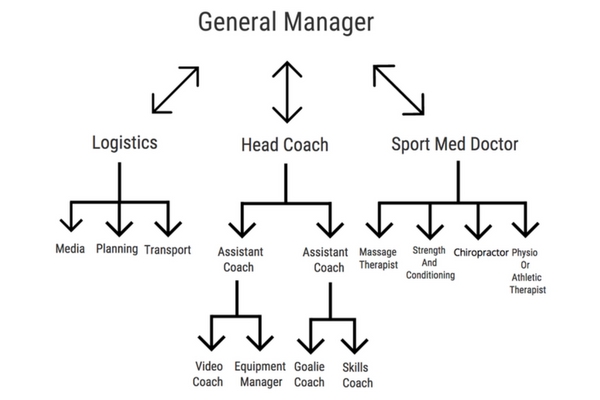
Below is how an organizational chart could look for a large team (obviously I picked hockey).

*This is just an example, not necessarily how any one team is set up.


Sport Massage Chain of Command


As you can see, the General Manager would ultimately be in charge with Logistics, Head Coach and Sport Med Doctor all reporting directly to him/her.

They would each then oversee their own group who would report to them.

In our case, the Sport Med Doctor would oversee the healthcare of the athletes with Massage, Strength, Chiro and AT all reporting directly to them, they would then convey the necessary information the the General Manager.

Remember, the above is just an example. It may be set up where the Massage Therapist reports to the Physio, who reports to the Doctor.

These lines of communication are essential in the function of any organization, since each person can only effectively manage five people (according to span of control).

Having things organized this way also gives the organization room to expand (or decrease) if necessary. For instance, the General Manager can add assistant GM’s as the organization expands giving them new branches of responsibilities and groups operating under them.

Understanding how you fit into these lines is essential, not only to your success, but to the teams success as well.

Know Your Role Jabroni!

Okay, so you’re not a jabroni, but it’s a good headline to get the point across.

If you’re selected to work in this kind of team environment, knowing your role is crucial.

The team probably even has a job description prepared for each person on the medical team, outlining each persons specific role. Not all the roles will be specifically medical.

Depending on your past relationship with a team or whether you’re brand new can define what your role will be, or how you can function within the role they define and the scope that is laid out for you.

Initially you may have a very minor role. The A.T, Physio or Sport Doctor may be the ones who do all of the assessment and refer athletes to you only when they deem necessary.

Don’t take this as a slight against you if this is how things start out!

The team may have things designed that way because of insurance concerns, or because of past experiences which are totally beyond your control. Don’t forget, there is a broad spectrum of massage therapy certifications out there in addition to the broad spectrum of experience these other healthcare professionals in working with Massage Therapists.

The job description given to you may have you assisting equipment managers, helping with video, filling water bottles, or just cleaning up the dressing room.

Again, it’s not a slight against you or the profession, it’s just a role the team needs filled, so they might get you to help out by filling that role.

Now, the rest is up to you.

Personalities play a massive role in team sports. When you’re starting out be happy to fill whatever role it is they have designated for you. Leave the ego at the door. As you start to work more regularly with the team, your role can expand, it’s all about building that relationship (where have I heard that before?). As the trust builds between you and the other healthcare professionals in the group, so will your role and what you can do. It’s all part of being a team, not all jobs on the team are going to revolve around you doing soft tissue work on athletes. Nor is all the work for the other healthcare professionals going to solely revolve around healthcare for the athletes, it’s about pulling together for the greater good of the team. Like it or not there is still a hierarchy, these other therapists have more education than we do and may assume that we report to them, even though the team chain of command doesn’t display that. Back to those personalities, while some people will bring their ego and put it on display, that usually gets weeded out. You may just have to change your approach in dealing with people for the greater good of the team. If someones ego is getting in the way, it may be something you have to work around temporarily, but trust me it will be temporary.