Posts

Maintaining Mobility During Isolation


Stress exacerbates pain.

This is a simple truth and isn’t exactly an epiphany to most healthcare practitioners. With the current pandemic crisis, this has become more relevant now more than ever. Everywhere we turn there is another announcement or pandemic response, a commentary on self-isolation or social distancing, and someone, somewhere, looking to sell us a magic cure. 

It’s an onslaught.

I’m an EDS patient, without regular mobility, resistance, and acceleration/deceleration training my pain has this nasty habit of becoming maddening. Over the years I have found that “movement snacks” can be an incredibly effective intervention. The following are general examples of novel movement; just about every movement demonstrated is scalable, and can be modified to suit your needs in terms of your own capacity.

*Please note, my form isn’t perfect, nor is it meant to be. I’m not trying to focus on a perfect repetition so much as a movement that feels good for me. 

Hip Girdle

I don’t think I need to state the prevalence of lower back and sacroiliac pain we see in our clinics day to day. Whether you’re working in a relaxing spa environment or with elite athletes in a competitive setting, lower back pain is practically ubiquitous. The effects of daily stress on low back pain are well documented, and regular movement is one of the best ways we can try to manage that. I’ve found hip girdle based exercises incredibly helpful for this.


The following link begins with some femoroacetabular movement and gradually grows from there to greater complexity and difficulty:


Shoulder Girdle

As an RMT I was taught that stretching the pectoral muscles is the panacea to shoulder and neck pain. Pec stretches do it all: Headaches? Pec stretches. Whiplash? Pec stretches. TMJD? Oh, you’d better believe that’s a pec stretch. 

And they can help, but really stretching is only a very small piece of the puzzle.

For my own rehab, overhead range of motion has always been much more helpful, as well as addressing ongoing issues with thoracic outlet syndrome and management of chronic dislocations. End range exploration and competence is key. 

The following link features scapulo-costal movement, glenohumeral movement, resistance, and coordination to tie it all together:


Spine and Trunk

Strengthen your core. 

What does that even mean? Strengthen it to do what? What structures are we targeting? What directions of movement? For what task?

Core strengthening is practically ubiquitous and all but meaningless, it’s also myopic.

I’ve found addressing trunk mobility to be a much more effective approach. There is the inclusion of strength of course, but more importantly more aware of safety and resiliency in movement.  

The following link opens with some basic control and builds up in terms of simple to complex ranges of motion, and mild to moderate resistance.


*DISCLAIMER*

These videos are intended as demonstrations of movement exploration only, not interventions for existing pathologies. If you’re uncertain about any movement, consult with a professional.


References:

Chadi C Abdallah, and Paul Geha “Chronic Pain and Chronic Stress: Two Sides of the Same Coin?”  https://www.ncbi.nlm.nih.gov/pmc/articles/PMC5546756/

Eric Bowman, “Low Back Pain: What Are We Doing Wrong and What Can We Do Better?”

https://ericbowman03.blogspot.com/2017/09/low-back-pain-what-are-we-doing-wrong.html?fbclid=IwAR0CNUTRUZ31BTGYx4GJ647d_O_erVIAUWfGnNOusNfBJ3dFk4BQp6xibpg

Bronwyn Thompson, PhD, “BACK TO BASICS ABOUT PSYCHOSOCIAL FACTORS IN PAIN”

https://healthskills.wordpress.com/2017/09/04/back-to-basics-about-psychosocial-factors-in-pain-i/?fbclid=IwAR2BWNo27PXXnTJKsGvZgSxzGyKcjhhuoGP2EO92PWVkDUwBEI6YoYEbDFU


Knee Tilt Mobilizations – Improve Knee Flexion Past 90

This is one of my favorite old school manual therapy techniques I learned while in Fellowship with the University of St. Augustine.

When my current techniques of tibial IR, lateral tibial glide, or other Functional Mobilizations I do in closed chain don’t work to improve knee flexion, I try this knee tilt.

It can be enhanced or made much more comfortable with an EDGE Mobility Band. Try this mobilization and let me know what your results are!

Are The Days Of Assessing Movement Over

In all honesty in its current format the answer here has to be an unreserved YES, we should STOP assessing movement.

This opinion is based on the two predominant concepts we appear to have currently when assessing movement.

Firstly the concept that a deviation from a movement or muscle firing ‘ideal’ is the cause of someone’s pain such as seen with the pathokinesiology model.

Secondly that we can also ‘screen’ movement to identify faulty movement that might lead to injury, this is FAR too big a subject to get into but it seems we weekly have new data suggesting screening does not fulfil the role it was designed for.

Both of these concepts have so far proved to be elusive in providing concrete evidence that they do exactly what they say they do.

A modern understanding of all the contributors to pain means the likelihood of pain being consistently caused by one single factor across ALL people is pretty absurd really.

IT’S VARIABLE

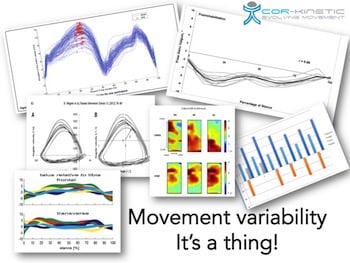
The more we study movement the more we find that it is in essence highly variable. This variability is not only between people but even the same person seems to move differently when they repeat a movement. It has been suggested, and with a fair amount of evidence, that healthy movement is variable and losing variability may be a problem within itself. It is important to realise this about movement because it allows us to appraise the idea of movement assessment more critically.

I have previously discussed this *Here* and *Here* along with the concept of corrective exercise.

Now this means that being able to identify a ‘faulty’ movement pattern will be highly likely if you are measuring it against a singular ‘ideal’ version. The problem is the singular ideal version does not really exist and also does not seem to be linked to very much, rendering the whole process a bit of a waste of time.Slide1

It makes little sense not to be variable:

  • Multiple options affords us redundancy
  • Ability to respond to varying stimulus
  • Spreading load over a joint in repetitive tasks
  • Avoiding fatigue through variable motor unit recruitment
  • Unavoidable at a biological level

We also may go further down the rabbit hole in that some now ASSUME that pain is simply the RESULT of a faulty movement pattern without any kind of critical analysis at all. Think how some people approach back pain, “Its your TvA not be firing” rather than lets find out if it is or not (obviously no clinical test tells us this, just an example).

MOVEMENT DOES NOT EQUAL FORCE

Now I am no biomechanist but we also must realise that just because a movement goes into a potentially ‘faulty’ position does not tell us the whole picture of how much damage that poses to a tissue. Sure it might increase the risk in some contexts but alone it does not give you the ACTUAL force applied and we would also need to know the acceleration as well. A fast movement within proposed ‘safe’ parameters that generates a large force (F=MA) could provide a much greater load to a tissue than one that was proposed as ‘faulty’ that moved much slower.

In fact under greater loads our movement seems to change, so assessing in a low load environment may not give you an indication of how movement is in another situation. This was an interesting piece from Frost et al *Here* showing exactly that!

Some seem to have developed the idea that if you get a movement right you can put it under ANY load. The way the body manages loads internally through the way it moves may be far LESS important the overall volume of load that the body may go through overall and this could be in volume, frequency or intensity.

A DIFFERENT PERSPECTIVE?

So can we STILL look at movement in practice?, I believe so. Everything has it uses and limitations and its working out WHEN thats the tough bit.

Pain DOES have an effect on the way we move, this is pretty well researched showing alterations in what happens with both kinematics AND kinetics at a joint, to adjacent joints and right up to avoiding movement completely for fear of pain. This is a great paper by Hodges & Smeets discussing this *HERE*

Like any other thing that we can measure, it may or may not be related to the problem and may or may not have to change to get a successful result.

Certainly it very difficult to suggest that the way someone moves is a cause of their problems. Do you know what it looked like before? Could it be the RESULT not the cause or pain? BUT is there also a possibility that a change in movement strategy COULD also have an effect on reoccurrence or another injury. We know that the best predictor of future injury is previous injury *Here* and this could be a factor. This has also been mooted with back pain *Here*.

It is a good place to use your reasoning skills. Is this the first time it has happened? Is it acute? Both of these simple questions might help to determine if it is currently an adaptive strategy (helpful) because of pain or is it a maladaptive behaviour (unhelpful) that maybe contributing to the maintenance or reoccurrence of a problem.

LOOK AT THE INDIVIDUAL

A potentially more individualised concept for how we view movement is that rather than a binary right and wrong view that we have currently, we could say your current strategy is unhelpful and swapping that for another might be more helpful, there are often a whole bunch of other ways that could be beneficial rather than the ‘right’ way.

This might only be for the short term, such as a symptom modification, or for the longer term if you believe a movement behaviour maybe coupled with a pain response.

Gait re-eduction for runners seems to follow this rationale, see whats going on, does that potentially relate to the issue and can we subtly alter it.

Now there maybe certain scenarios that do carry more risk such as loaded lumbar flexion or extreme knee valgus but they seem to be pretty load related. Unless someone is regularly under these loads perhaps it matters less. But ask yourself how many people in the gym have popped an ACL doing a single leg squat? Perhaps the caution can cause more problems than it solves here? Especially with the unhelpful beliefs people seem to be prone to forming.

SOME EXAMPLES OF UNHELPFUL


IT COULD BE THAT A MOVEMENT LOADS A SPECIFIC BODY PART THAT IS CURRENTLY SENSITIVE

Example

If some one has a very hip driven strategy whilst currently suffering from a proximal hamstring tendinopathy altering this could reduce further load/compression to the tendon to allow it to desensitise.

PRE MOVEMENT BEHAVIOURS

It could be that be that someone is bracing BEFORE they move and this is an unhelpful component. This maybe seen with lower back pain sufferers.

Example

Before bending over to do their shoelaces someone specifically braces and this has become coupled with the pain they are experiencing. Attempting to change this part of the motor strategy MAY affect the outcome.

IT COULD BE THEY ONLY HAVE ONE MOVEMENT STRATEGY

We see decreased variation linked with chronic pain at a number of areas of the body. This could cause repetitive loading or consistent patterns ASSOCIATED with pain.

Example

A specific task maybe is performed in a repetitive way. This might be the way someone lifts, reaches or even runs. A way to assess this could be to provide variable challenges and see how well someone can adapt.

What we do have to remember that this is all TRIAL & ERROR.

It may or MAY NOT have an effect and essentially this is everything we do. We should try to be informed by current best evidence but also  remember is just a probability generated in a controlled environment and may not directly translate to this person you are dealing with.

TAKE AWAYS

  • Specific movement ideals are pretty unsupported, especially linking them to pain
  • Movement screening is literally a can of worms
  • Movement is variable, EMBRACE it! This means it is tough to assume causative link with pain
  • Low load assessment tells little about high load behaviour
  • A movement does not simple equal the force applied to the tissue
  • Look at the individual
  • Be prepared that altering movement may have NO EFFECT or a very positive one

Functional Mobilization To Improve Squats


First things first, I used to give credit where credit was due. That was a key part of The Eclectic Approach and Modern Manual Therapy. However, I received cease and desists for using the terminology of Institutes I don’t teach for – it’s not like I’m not giving credit where I originally learned these concepts!

If you or your patient has pain with squatting, try these variations

  • Tibial IR and Femoral ER with closed chain flexion
  • Tibial ER and Femoral IR with closed chain extension (coming up from the squat)

The patient I am talking about in the example (but not the PT I’m demoing on) had a patellar dislocation a few months ago and has been afraid to have his knee go into extension in all closed chain activities. With this Functional Mobilization, I restored threat free knee extension and was able to overpressure it at end range. It was also easy enough for the patient to replicate hourly for his Recovery Plan (what I am now calling the HEP).

Learn How Education And Movement Can Help Frozen Shoulder

If I’ve heard it once, I’ve heard it 1000 times in my career (okay this is an exaggeration, it’s probably only a few dozen times), “I think my frozen shoulder is acting up!”

Meanwhile, the patient is moving their arm all over and wincing with a bit of pain.

The very name is enough to strike long term fear into a patient.

“Frozen Shoulder” it just sounds like something utterly debilitating, no wonder patients catastrophize over the diagnosis.

Part of the problem with this diagnosis is that all too often as soon as someone has an issue with their shoulder, it gets labeled, labeled with a damning diagnosis, and usually an improper one.

So, how do we convince someone their shoulder is probably okay and just needs to be de-sensitized, or actually realize frozen shoulder is the issue? Well, there are several ways, and while we can’t “diagnose” there are certainly some signs and symptoms we can look at which will help us recognize the difference and refer out when necessary.

Getting To Know Frozen Shoulder

Most of the time a detailed intake form, case history, and clinical examination should be enough to manage those who are coming in with shoulder pain, however, there are things we need to look for during this to determine the severity of a shoulder issue.

Frozen shoulder’s clinical name is “adhesive capsulitis” and is characterized by patients experiencing pain along with limited range of motion and disability of the glenohumeral joint which lasts anywhere from 1-24 months. There are two types of adhesive capsulitis:

  1. Idiopathic (primary): occurs spontaneously from a chronic inflammatory response (possibly an abnormal immune system response).
  2. Secondary adhesive capsulitis: happens after a shoulder injury or surgery and can be associated with conditions like diabetes, rotator cuff injury, cerebrovascular accident, or cardiovascular disease.

It seems those with diabetes (10-36% of diabetic patients) are quite prone to dealing with frozen shoulder as both types I and type II diabetics are susceptible and have worse outcomes compared to non-diabetics. They also experience more severe symptoms and are more resistant to treatment. Those who have had a stroke are also quite susceptible as it happens to 25% of stroke patients within 6 months, which is likely due to some muscle spasticity on the affected side. Some studies have also shown an association with Dupuytren’s disease, hypothyroidism, and Parkinson’s disease (however these last few are much rarer).

Mostly this affects people in their 50’s with the peak age being 56, but rarely happening to people under 40, and more commonly affects women than men (sorry ladies). However, some research suggests a high prevalence of shoulder issues among the elderly, who aren’t seeking medical attention for the issue.

One study tried to develop a new clinical sign to help diagnose a frozen shoulder with something called the “Coracoid Pain Test”. This is essentially putting digital pressure on the coracoid process, which creates more intense pain compared to the unaffected shoulder. In the study, 96.4% of patients with this condition complained of pain when the test was done, which they argue shows a high specificity rating, but I don’t know if this is widely accepted yet.

If we have a patient come in who is experiencing shoulder pain, trying to get a differential diagnosis is important (even though we can’t diagnose), but if we look at the above instances, these are all things which could be on our intake form that could help us narrow down and understand that maybe our patient is dealing with frozen shoulder as opposed to just some simple shoulder pain. One other thing that stands out as being consistent with a frozen shoulder is the complete loss of external rotation.

Once we understand this, it is also important to understand the “phases” this condition goes through.

There are 3 phases with varying degrees of length:

  1. The painful phase:
    • Pain with AROM & PROM.
    • Reduced flexion, abduction, and rotation.
    • Pain worse at night.
    • Duration lasting 10-36 weeks.
  2. Adhesive “frozen” phase:
    • Pain starts to subside (still bad at full range) but still stiff.
    • Almost no external rotation.
    • Rigid “end feel”.
    • Duration 9-15 months.
  3. Resolution “thawing” phase:
    • Spontaneous improvement in ROM.
    • Minimal pain.
    • Happens during 15-24 months since issues started.

While it is quite common for the symptoms to resolve themselves, it does take a considerable amount of time for that to happen and of course, this depends on whether things like diabetes are influencing the healing process. There are studies showing that 39% of people had a full recovery, the remaining 61% had some issues with pain and or range of motion.

However, there are things we can do to help move this along and education with movement looks like the primary treatment.

Of course, the treatment we are giving must be tailored not only to the patient but also the phase of the condition.

During the painful phase, the main thing we are looking for is pain relief and movement within pain-free tolerances and using graded exposure to get to the edges of painful movement. We did an article a couple of weeks ago where you can see how to do this by clicking HERE. While much of the literature points to the use of NSAIDs, there isn’t a lot to confirm its effectiveness for frozen shoulder.

One study on Idiopathic Adhesive Capsulitis showed good success with an exercise program that involved a four-direction shoulder stretching program that included passive forward flexion, passive external rotation, passive horizontal adduction, and passive internal rotation. With this program they had 64% of patients report a satisfactory outcome, 7% not satisfied, and 5% who went for surgery.

Treatments during the adhesive phase should be more aggressive toward longer stretches and a low load to push toward an increase in range of motion.

When these exercise interventions don’t work, the patient is often referred for surgery or for manipulation under anesthesia and have relatively good outcomes. There is also well-documented use of injected steroids, which when combined with manual therapy have some good outcomes as well. Although, in reading over Paul Ingraham’s post on frozen shoulder, there is also a risk of causing shoulder issues with various types of injections, so this should be considered as well.

Much of this is going to be left up to your clinical decision making, but having a good understanding of the timelines and what is happening, along with feedback from your patient should give you a good idea of how to manage this, should someone come in for treatment.

Educating

As mentioned in this post, education is a major part of helping someone with this condition. 

Unfortunately, this probably isn’t done as much as it should be. While most patients are probably looking for a “quick fix”, the reality is, this is just going to take some time and effort on their part and yours. 

There is a normal course the condition takes and at the 12-24 month period it falls into a resolution phase and there is a greater improvement in range of motion. While any patient would look for complete resolution one study showed at the 5-10 year follow up of 41 patients: 

  • 39% had full recovery.
  • 54% had some limitation without functional disability.
  • 7% had functional limitations. 

And still another study showed 50% of their patients had some degree of pain and stiffness seven years after the condition started. 

However, the above studies did show that the longer the person was in the stiffness stage, the longer the recovery stage, there was a direct correlation. So, perhaps proper education and movement in the painful phase could, in turn, shorten the stiffness and recovery stage?

Interestingly one of the previously mentioned studies showed that prior “physical therapy treatment and a workman’s compensation claim or pending litigation were the only variables that were associated with the eventual need for manipulation or capsular release”.

This is a fact I find really interesting. While some argue that the biopsychosocial approach to pain isn’t in our scope, how can we look at that study and say these other factors are not a contributing factor to a persons pain and disability? In my old job I was told by a compensation representative that their studies had shown if someone was off work for 18 months on an injury claim, chances are they were never going back to that job. And here we have studies showing us that a compensation claim is one of the contributing factors to needing more aggressive treatment for this condition. While we cannot counsel a patient on this, it is something we should be cognizant of when treating them (if a compensation claim is part of their issue).

While we would never want to tell a patient there is only a 50% chance that after seven years they would be pain-free, we do want to try to educate, encourage, and build resilience with them through each phase of this condition, giving them hope for the most positive outcome possible. Reassuring them that there is a bit of a longer recovery process compared to other shoulder issues, but that full recovery is possible will probably bring a better chance of shortening the stiffness, and recovery stages.
4 Instant Ways To Help Increase Shoulder Movement

It’s the most mobile, yes least stable joint in the body.

This makes for a joint that can sometimes be a bit confusing to treat, especially with the various diagnosis names and syndromes that are thrown around.

With names like frozen shoulder, rotator cuff tears, impingement syndrome, and various other scary-sounding titles, we quite often just need to help get the shoulder moving again.

Here are four of my favourite graded exposure/altered movements I use to help patients get their shoulder moving again.

This first one is a great way to help when a patient is having difficulty with shoulder flexion.

This one is a great way to help with shoulder extension.

Here’s one to use on your table to assist with abduction.

And finally, if you have a broomstick, a piece of dowel, or something similar in your clinic, here’s another way to help with shoulder abduction.

Takeaways

  • The biggest thing we want to do is instill confidence in our patients by showing how these movements are safe. 
  • Showing patients that a little discomfort is okay, and it’s not the same as pain.
  • Make the movements meaningful to patients so they will do them at home.
  • Do the movements before and after your treatment demonstrating to the patient how much improvement THEY have made.
  • Make it fun.