fbpx

A Summit On Massage Therapy


When I got the invitation I didn’t know what to expect.

I was even more surprised that I was the only one in the clinic who got one.

When I phoned the association to find out what it was about, I was told:

“We are hosting a summit where there will be a roundtable discussion on what needs to change and what can be done to improve the profession. There will be several other RMT’s and members of the public participating.”

Okay, I’m in.

I walked into the room on Saturday morning and started to see faces I had only ever met online.

More and more people started to look familiar.

I’ll admit, I was a little star struck.

There were between 40-50 people in the room. We were told that the invite was because those in attendance were considered to be thought leaders in the province.

There were no ego’s in the room and everyone was there for one purpose.

Improving the profession.

Massage Therapy In Patient Centered Care

The BC Ministry of Health is setting new priorities for our health system by setting eight new priorities.

While I understand that if you don’t live in British Columbia, it doesn’t really matter to you there are still take-aways from this that can apply to the profession everywhere.

  1. Provide patient-centered care.
  2. Implement targeted and effective primary prevention and health promotion through a co-ordinated delivery system.
  3. Implement a provincial system of primary and community care built around inter-professional teams and functions.
  4. Strengthen the interface between primary and specialist care and treatment.
  5. Provide timely access to quality diagnostics.
  6. Drive evidence-informed access to clinically effective and cost-effective pharmaceuticals.
  7. Examine the role and functioning of the acute care system, focused on driving inter-professional teams and functions with better linkages to community health care.
  8. Increase access to an appropriate continuum of residential care services.

I don’t think anyone can argue, these are great priorities (especially the portions that are in bold) and we as Massage Therapists should be involved.

However the sad truth is that we are not.

When we looked at the BC labour market for therapists and talked about the Provincial Priority Health Professions, this is what the list looks like:

  • Audiologist
  • Medical Laboratory Technologist
  • Medical Radiation Technologist
  • Occupational Therapist
  • Physical Therapist
  • Physician-General/Specialist
  • Registered Nurse
  • Registered Nurse-Specialty
  • Speech Language Pathologist
  • Ultrasonographer

We didn’t even make the list as a Priority Health Profession.

When you look at the National Occupation Classification we are under “Major Group 32 Technical occupations in health” and within that grouping are classified as “323 Other technical occupations in health care.” Within that group we are listed along with Opticians, Practitioners of natural healing, Licensed practical nurses, Paramedical occupations and Other technical occupations in therapy and assessment.

Under Major Group 31 Professional occupations in health (except nursing) is the realm and classification given to Occupational Therapists, Physiotherapists, Chiropractors and are called “Therapy and assessment professionals”

RMT’s and Physiotherapists in the BC labour market both are in demand, but RMT’s are listed as having “Some Post Secondary” education and  Physiotherapists are listed as having a “Masters Degree”.

The group we are in has significantly less education than we do and with some of those occupations the schooling can be done online. Really!?

In order for us to be recognized as a priority health profession some things need to change.

We need to establish our legitimacy as a profession.

Level of education has been an issue since I became a Massage Therapist and I’m sure it started long before. If we want to be recognized and given increased legitimacy we need to start looking at improvements to our education.

One of the big issues is price of education. For a Physiotherapist or an Occupational Therapist the average tuition is only $13,000 but we know to become a RMT it’s around $30,000.

All because their programs are offered through public universities instead of private schools.

There is a significant decrease in the amount of physical therapists and occupational therapists in the province that are able to fill necessary jobs within the public sector. Most are working in private practice, which creates a substantial need in the public sector working within the health authority.

So where can we start to help fill that gap and be involved?

First off the government needs to fully understand what we do. They are projecting our annual salaries to be in the range of $11,000 – $33,000 a year.

With their stats of 3,200 RMT’s where only 26% are working full time (a total of 832 full time RMT’s in the province?) I think we’d all venture to say those stats aren’t accurate.

Here are the stats from RMTBC on a survey that was done regarding income 

It’s time to start lobbying government to educate them on what an RMT does. Show them what our current education consists of and also how effective Massage can be for the patients in hospitals or extended care facilities.

The encouraging side is there are some places where Massage Therapy is being offered in the public sector.

We heard from Liza Dion.

She is a Massage Therapist at the Mayo Clinic. She told us about how surgeons wanted Massage Therapy performed for their cardiac surgery patients. They ran randomized control studies and proved Massage Therapy was effective in helping these patients.

They now have regular Massage Therapy happening in the hospital and is a primary part of the care given. However it’s not just in cardiac patients, they have also done studies with Colorectal surgery, Thoracic surgery, Breast surgery and Cardiology patients. It has even gotten to the point that they have a hospital based Massage Therapy course that is offered twice a year for Massage Therapists to come in and learn how to offer care in the hospital.

Liza also mentioned that she regularly has to educate new nurses and other practitioners in the hospital about what Massage Therapy does.

What if these other practitioners already knew what we did because we all went to university together? At least started out in the same programs and then decided which avenue we were going to pursue.

If we want to join these other therapies in the public sector work, we should also join them in the public sector schools.

https://flic.kr/p/qL2wPW

Photo by: NEC

Massage Therapy Education, Professionalism, Practice Support and Resources

As part of the summit we were divided into groups to discuss these topics.

I was fortunate to be part of the Education group.

As expected, there was a lot of discussion and passion on the topic.

Everyone there believed more education was crucial to our advancement as a profession. The common belief (as discussed earlier) was that a bachelor’s or master’s degree in massage was the direction we should start looking at.

I’m sure there are just as many people against the idea as there are people for it, but think about what this could do for us.

We have never been able to say that we specialize in something. I’m sure there are a number of therapists out there that focus their practice into something specific or some particular modality. Having more education is one way to lift this type of boundary on the profession. As we start to set up Professional Practice Groups here in the province, why shouldn’t we be able to say that we specialize in something or some area of interest?

Expanded scope of practice. I get frustrated that we are not allowed to use modalities like IMS, Shock Wave, Ultrasound or any other electrical stimulation. I know that in other provinces Massage Therapists are fully licensed and allowed to use these types of modalities. I think it’s time to make these options standard practice in regulated provinces.

Part of the problem with this goes back to lobbying government and making them aware that this should be within our scope (even though I think it already should be). Having a bachelor program in place, would help take away any doubt on their part.

As someone who loves working in sport, I believe there are many things we could do with our curriculum that would support students who have this interest. I spent last year working with some Athletic Therapy students and there are things we could learn from their program.

Those students come out of school with a few different certifications. Since it is a bachelor degree program, they come out with a list of exercise certifications on top of the AT certification. Right now we could start incorporating a CPT (Certified Personal Trainer) certification into the program. It would give students a much better grasp of exercise prescription for their patients and also give them an extra avenue of making money once done school.

For those that are interested they could have a combination Personal Training and Massage Therapy practice. It would also give those students interested in working with athletes or sports teams a better chance of getting involved.

There were so many other topics that were brought up in that discussion, but I’m writing this from memory so I can’t remember it all.

However when each group came back and talked again, every group mentioned that education had come up as a priority.

The Future Of Massage Therapy In Mainstream Healthcare

Dr. Gurdeep Parhar presented to us a new idea on how we could identify what we want from our profession and how we fit into the healthcare system.
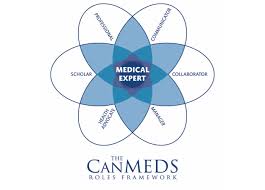
canmeds 1

He talked about the CanMeds framework that physicians had put into practice to see what is expected of a medical expert. This framework has been adopted around the world, where students and medical professionals are graded on the six branches of the model. But the same model has been adopted in Physiotherapy and Occupational Therapy groups as well.

The public expects a doctor to be a medical professional (obviously) but the above six qualities are expected as well.

Communicators. We are judged by other professions and the public on how we communicate. This includes writing reports in response to doctors and other practitioners that we refer to and from. Dr. Parhar also sat in with the professionalism group and spoke with them on how important it was to implement report or communication writing back to doctors.

It is an area that we are not very good at. During discussions later in the day, the feeling was that most thought a report to a doctor had to be complicated and frequent. Dr. Parhar spoke about how much he as a physician appreciates getting communication from RMT’s, but it just needs to be a report at the beginning of treatment and one at the end. Just a report that informs the doctor in areas of treatment and how treatment progressed, so they know what has been done with the patient.

That’s it.

Collaborators. This works with our communication. How are we interacting with the rest of the healthcare team? We can’t work in isolation, we should be communicating with our patients other practitioners and contributing to their healthcare plan.

Manager. Why can’t we be a case manager on behalf of a patient? We can see a recently injured patient 2-3 times a week for an hour at a time. A doctor will see this person once every 4-6 weeks for maybe half an hour. So why aren’t we a piece of this puzzle, or even the primary case managers?

Health Advocate. Access to care is so crucial, especially in a “patient centred” model of care. There is still a difficulty for doctor’s to explain to their patients why Registered Massage Therapy isn’t approved by their insurance company when it is needed. We need to help advocate for the patients because society trusts us as professionals based on our guidelines and standards of care.

Scholar. This is a difficult area for us. There was plenty of discussion throughout the day on research (in fact a guest speaker Dr. Martha Brown-Menard LMT, spoke to us specifically on research) and how important it is. The problem is that research is done at universities and big companies don’t necessarily want to fund research for massage.

As much as we are pushing for evidence based practice, qualitative studies are just as important. But we need to start doing the research if we want to advocate for more resources to back up our profession.

Professionalism. Is Massage Therapy going to continue to have an artistic side to it, or do we start to present ourselves in a more professional manner? Should there be a standardization so that when someone comes in for treatment a person feels like they are dealing with clinicians?

I’m as guilty of this as anyone, I like just going to work in what I’m comfortable in (which is usually cargo shorts and a t-shirt), but would I be more presentable or respected if I made sure to wear a golf shirt instead? While I don’t think this is something that will ever be mandated, it may just be some food for thought when it comes to your own practice.

Listening to all of those points coming from a doctor was more than rewarding. Knowing there are doctors out there that are also advocates for Massage Therapy says that we are at least on the right track.

When I started this blog, the whole intent was to have other therapists collaborate information on how to improve the profession and share knowledge. I was excited when each one of the coaches agreed to be part of it because they were willing to share.

Sitting in a room of other RMT’s that are passionate about their profession and improving it was impressive. It also showed that we have a ways to go in order for our profession to gain more respect. While it is leaps and bounds ahead of where it was 10, 15 or 20 years ago, we can never stop improving. As the CanMeds model increases throughout the world, Massage Therapists need to continue working on being Professionals, Communicators, Collaborators, Scholars, Managers and Health Advocates. As mainstream healthcare continues to develop we need to make Massage Therapy prominent in patient centred care.

No one is going to this for us, it is only through our efforts that we can prove to government and other practitioners that we belong in the public sector and mainstream healthcare. I realize as I write this post that it seems pretty heavy on the education side of things. There was so much more that came out of the discussions that day, it’s just hard to put it all down in one place. If nothing else, I think the discussion was a step in the right direction.

We were asked to bring the excitement that we were all feeling that day back to our colleagues and share in order to keep the momentum going. I hope I have at least managed to do that, although I know it’s just the beginning.


Removing Pec Minor Discomfort From Massage Treatments


He winced when I first started trying to dig in to the area.

Palpating along the ribs, I found it.

Getting him to activate the muscle I felt it pop up under my fingers.

Okay, this is going to be a bit uncomfortable.

Treating Pec Minor is always a bit of a daunting task, especially when the patient is hesitant to have it done.

And with good reason, its usually pretty uncomfortable and can be painful.

However, as a therapist that preaches modern manual therapy, there is a less painful way.

Pain Free Massage Therapy Techniques

Yes… absolutely like most manual therapists, I have caused a fair share of pain and discomfort at my hands in the name of tissue deformation.

I have not believed in that for about 3 years now.

Here is my updated Pec Minor Release.

Patient: Supine

Massage Therapist: standing on the involved shoulder side

Test-retest: posteriorly tip the scapula to assess for loss of shoulder internal rotation, make sure you push the scapula into a set position as the involved side is often anteriorly tipped.

Technique:

  • lightly place your fist or a ball into the pec major under the coracoid
    • no you don’t need to go underneath it or anything ridiculously painful
  • have the patient move actively into elevation until extra tension or discomfort is felt, then have them resist into elevation to activate the scapular stabilizers
  • this will reciprocally inhibit the pec minor and they (or you) should be able to elevate the shoulder into the next barrier
  • continue until the shoulder is at full elevation if possible
  • re-test shoulder internal rotation, if they are a rapid responder, this should change after 4-5 reps

If done correctly, this should not hurt at all, unlike most other passive or movement based “releases”

Give the repeated shoulder extension reset for home care exercises

With modern manual therapy, we don’t need to cause pain and discomfort to get positive results. Make sure when you’re treating pec minor that you test and retest before and after the treatment to see the difference you have made in the patients internal rotation, not just for yourself but also to prove to them the difference the treatment has made. After 4-5 reps in the treatment you should be able to tell the difference you’ve made, the difference is that you’ll do it pain free.

How Massage Therapists Can Recognize And Deal With A Heart Attack

“I have had a few times in practice where I’ve caught a myocardial infarction and called 911, if this has yet to happen to you, be forewarned, it will” – Robert Libbey RMT


I’ll never forget that day walking into the hospital.

He didn’t look like himself and wasn’t acting like himself.

He was too young for this to happen and I was too young to really understand it.

Years later he told me the story about, feeling chest pain at home and thought there was something wrong so he jumped in the car and headed to the hospital.

Halfway there he lost the use of his arms and had to steer with his knees.

My dad was in his thirties and had a heart attack. I use this story whenever I teach a First Aid course. You wouldn’t think an otherwise healthy guy in his 30’s would suffer a heart attack, let alone one with two young boys and a wife at home.

Thankfully he survived but had an issue with his heart a couple years later.

We had to change the way we did things, the way we ate and the way we lived.

He wasn’t sure how to recognize what was happening that day or even acknowledge that it was a heart attack.

How about you?

Could you recognize it if this happened in your clinic, or to one of your family members?

Differentiating Chest Pain In Your Massage Therapy Clinic

I’ve said it before and will continue to harp on it.

As healthcare professionals this is something we really need to be able to pick up on, which isn’t always easy to do.

If someone is having a heart attack, they really don’t want to admit it. Their mortality is staring them in the face at this point and realizing that something major is going on isn’t an easy thing to face, in fact most people will completely deny the possibility they are having a heart attack.

That day my dad didn’t want to admit things might be worse.

It would have been fatal if things has progressed anymore on the drive to the hospital. Thankfully he didn’t drive off the road when he lost the use of his arms.

We need to realize the differences in pain to understand whether someone is having a heart attack, indigestion or if something muscular is going on.

If you are going through your typical assessment before a treatment and your patient is having brief chest pain as a result of bending or breathing deep, it’s probably not a heart attack.

Some even feel that it is, or starts as indigestion. However, if it is a heart attack it will continually get stronger over time.

If someone is having a heart attack I have heard it described as “an elephant sitting on my chest”.

While writing this post, I called my dad to ask what the pain was like. He said:

“It felt like someone drove a sword through my chest, pain down both arms and through to the back, it was ten times worse than having any kind of indigestion”

The pain can range from mild to a description of squeezing, or tightness and constricting to a crushing feeling in the chest.

If one of your patients is having chest pain and it lasts longer than ten minutes, it’s time to get them some help.

Signs And Symptoms For Massage Therapists To Recognize

These are going to be a bit different between women and men.

As my dad mentioned he had pain going down both arms. Generally, it will be in the left arm as well as going up the neck and into the jaw. These signs are pretty much the norm when it comes to men.

With women, they quite often get low back pain. Women can also exhibit some soft signs, which are a little harder to pick up on, but just as important to understand and read because it sometimes goes unrecognized.

Some of these can be stomach pain, flu symptoms and some chest pain that changes with the level of activity. These symptoms are also common in those with diabetes and the older population.

There are a few other signs that usually don’t get talked about much (at least in basic First Aid courses).

Here are a few of the other things that you may see:

While you won’t see this every time, they are all signs that can help you make a decision as to what is happening with someone or how severe their condition is.

https://flic.kr/p/5ZsuFK

Photo by: Alessandro Bonvini

What Massage Therapists Can Do To Help

The first thing we need to do as Robert mentioned is call 911.

Stay calm!

When you call 9-1-1 the dispatcher needs some information from you and the calmer you stay, the better!

They need your address and this is the most critical piece of information because if they can’t get that from you, they can’t get help to you.

They will also ask for your return phone number. They need this to be able to call you back and get more information or to help the crews on their way locate you. It is also so that if you need help they can coach you through what you’re doing.

They will also try to get as much information about the patient as they can. Age, sex, physical condition, level of discomfort, pain and surroundings are all critical information for the arriving crew to have before they get there, so they know what they are getting into.

After that call is made, getting the patient into a position that provides them with the most comfort is the best thing we can do for them. Usually, this is going to be in a seated position leaning forward, but just go with whatever position they say is most comfortable.

Now I know most clinics aren’t going to have this on hand, but getting them some aspirin is going to help things out. And it has to be Aspirin, not Tylenol or Ibuprofen…Aspirin.

It works as a blood thinner so it can help relieve tension on the heart as well as help diminish clots. 

All too often this goes unrecognized or people don’t want to admit it, so they don’t ask for any help. Unfortunately, this could be fatal as it leads to cardiac arrest and the need for CPR.

The more you can do to recognize and be aware of what’s going on with your patients, the more you’ll be able to help and prevent things from getting to that point. Being able to recognize and differentiate the pain a person is experiencing is key to understanding what’s going on with them. Also knowing that the signs and symptoms can be different between men and women can go a long way to recognizing that there is an emergency happening. And remember, this is the only time it’s okay to ask about erectile dysfunction drugs!

“Heart disease is no laughing matter. After my father suffered a massive heart attack, I realized just how serious heart disease can be” – Cheryl Hines

How Massage Therapists Can Treat The Thorax Part 2

In our last post Robert discussed how the assessment and treatment of the thorax was far from acceptable.

He went on to outline the importance of gaining informed consent from patients will help them feel more comfortable with treating this sensitive area. The more you can tune in to the area and ask for information with your palpation, the better we can develop the treatment.

Here is the follow up with Robert’s instructions on how to assess and treat the thorax:


In the previous post I had hoped to serve you by discussing my general thoughts and perspective on the Anterior Thorax. This section will be a discussion on some basic assessment techniques and perspectives I regularly utilize for the anterior thorax.

When looking at treatment for the anterior thorax, the manual therapist must have a good knowledge of the anatomy of the exterior and interior thoracic cage. One book I recommend is “The Thorax” by Jean-Pierre Barral. It is a great resource and I refer to it on a regular basis.

From Amazon:

“Barrral begins by describing the thorax as an area of conflict and contrast: it must protect the organs thoraxenclosed within, yet must also allow exchanges with the neck and abdomen. Problems with either of its dual roles of protection and exchange lie at the root of most thoracic disorders. Detailed descriptions and illustrations are provided of tests for dysfunction and treatment of the nonaxial joints, fasciae and viscera of this important area of the body.
Among the special topics contained in this volume are global and local listening of the thorax; utilization of the completed Adson-Wright test; cervical attachments of the pleura; intrasternal tests and treatment; utilization of various access points to the phrenic nerve; and stretching along the orientation of the coronary arteries.”

I couldn’t agree more with this description.

Complaints Massage Therapists Will Hear

There are a number of patient complaints that we see every day; shortness of breath, tight exterior chest and or back, sharp specific and or shooting pain, deep pain, referred pain/tension, the inability to breathe deeply etc… There are also complaints from condition such as asthma, post surgical trauma, post unforeseen trauma such as MVA, strains, sprains, fractures, contusions etc…

As with all patients complaining of dysfunction in the thorax, a detailed thorough history must be done to rule out conditions that are outside our scope of practice and may require immediate emergent care.

I have had a few times in my practice where I’ve caught a Myocardial Infarction and called 911. If this has yet to happen to you, be forewarned, it will. Most of the time though, the complaints are well within our scope.

A future article will deal with information gathering during history taking.

Massage Therapists And Orthopaedic Tests

So, the question is how do we assess and come to a treatment plan for a patient in discomfort? There are a number of assessment tests that are available to utilize. There in lies the problem. There is much research that shows that these tests are unreliable due to user perception, testers reliability and testers education on the application of the tests.

Therapists perform the same tests on the same patients and come to completely different conclusions. This happens more often that we would all like to believe.

So do we throw out all the tests, books written on the tests and our education?

Well… not yet!

My suggestion is to have a few books written on orthopaedic testing in your library. Refer to each of them on a regular basis and compare/contrast the application of the tests.

Once you have become familiar with them, choose 3/body part that you feel you are capable of performing. These should be committed to memory and should be practiced on a regular basis. Make these part of your regular routine diagnostic assessment portion of your treatments.

Your goal is to become very skilled in the investigative art of attempting to understand what possibly is causing your patients complaint.

In my office I created orthopaedic assessment paper that had a list of my commonly used tests and expected positive and negative outcomes for each region of the body. I did this to make it easier to remember the tests and before long, this list was imprinted in my mind through my eyes.

Remember that we don’t just perform tests willy nilly. There has to be an underlying reason.

The patient must have some complaint that leads you to testing. Pain, tension, loss of AROM/PROM, headache, referred pain/tension and so on must be investigated. Initially attempting to investigate the complaint with orthopaedic testing is the logical starting point.

One main problem I find is that there are too few orthopaedic tests for the thoracic cage.

There are Specific AROM tests for vertebralcostal joints, Sternochondral joints, and you can usually feel for a decreased intercostals space and there are tests for extremity’s with neurological/vascular complaints, loss of AROM etc… but what about torsional strain feelings behind the sternum?

What of pain over the heart where the heart has been ruled out?

What of pain within the chest sometimes described as being in between?

What of respiratory challenges?

Sure there are medical tests that can confirm what the patient is complaining of, but why?

In cases such as these and many more, you must rely on your sensing/palpatory abilities and patient observational skills to make the determination of what a possible cause may be.

How Massage Therapists Can Acquire Information

In my previous post “The Thorax Part 1”, I very briefly suggested that you commit yourself to not palpate, but to “sense” for information your patients body is attempting to relay to you. I find these listening skills come into place more and more with concerns of the thorax.

Develop your “allknowingseeingthinkingfeeling” hands.

I utilize a combination of palpatory and sensing techniques together. Try the following:

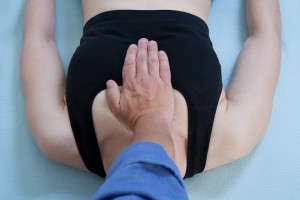
Standing above your supine patient at their head, placing your full palm onto their sternum. Slowly and firmly load down into the table and inferiorly through the sternum.

sternum-1-300x200What to you feel? Does the tissues take you straight, or is there something that takes you into either a rotational or diagonal direction or a combination of both? Come back out and this time perform the same action with less force of compression. Do this over and over until you get to the point where you can feel the direction of ease of the tissue using the minimalist amount of compression …ounces. You are now on your way to sensing! This is a great technique for any body part.
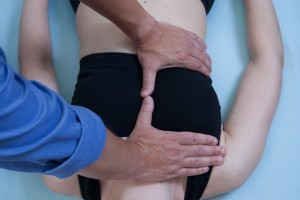
“Co-operate with the tissues, you’ll get more with less!”

Now move to one side of the table. Working cross body, place both of your hands onto the chest wall, one sternum-2-300x200placed on the upper ribs 1-4, and one place on the lower ribs 6-10. If you patient is female, the breast tissue will be in between your hands, but our focus is still the thoracic tissues. Perform this exercise once again. Does the tissue take one hand in a different direction than the other? Does the whole cage move easily down into the table or is there some kind of diagonal/rotational torque. Do the upper tissues move differently than the lower tissues?
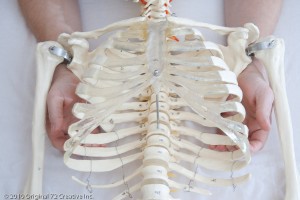
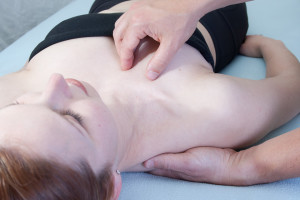
Information acquired can change with small movements of the head, neck & arms.

Don’t be afraid to move your patient or have them move. Load into the sternum once again with either of the techniques described above and have the patient rotate their head one direction then the other. Look for subtle changes not only in what you can sense, but also in feedback from the patient.

What are you feeling; Skin, Superficial fascia, muscle, deep fascia, bone, ligament, joint capsule, endothoracic fascia, parietal/visceral pleura, lung, mediastinum, neurovasculature, pericardium, oesophagus, trachea, vertebral rotations, fluid dynamics, tissues of the same side or opposite side?

I find it’s always a good idea to have a Netter Anatomy around when trying to be specific as to what tissues are speaking to me.

Don’t forget to monitor to your patients heart rate and thoracic respiration. These are great systems that let you know when you are close to the source of a patient’s complaint(s).

“The quieter the mind, the stiller the hands, the less movement we make, the more we are able to perceive involuntary movement.”

– James Jealous, DO

Look for health!

Where is the health, where is the restriction?

We all seem to be very focused on finding the restrictions, tension, pain, but how often do you look for the health in the tissue?

How often do you look for what is working pain free?

Look for the health in every patient at some point. It’s quite refreshing to watch the physiology work as a well sounding orchestra! Music not only to your hands, but to your physiology also. Time seems to stop in this place… enjoy it.

Always make sure give extra attention to a patients complaints when it comes to the thorax. Get that detailed history from them so you can rule out anything that may be out of your scope of practice and may require emergency care. In addition, make sure you are comfortable with orthopaedic tests while also relying on your palpation and observation skills. Continue to look for health in your patients and see how you can help them to start working pain free. As always, I hope that I have been able to serve you in some way with this information, be it a completely new perspective into your patients, be it some new thoughts about how to approach a treatment or provide you with a review and acknowledgement that what you are doing, as far as I’m concerned, is having an amazingly positive impact in improving the quality of life for your patients.


How Massage Therapists Can Treat The Thorax Part 1


In this Part 1 section for the Thorax, I hope to serve you by discussing my general thoughts and perspective on the Anterior Thorax. Part 2 will be a discussion on the assessment and treatment of the anterior thorax.

Please remember that ALL structures in our bodies are connected, from the largest organ to the smallest arteriol.Ribs-2-10-general-300x200

Everything is dependent on each other. When a part is removed or becomes dysfunctional, the rest of the system is affected in some form or fashion.

Fascia, skin, vasculature, nerves, lymphatics, interstitial fluid…they all span the complete existence of who we are and we are never apart from them. Even though I have divided these discussions into sections, we, as a whole, are not.

Currently, I feel that the assessment and treatment of the anterior thorax is an area of education and instruction that is far from acceptable. I feel the same for the abdomen & pelvis. I estimate that the majority of manual therapist spend the majority of their careers touching the dorsal thorax and rarely the ventral side. If you are a therapist that treats the anterior thorax on a regular basis, then I commend you.

We are all greatly affected by negative events that occur in our lives. My perspective is that when these negative events occur, our physiology attempts to revert to the foetal position. You can see the postural changes that occur in someone when they are being verbally abused/bullied at work, school, home etc…

Stress accomplishes this perfectly. In today’s society, there is such a prevalence of Essential Hypertension, the anterior thorax is an area that is sorely in need of treatment.

Knowing the detailed anatomy of the thorax is necessary. Your education for this area will consist of study of the vital organs, vasculature, osseoss articulations, fascia, musculature etc… and their interactions with each other. This study takes time, focus, patients and a continued interest.

Gil Hedley’s Dissection DVD series is an AMAZING volume to learn from. I watch them on a regular basis and always see something I missed from the previous time.

The payoffs for focus in the area are the compliments that you will receive from your patients for helping to improve their quality of life, helping them to move from dysfunction to function.

Massage Therapists, Gain Informed Consent

Typically, in my practice, techniques in this area are “clothes on” techniques. I treat through the clothing, educating my patient along the way, describing what I’ve found & what may potentially be contributing to their complaints. Patients must be informed so as to make an informed choice about receiving treatment.

I am always clear and precise.    1st-rib

An informed patient who recognizes that you have an interest in improving their quality of life and who feels that you have the confidence to treat effectively in this area, will give you permission to work here.

Please do not fear the potential of touching anatomy (breasts) that shouldn’t be touched. The breast tissue is quite extensive in some women and in order to gain access to the structures we intend on making changes to, some breast tissue will be touched.

With clear intent, knowledge, and confidence in your skills, an informed patient will feel comfortable and confident having you treat in this area.

If you have any doubts or fears for this work, then practice on a family member, wife, girlfriend, someone whom you can make mistakes with, who will provide you the necessary feedback needed.

I always practiced on my female colleagues any time I am learning a new technique that is performed in a sensitive area. Their feedback is invaluable and has allowed me to help my patients. I am truly grateful!

“The quieter the mind, the stiller the hands, the less movement we make, the more we are able to perceive involuntary movement.”
– James Jealous, DO

Why Massage Therapists Shouldn’t Just Palpate, Also Sense

In the beginning, you must be calm and slow your thoughts in order to develop a “perceptual touch.”

This is an alert observational awareness for the functions, dysfunctions and actions that are occurring within the physiology. The thorax is a busy place and you honestly need to “watch the world go by” for a few minutes to have a sense of what’s going on.

This is the beginning of developing “Listening Skills.” Develop your “allknowingseeingthinkingfeeling” hands.

Once, you’ve have an outsiders look in, then you must start to ask questions with your inner voice and your hands. I know it sounds completely unscientific, and it is, but we are not completely made of substances that can always be explained by science. If you do not believe me than I challenge you to join a dissection class and dissect a thought or a memory.

Back to asking questions; the little voice in side your head will answer back through your patients tissues into your hands. This is your patient subconscious. Biodynamic Craniosacral/Osteopaths have an amazing ability to tune into this “conversation.” Listening in this way will change your skill set.

Ask for information with your hands. What pulls you in is what’s needing help, what pushes you away, does so for a number of reasons. It doesn’t require treatment, or something else is in need of treatment first.

Everyone is different with different injuries, conditions and the sequence of what gets treated in what order is different. This sequence not only changes from patient to patient, but from each treatment with the same patient.

The more you can “tune in” to what the specific sequence is for a patient, the faster you can determine a course of treatment, or make decisions as to what will be treated today and what is on the agenda for the next treatment. Of course we need to stay flexible in our planning as inevitably patients complaints/concerns do change.

Remember, we need to be calm and focused enough to listen and understand the information we are receiving to follow the order of treatment, rather than having a predetermined concept of what the tissues need. Forcing tissue will get you nowhere.

Remember:
“Small changes can result in disproportionately large effects!”

One of the most wonderful processes to watch/feel is thoracic respiration. It’s such a simply detailed process that is ignored as a treatment assistant by many. It should be used to our advantage with every technique and treatment.

My Challenge To Massage Therapists

Sit quietly with a willing, informed participant lying supine on your treatment table.

Seated at the head of your treatment table with your patient lying with their clothes on, place one hand gently but firmly on the sternum.sternum-1-300x200

Your fingers are relaxed, close together, the wholeness of your hand/palm is in full contact with the sternum. You may chose to have the other hand placed along the vertebral column directly at the same level as your hand on the sternum, or you may just choose to monitor the sternum hand on it’s own.

Calm your mind & your hands. Become focused on the functions of the physiology and movements that you are in direct contact with. If thoughts about your life come in to your mind, push them out and refocus. The more you practice this preciseness of focus, the less those life thoughts will enter.

Do not make any attempts to “correct” what you find. You are feeling how the physiology needs to function in it’s current state to allow the current quality of life for the patient. Just sit and “window shop!”

As Rolin Becker DO wrote, “ Be a water bug on the surface of the water.”

Sit in this quiet place, almost in a meditative state for 15 -30 minutes. It may seem like a long time to sit there “doing nothing”, but it will go quicker than you anticipate. You are now listening to what your patients body physiology is speaking to you.

The body physiology never lies, it always tells you exactly what is needed, where, when for how long, and to what tissues.

I the next section on the thorax, I hope to provide perspective on assessment and treatment for the thorax.
As always, I hope that I have been able to serve you in some way with this information, be it a completely new perspective into your patients, be it some new thoughts about how to approach a treatment or provide you with a review and acknowledgement that what you are doing, as far as I’m concerned, is having an amazingly positive impact in improving the quality of life for your patients.


Pain Science And Massage Therapy (What I Learned In Greg Lehman’s Course)

“Exercise is an analgesic” – Greg Lehman

Coming out of college, I felt like I had a pretty good handle on things.

Although the sciences were not my strong suit, I didn’t think I needed to know everything about it. Lately there has been a strong move toward evidence based practice, advanced research and pain science.

With so much information out there, sometimes it gets confusing.

Watching facebook groups, blog posts, social media and other constant influx of information, how much of the information is fact or just opinion?

Ever read posts on Pain Science and feel like you’re looking at authentic frontier gibberish?

Maybe I’m alone on that but I quite often get confused and lost in what I’m reading. Almost like people are trying to make is confusing.

So I figured I had to do something about it. One of my neurology instructors from college posted on Facebook that he was bringing out Greg Lehman to teach on the subject of pain science. I signed up right away.

Last weekend a number of us attended “Reconciling Biomechanics With Pain Science For Healthcare Professionals” and it is one of the more rewarding continuing ed courses I’ve taken.

So here is a few of the things I learned in the course. 

How Massage Therapists Can Recognize Pain As An Alarm

Greg used a great analogy that resonated with me (although I’m sure he didn’t know it).

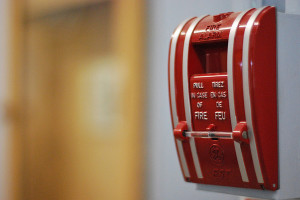
He compared pain to a fire alarm. Do you actually need a fire to make the alarm go off? Does it tell you the severity of the fire?

The answer is no, and I know this firsthand.

When I work as a fire dispatcher, or when I’m responding to an alarm bells call on the truck, 99 times out of a hundred it’s a false alarm. Or the alarm has gone off because someone burnt something on the stove and it’s not actually a fire.

Turns out pain works the same way.

Pain is an alarm in the brain that warns us of the threat of damage, not necessarily that there is damage (although it recognizes that as well). The brain is listening to signals throughout the body, evaluates them and then signals action to protect it. Once the brain recognizes there is a problem it produces pain as a protection mechanism to help you.

However much like that fire alarm it doesn’t always recognize the severity of what’s going on. It is not a great damage indicator.

A year and a half ago I separated my A/C joint. When it initially happened there was a significant amount of pain and it caused a step deformity (brain recognized there was a threat of damage).

I went to the hospital and they determined that putting the shoulder in a sling for a week and no surgery was the only intervention needed. Within a few days the pain diminished and now I just have a funny looking shoulder. It still functions well even though there is torn ligaments and I can hear a grinding noise in my golf swing.

My shoulder is no different now than it was the night I injured it but the brain realizes there is no longer a real or perceived threat, so I’m not experiencing pain. Even with a significant amount of damage there is no pain to indicate a problem.

https://flic.kr/p/66Zman

Photo by: Morgan

 Pain And Sensitivity For Massage Therapists

I had always thought that when a patient came in who was experiencing pain it was because something was damaged.

I would give them explanations of what I thought was happening and why their shoulder or low back was experiencing pain. Ie: the muscle is damaged and is creating or making that pain.

Like so many other times in life, I was wrong.

Pain can persist past healing because for some reason the brain still thinks it has to protect something. Pain has more to do with sensitivity, not so much about damage. This means that you hurt but are not harming yourself.

How many times have you treated someone who was concerned about continuing to harm an injury if they kept up with a certain activity? As pain persists after healing we just become more sensitive to the pain. Our pain threshold is lowered so people start to experience pain sooner with less stress placed on the tissue.

It doesn’t even mean that anything has been damaged, we are just becoming more sensitive to the pain.

When we are providing therapy to our patient we are trying to change their thoughts from being fragile and weak to thoughts of strength so the brain no longer thinks the body requires protection.

This is where communication with your patients becomes invaluable. While we would never want to bluntly say “the pain is all in your head”, a good explanation of why the brain is registering pain can go a long way to improving their condition. We are basically just trying to decrease that sensitivity.

Massage Therapists And Smudging

In addition to everything else in the course I got to learn a new word.

Smudging.

Smudging is basically when brain cells become activated easily or become dis-inhibited which spreads pain or makes it move around. Pain is changing the map of the body within the brain making parts of the body poorly defined within the brain.

Smudging can cause a decrease in sense of balance, decrease in proprioception, change in muscle strength and timing.

This is where we come in. Massage Therapy gives feedback to the brain that it needs to help improve those maps in the brain.

Greg showed us a great example of how just altering someone’s position can change the way they are moving and experiencing pain. He showed a video of a therapist treating someone who was experiencing low back pain and couldn’t bend forward. The therapist got the person onto the Massage table and put them into table top position, then had them rock back and forth hinging at the hips.

Once the person saw that they were able to move, it helped re-work that map in the brain and the person was able to move easier getting off the table.

I used that exact same method at the start of a treatment later that week. A new patient came in who had chronic back pain for years.

They were experiencing a flare up and had never tried Massage Therapy. They were having difficulty walking and couldn’t bend forward at the start. I used the same technique prior to the Massage portion and included it again at the end and recommended it for home care.

They came in four days later for a follow up treatment with no pain and increased range of motion. Getting them moving in a different way helped tremendously in restoring function.

I had a boss years ago who introduced me to the K.I.S.S. rule (keep it simple stupid (well at least that’s how he explained it to me)), and as far as pain science goes, that’s exactly what Greg’s course has done for me.

Understanding that pain involves multiple systems of the body including muscular, immune, nervous and emotional changes has given me a greater understanding of what’s going on with the patients that come and see me. Realizing that pain doesn’t necessarily mean damage but that it is just an alarm the brain is using as a protection mechanism will change the way I communicate and treat my patients. Now, with an understanding of what “smudging” is, I am incorporating more movement therapy, especially with patients who come in dealing with acute pain.

There is so much more that I could blog about in regards to this course but I wouldn’t do it justice. I think it’s better for you to just take Greg’s course when you get the chance. If you don’t get the opportunity, at least download his pain fundamentals workbook to give yourself a better understanding and for better outcomes with your patients.

And hopefully pain science won’t sound like this to me anymore:

“I wash born here, an I wash raished here, and dad gum it, I am gonna die here, an no sidewindin’ bushwackin’, hornswagglin’ cracker croaker is gonna rouin me bishen cutter”

– Gabby Johnson, authentic frontier gibberish