fbpx

Posts

4 Steps To Building A Successful Therapeutic Relationship With Your Patients

There was something different about the way she said goodbye.

The lack of communication was strange as her typical six or seven text messages were never sent.

I pulled in the driveway and wondered why she hadn’t gotten home from work yet?

I walked to the top of the stairs and there it was stuck to the fridge, almost glowing because it stood out from everything around it.

That letter told me about the pain she was feeling that I wasn’t able to fix, but really just didn’t know how to. It wasn’t that I didn’t want to, I just didn’t have the ability or maybe the proper tools to.

The last few months had been tough and I guess something I had said, done, or possibly not done was the last straw.

To be honest, I really didn’t know how to deal with our issues and sometimes chose to ignore things because well…it was just easier.

The strong woman that she was had long before decided to move on, since I couldn’t be the man she needed. She put her interests first.

I walked through the house alone.

The relationship we had taken so much time to build up was now gone because I didn’t know how to deal with it.

Why Therapeutic Relationships Are More Important For Massage Therapists

Our careers are built on relationships. 

Patients can go to a Chiropractor, Physiotherapist or even their Doctor and sometimes get a total of 15min with them. When a patient comes to you they get you for anywhere from 30min – two hours, of direct contact.

That time is your opportunity, especially when it’s a first time patient. You could be the best therapist in the world but if you don’t take the time to cultivate a relationship with that person, your efforts will be in vain.

So what can we do to build a solid relationship with our patients?

  1. Make a damn good first impression
  2. Read your patient
  3. Build a good foundation through assessment
  4. Build trust

1. Make A Damn Good First Impression

Remember the old saying “you never get a second chance to make a first impression”?

It is quite frankly the start to any good relationship. Even the girl I spoke about at the beginning must have been impressed the first time we met, it turns out I just couldn’t sustain it.

Greet everyone with a big heartfelt smile, they can tell if you’re faking it. This can set the tone for the rest of the treatment.

It’s important to remember that when your patients come in, it’s all about them. They’re paying you and it is their time.

So, no matter what is going on in your life, it’s kind of irrelevant. 

The more we can do to set them at ease before the treatment even starts, the better. Your patients have a ton of things going on in their lives stressing them out, including whatever injury they’re coming in for. This is not a time for you to come across in any kind of a frustrated way because you’re not having the best day, remember they’re paying you to help.

I used to work with a guy who was constantly stressed out about home life. He would fly off the handle about anything and could only communicate if he was yelling. Everyone was scared to deal with him. But, if he smoked a joint (yes this was happening in an industrial mill) he was way more approachable and easier to deal with.

The only way you could tell?

You could see him grinning ear to ear from across the mill.

Now in no way am I suggesting that you should smoke a joint at the start of your day in the clinic. But, the only way we could tell if he was going to be easy to deal with (which set us at ease) was when we saw that big grin.

Your patients will read you the same way. Most of the time they are coming in to relieve some stress and deal with a variety of other issues.

Do your best to set them at ease right away. 

2. Read Your Patient

This starts to happen as soon as you greet your patient.

Are they in a good mood and happily walking into your room?

Are they slumped forward and feeling down?

Read their body language.

This makes a huge difference in your treatment. If they’re feeling down and in a bad mood, they may not be as happy with your treatment as when they come in with a better frame of mind.

The results of the treatment may reflect that.

Other than getting this massage and relieving some stress, what can be done to elevate their mood?

Change your music to something more upbeat. It doesn’t always have to be new age spa music (in fact if I played that all day in my treatment room, I’d have to jump out the window), throw some 80’s music or something else they like on and elevate the mood a bit.

Try telling them a story or a good (albeit clean) joke to bring their mood up. Recite your favourite part of a a Seinfeld episode to them.

Get them to tell you a story about something great happening in their lives right now. Get them to talk about their kids, another loved one, or some accomplishment they have had in the last while. People love to talk about themselves, so ask them to.

I’ve heard it said that “the only thing we should be talking to our patients about is their healthcare”.

If that was the only thing you ever talked to, or allowed your patient to talk about, I doubt you’d get too many repeat patients. While the conversation should always be kept professional, patients aren’t coming in to be treated by a robot.

Your personality is part of what keeps them coming back. 

3. Build A Good Foundation Through Assessment

I didn’t completely understand what my teachers were harping on me so much about when I was in college.

They would get after me about “make sure you do three different assessments with each patient”. Then I became one of those teachers harping on the students.

Assessment is your foundation. 

A good assessment isn’t just to give you an idea of what’s going on with your patient, to tell you what areas to treat.

It’s your proof.

It is your opportunity to prove that you know what you’re doing and that you did a good job, that you made a difference. When you can perform the same orthopaedic tests after their treatment and demonstrate the greater range of motion, decrease in pain or freedom of movement, it instills faith in you and what you do.

Even if you’re a little stumped on what assessment to do, make something up, figure something out. Then look up what test you could do while they are getting on the table. You can always do more tests during the treatment.

In fact, get them moving on the table, so that you both get feedback about how the treatment is going.

It’s amazing the difference it makes when part way through a treatment someone can only move a certain amount and it continues to get better as the treatment progresses because you continually assess.

Photo by: Roger Mommaerts

Photo by: Roger Mommaerts

4. Build Trust

This is one of those areas where we are pretty privileged.

There is an assumed trust before our patients event get there. They know coming in that they are going to be naked on a table. That’s a pretty huge thing for anyone to give to us. Think about it, even before meeting us, they have enough faith to take their clothes off and just lay there, assuming we will be professional and bring no harm to them.

It’s our job to in still that trust immediately.

For me as a male therapist this is huge. Not everyone is comfortable coming in to see me, and some do it reluctantly. There are times I have to put people at ease before even starting an assessment (although I think I have an advantage from dealing with people in emergency settings) and let them voice how they’re not overly comfortable being treated by a guy, but they just need treatment.

Fair enough.

Let them talk. This is a big opportunity to build trust. After the treatment, when they realize nothing bad happened or was going to happen, they’re usually happy to book in again. 

In a conversation with someone a couple of weeks ago, they told me that their spouse had asked:

“What is so wrong with you, that you have to go for a massage once a week?”

The response:

“It’s more than just a massage, It’s my therapy. I get to unload about life, I get a good belly laugh and I get to de-stress”

Sometimes people need a non-judgemental ear. Allowing them to unload about the stress of life can me more valuable than the actual treatment (while of course keeping our professional boundaries in check without offering advice or counselling).

When people know that what they say in the room stays in the room, (think of your room like Vegas, okay maybe not all of Vegas, but you get what I mean), it builds their trust in coming back to see you again. Especially when different family members come in and talk about home life. We definitely don’t want to cross a line and say something to another family member that was said to you in confidence.

If someone comes in with a condition or injury you’re not sure how to deal with, refer them to someone who can. It’s okay to admit you’re not sure how to deal with something, just get them to someone who does. Trust me they’ll respect you for it.

Use these four steps to build a therapeutic relationship with your patients. Although some of these suggestions may seem like common sense, sometimes it’s easy to become complacent in practice. Even though I named the fourth one building trust, using the first three steps are a good way to set up the foundation to build trust. Communicate effectively with your patients when they describe their pain to you, figure out how to deal with it. Refer out and collaborate if necessary. A patient can pick any Massage Therapist in their community to use for their healthcare, being engaged and building relationships with the people who come to see you is what will keep them coming back. Be the therapist they need so that you never get a “goodbye letter” from your patient. Now if someone could just tell me how to get the TV and the Netflix account back that would be awesome.


 

Is Volunteering Massage Therapy Worth The R.O.I?

“Contact us and we’ll get you to the first page on Google”

We’ve all seen the emails come into our clinics (and maybe even personal accounts).

Then there’s the other emails. You know the ones.

“Our organization is doing a fundraising event and would like to give you the opportunity to donate some gift certificates to help raise money for our charity”.

Every year as business owners Massage Therapists must decide how they are going to spend their marketing dollars.

Where is the best place to spend money and what will the Return On Investment be?

Is volunteering our time really worth the effort it takes to provide free treatments?

As it is with any marketing venture, you have to ask “is there a return on investment of my time if I donate”?

Well it depends.

Donating Massage Therapy Gift Certificates

This can be a bumpy road.

Every year our clinic gets several requests via email, phone and our regular patients that come in, to donate a gift certificate to some sort of cause or function.

One of the interesting things about this (and I know from doing fundraising with the fire dept) is that once you say yes, the same organization is coming at you next year to ask again. While there is nothing wrong with them doing that, just make sure that wherever you are donating gift certificates is worthwhile.

Make sure to check that your donation is going to something you can actually help with.

I’m always more than happy to donate to local hockey teams, or different events that I can at least relate to. If there is a request to donate to an organization where I know the recipients are people who actually use massage therapy, then yeah I’ll donate.

For instance in our community, hospital workers (ie: nurses, pharmacy tech’s etc.) have amazing benefits when it comes to massage. So if I can manage to get one of them in the door, where there’s a really good chance they’ll rebook, I’m happy to help.

If the request comes from one of my current patients, again I’m happy to help. They support me in my business, so the least I can do is help them out with whatever endeavor they are putting their efforts toward.

If the request comes from someone or something that I don’t connect with, I’ll be far more reluctant to donate anything. Although from being involved in fundraising on the other side of the table, there’s something I’ve learned from making requests for donations.

Most of the time when we’re fundraising and ask stores for donations (especially the big box stores) they’ll donate just enough that it requires the recipient to spend more money.

Rarely do they donate a material prize, it will be a gift card for say $25-$50 so that the person will buy a bigger ticket item and just put the gift card toward the cost. It ends up being a win-win for both parties.

The other thing most of these places do, is ask for a tax receipt. At least this way, they are not losing out on the money, they will actually get a tax deduction at the end of the year which lowers their bottom line.

Before you just randomly donate to the next charity that calls, ask yourself (and the person asking) a few questions first:

  • What is my possible return on investment?
  • Can I get a proper tax receipt?
  • Is it better to give a discount rather than a full treatment, so I at least make some money?
  • Is the charity or cause something I actually believe in and can connect with?
  • Does my clinic schedule actually allow for someone to book in?

Gift certificates can be a great way to promote your business and be a great marketing tool, just make sure you donate wisely so it is still profitable for you in the end.

Volunteering With Sport Massage

When it comes to working in sports this is a bit of a vicious cycle.

So many sports organizations don’t have the funding or the money to be able to pay for the services of a Massage Therapist. Depending on the size of the community you live in this can be almost painful if you want to get involved.

Your average high school basketball team obviously can’t afford full, or even part time therapy and if there aren’t any teams in the area that can afford it and you want sport experience, what do you do?

One of the other issues with sport, is that if you do volunteer and decide that the organization should start to pay for your services and put up a hard stance with the team, there is someone around the corner who is willing to take your spot and start volunteering, just to get an opportunity.

Most teams are going to do whatever they can to save money, so if you’re not willing to volunteer your time anymore the general attitude can be (and I’ve heard this from team managers) “no biggie, we’ll just get someone else”.

While there are teams that can afford to hire a full or part time therapist, those spots are tougher and tougher to get into. It also completely depends on where a team gets their funding from or if the team is privately owned. Usually if a Massage Therapist gets one of these spots, they’re reluctant to give it up and they hold onto it like Donald Trump grabbing his hair in a windstorm.

I’ve debated giving up one of my sports volunteer positions but hesitate because I always wonder if I’ll get the chance again.

If you decide you’re going to volunteer your time, make sure it’s worth your while.

At a minimum, make sure the team is willing to promote you. In return for your donated time, the athletes should be willing to come and see you in your clinic as well. If the athletes are minors, their parents should be made aware of who you are and that if they need treatment, your clinic is where they should go.

Check to see what kind of insurance the athlete or team carries.

I used to do one day a week at the rink with the hockey team where I would bill hockey canada. If a player was injured, the team doctor would sign off on the insurance form recommending massage therapy so I could then fill out the form and submit it for payment from the insurer.

Find out what other healthcare practitioners the team uses and see if you can set them up as a referral base. I still have a steady stream of people who come in from the team chiropractor and we refer back and forth for each other regularly.

Just make sure that if you’re volunteering your time with sports you get more from it than just experience.

Photo by: Elvert Barnes

Photo by: Elvert Barnes

Fundraising Massage Therapy Outreaches

Every year in our city there are charity 10K’s, Run For The Cure’s, Goddess Run’s and various other charity events looking for Massage Therapists to volunteer.

They can all be great events to volunteer at and hopefully generate some business for you.

Just like the gift certificates, if you volunteer one year you can bet the event is going to call you next year to see if you’ll come out again.

But choose wisely.

I have done some volunteer work for events like this in the past, both as a student and as a registered therapist. I’m much more likely to spend my time at a half ironman or a 10K because most of the people involved in these are going to look for more therapy after the race day.

If they have spent enough time training to get ready, they’re more likely to keep exercising as a regular habit, thus needing more therapy. This is where I’m more confident that I can turn a couple of them into a regular patient with a little education and discussion on race day.

I’m far less likely to volunteer at a Run For The Cure, or a Goddess run. Not because I don’t think they’re great causes or that the athletes won’t need further therapy. It’s because it’s harder for me to connect with the participants (which is my own issue). I worked a couple of these kinds of events as a student and had a tough time watching people crying as they crossed the finish line. I hate seeing women cry!

If you decide to volunteer at one of these events for the first time, keep track for the rest of the year and see how many people come to your clinic as a result of your attendance. If you get a few new people, then you’re getting a return on your time investment.

I’m not saying that volunteering your time is a bad thing. I volunteer hundreds of hours a year between the fire department and sports. Both have their own set of rewards and both have given me some great opportunities. However our time is valuable, maybe the most valuable thing we have. While volunteering can help give you better community engagement as a business person your time shouldn’t be given away randomly. As you should with any marketing you do, track how successful the marketing strategy was. Track how much business comes your way from your volunteer time and weigh out whether it was worth the investment. I mean you paid a lot of money to go to school and learn how to be a therapist, you should at least get paid for it!

10 Business Mistakes I’ve Made As A Massage Therapist

“Success is walking from failure to failure with no loss of enthusiasm.”

— Winston Churchill

“There are no secrets to success. It is the result of preparation, hard work, and learning from failure.”

— Colin Powell

I couldn’t wait to get out of school.

25 hours a week was all I was going to have to work to make a great living.

It would be so easy, this is why I spent two years in school.

Then I got my first job and went to work. I think I had three patients my first week. Why wasn’t everyone just lining up to get a massage?

I worked in a room adjacent to a gym. All these healthy people that were into fitness and taking care of themselves, why weren’t they booking in?

The following week wasn’t much better.

Why wasn’t it just happening instantly like I thought it would?

Because assuming it would just magically happen was my first mistake. Unfortunately I made other business mistakes along the way. Some big, some small but they were all mistakes that I was clearly not ready for.

Here’s 10 business mistakes I’ve made along the way.

I’m sure there’s a lot more, but these are the ones I can remember.

1. Taking The First Job Offer, Without Actually Looking

I couldn’t believe my luck. I bumped into my sport massage instructor one afternoon and asked about getting involved in sports.

As the conversation progressed, she asked if I had a job lined up after school was done.

I hadn’t yet.

She told me about a great opportunity at a local rec-center. I would have full access to the gym, steam room, equipment, pool, everything. I’d also be working with a kinesiologist who had been at the rec centre for 15 years and had a great client base.

He would also be more than happy to refer people to me.

This was awesome, I don’t even have to look for my first job.

I was set and couldn’t wait to get started.

Once I got out there and got all set up, I had to start networking with the employees. None of them knew who I was, what I was doing, or really knew anything about Massage Therapy. They were willing to put an ad about me in their newsletter that went out every quarter, so there I had a bit of advertising. A friend of mine who owns a decal company made me up a sign for the treatment room, to show people in the gym what was being offered.

Then I’d show up and wait.

And wait.

And wait.

Some days people would come in and ask questions, sometimes they’d book in for a massage. I ended up getting one or two regulars that would come in once a week. Some days I would get super excited that I’d have three people booked in.

Other days, there wouldn’t be anyone.

I worked there for about nine months before I had to move on. And it was MY fault. The kinesiologist was a great guy, who did his best to help, my former teacher did everything she could to help, it just wasn’t a good fit for someone fresh out of school with no business experience.

Or maybe it was for someone else, I just couldn’t make it work.

I was so excited to get that first job out of school, I just assumed it would come easily. I didn’t even bother to look for another job at another clinic. I didn’t look to see if maybe there were other places that would be a good fit, where I could be busy right off the bat. I just assumed it would be easy.

It isn’t.

2. Not Starting In A Busy Clinic To Actually Learn The Business Of Massage Therapy

Since starting in the clinic I work at now, it has been a constant learning experience.

Compared to that first job, I have gotten to learn more about the “business” of Massage Therapy as opposed to being a Massage Therapist.

Actually signing a contract with the clinic and realizing the importance of that for both parties involved.

Understanding the mix of personalities in a clinic and how that affects not only the running of the clinic, but also how different people book in.

Getting into billing insurance companies directly and realizing the convenience it brings to patients. And this one is huge. I have seen a significant increase in patients ever since we started doing this. When the patient realizes that they don’t have to pay anything out of pocket and you handle the billing, they will choose your clinic over one that doesn’t.

Taking the time to understand how rent, tax and other deductions are all calculated has been a steep learning curve since starting there.

All things I should have learned earlier in my career.

3. Being Timid About Re-booking Patients

I really struggled with this early in my career.

Then one day I had a conversation with a local Chiropractor who runs a very successful clinic and has Massage Therapists working there.

He told me that one of the biggest mistakes he sees Massage Therapists make is when they concern themselves with what a patient can afford. Our job as therapists is to lay out the best treatment plan possible for the patient. If you say they need to see you twice a week for the next three weeks and then tell you they can’t afford it, alter the plan.

He backed that up with a story about a patient that had gone to a specialty clinic for some specific work. When they layed out the treatment plan it was very sporadic. Once they found out the patient had insurance coverage, the treatment plan changed dramatically and the patient was given better care.

The patient was understandably confused and didn’t go back to that clinic again.

Our concern (especially in patient centred care) is what’s best for their health, so give them the best possible plan for their recovery.

All too often I would be concerned about the patient’s finances when considering re-booking them. I’d say things like “well if you can afford it, I’d like to have you come back next week”.

Little did I realize that by communicating like this, I was losing the patients confidence in me.

Remember, you are the therapist and the patient is coming to you for your skills and knowledge.

Only worry about their pocket book if they bring it up.

4. Listening To The “Myths” I Heard From Other Therapists

The myths in Massage Therapy aren’t just around the therapy end of things.

They are also around who to work with.

All too often I’ve heard about therapists who had bad experiences in dealing with insurance, lawyers and workers compensation companies.

While the stories are true and some therapists have been stung by not getting paid, it doesn’t mean this happens every time. I know some clinics around town who are very successful in dealing with some of these insurance companies and make a good living off of referrals coming in from them.

Early in my career I would avoid these type of things like the plague because of the stories I’d heard.

Last year for the first time I entered into a “Direction To Pay” agreement with a local lawyer. The agreement is between the lawyer and myself, not between me and the patient. When he has people come in who have been in a car accident, he refers them out to healthcare professionals that he uses exclusively.

When the patient comes in to see me, they sign a contract which is then signed by the lawyer. When their claim is settled, the lawyer (not the patient) pays me out of the settlement.

Most of the stories I heard where this goes bad is when the patient calls the therapist and wants to negotiate a reduction in pay after the settlement. In these cases it is usually the patient who has made the agreement with the therapist, not the lawyer.

While it does take time to get paid from these agreements, it has filled my practice and made me busier than ever before.

I truly wish I had started doing this right out of school. It would have brought me more patients and I would have a steady stream of recurring income from a consistent source.

5. Not Getting Proper Accounting Advice

I’m not good with money.

I find managing money, balance sheets and accounting software confusing and frustrating.

I’m five years into my career and am just now starting to look at how to properly budget to make sure my finances are completely taken care of. Back when I first started I would just take my books to an accountant once a year to get my taxes done.

I am ALWAYS shocked at how much I end up owing.

At the start it wasn’t quite as important because I wasn’t busy. It was simpler to just take things in at the end of the year and have someone deal with it.

It was a terrible approach. It never made me understand where money was going, or where money was coming in from and I was never prepared to pay that tax bill.

Using a proper accountant and book keeper has helped to change all that. Now I can delegate a lot of that work and the accountant keeps me up to date on when things are due. I get regular communication about when quarterly taxes coming, how much is due and what things are good to spend money on business wise.

I’m also fortunate as I can just email back and forth with the book keeper regarding business questions, email receipts and she doesn’t tear me a new one when I walk into her office with a pile of unorganized junk that she has to figure out.

Now that we are working on a proper budget it should keep me in better financial shape for the future.

Had I started doing this from day one, I would be in much better financial and business shape today.

6. Not Having Another Job To Make Ends Meet

This is especially important if you’re just starting out.

Things are going to be slow while you build your practice. Even if you start in a busy clinic, you’re not going to be booked solid right from the start. Plus you have the added stress of student loans and the fact that you probably haven’t made a dime while you were in school.

There is no shame in having another job to support you while you build your practice.

When I first started in that rec-centre half the time I had do idea where I was going to get the money to pay the bills for that month and even had to borrow money from my parents at the start (and I hated that).

Then an opportunity came and I got my job working in dispatch with the fire department.

You have no idea the relief that brought. I was working construction on the weekend, just to get enough money to pay bills for that month when I found out I got the job. It was like I had just hit the jackpot.

I could schedule my clinic hours to work both jobs and this way had some money coming in while my practice was building. Even after starting at the busier clinic I kept working the dispatch job. Fortunately my clinic owner was understanding and would help me work around those shifts.

On average I would work 36 hours a week in dispatch and about 30 in the clinic.

Every Friday for about two years I would work in the clinic from 11am – 5pm, then head straight to the dispatch job and work 6pm-6am. Then another two shifts in dispatch between the weekend or during the week.

It was a lot of work, but eventually I was able to back off the hours at the other job as my practice grew.

Now I just work the dispatch job one or two shifts a month, and more because it interests me, not because I have to.

Don’t be afraid to pick up extra work while your practice builds, it will make you appreciate things when you’re busy that much more.

7. Thinking “Giving Away Free Massages” Was Good Marketing

This may be one of the worst things I did when I started out.

I would put up posters around the rec-centre promoting coming in for half price massages and did a bunch of them for free. My thinking was that I just needed to get people through the door, no matter how much the treatment cost.

It was terrible.

While I thought it was a good marketing ploy, all it did was open the door to people who didn’t want to actually pay for anything. One man during the treatment asked how long my schooling was. When I told him it was two years, he said “my son went to school for four years to be a welder and only gets $30 an hour, how the hell do you think you’re worth $90 with only two years of school?”

Most of the people I treated at a discount, expected their next massage to be the same price or cheaper and refused to pay full price.

While I still donate some time to sports teams and am willing to give out gift certificates for fundraisers when requested, I won’t market myself by doing discount massage ever again.

I also believe I was just cheapening the profession by doing that.

8. Not Networking Properly

A friend of mine invited me to a networking breakfast that he went to every week to see if it could help drum up some business.

I went to my first BNI meeting. There was a cost for breakfast (and for membership if you sign up), but there was a large group of people there who met regularly to refer and create business for one another. I thought it was  a good enough idea, so I signed up for a year with a chapter closer to where I worked.

While I made some great friendships, it didn’t end up creating a lot of business for me (however I know several people who swear by it for their business).

I should have been trying to network with local healthcare professionals instead.

Reaching out to local Chiropractors, Physiotherapists and Doctors would have brought greater returns than what I was doing. Once I started dealing with other healthcare professionals and communicating with them effectively, I started having more patients referred to me.

Now when I say networking properly, this doesn’t just mean the initial introduction. It’s an on-going process. Following up on the referrals and reporting back what you found and what you did with each patient grows a stronger relationship with those other practitioners.

If one of them sends you a patient, send back a thanks along with a report of what you did.

When you start comparing notes back and forth, they will be more likely to keep referring to you.  

But make sure you return the favour.

If you get someone in who could use the help of a Chiro or Physio, make sure you refer back to them as well.

Photo by: Maryland GovPics

Photo by: Maryland GovPics

9. Not Asking For Referrals

This is something I still struggle with, but continue to work on.

The biggest marketing advice I was given in school was: “just give the best damn massage you can to every patient, you never know who they’re going to tell”.

While we live in a digital age now, word of mouth is still one of the best marketing tools out there.

Don’t be afraid to ask your current patients for referrals. If they start talking about a friend who’s injured, explain what you can do to help, tell them a story about how you helped someone else with the same issue.

If they’re a regular patient, they obviously have faith in you and what you can do. So let them tell their friends about you.

Usually people are only too happy to make the referral, sometimes they just need a little nudge to remember to do it.

10. Not Being Active On Social Media

I’ve been studying and reading a ton about this over the past couple of years.

Social media is probably the most cost-effective tool you can use to promote yourself and your business. The only real cost is time and when you’re just starting out, you have lots of it.

Social media platforms are a free place to do business.

Facebook is the place to start connecting with your patients, it allows them to communicate directly with you as a therapist. Every time they interact on your business page with shares and likes, it opens you up to be able to market to their friends when they see this interaction taking place.

You can also set up ads and messages to reach a target audience, which you can structure to appeal to certain demographics. So you can actually aim your marketing at specific groups that you would like to have as patients.

Twitter is a great way to start interacting with local businesses and potential customers. Be a curator of content and provide useful information about Massage Therapy to start building a following in your community.

Use Linkedin to start connecting with local professionals in your area. Use it to grow business to business associations. You can also use it to blog about your practice and grow awareness about it in the business community.

There is so much more to being a Massage Therapist than just giving a great massage. You have to be a business person, marketer, accountant, networker and social media personality. It is just as important to learn how to run a business and be a sole proprietor as it is to learn a new technique at your next continuing ed course. In fact, there should be some solid continuing ed courses just on being in business. I’ve made lots of mistakes in my career, but at least with every mistake there is also a learning opportunity. Take the time to track what you’re doing for marketing and make sure you’re getting a solid return, whether it’s attending networking functions, volunteering your time or working directly with insurance companies. And even if you have a busy practice, you should still continue to market yourself. Even McDonalds still has to advertise.

The Massage Therapist Guide To Clinic Management Software

This was an opportune time to make the switch.

Over the past 8 years, our clinic has gone from paper and pencil scheduling, through two different software based management systems, and now we’re switching to a platform that supports online booking and electronic medical records.

Each time we change systems, it involves researching options, exporting and reconfiguring all our data, and then re-training the staff on a new software.

Every few years our needs in a clinic management software seem to change or grow, and unfortunately our past softwares haven’t grown with our needs.

With the high demand from the public for online booking, even though we have full-time reception, this was something we couldn’t ignore any longer.

The other factor that played into our need for change, was that with more therapists and multiple disciplines their files take up A LOT of room in the clinic. They are taking up so much room that we are now archiving files after two years.

Needless to say, a more storage-efficient method was needed.

6 Important Features For Massage Therapy Clinic Management Software

When what you love doing for your career involves working with patients to become pain free, you don’t want to spend all your time with dealing with scheduling, billing, and lots of “front end” duties at the office.

We now live in a time where there’s an app for everything. It feels like overnight we went from not having any choices, to having too many choices in selecting the software to run our clinic.

Being involved in a large interdisciplinary clinic, I’ve recently underwent the arduous task of finding a new clinical management software (CMS) that needed to check more boxes than I have fingers. Since I have finally come to a decision for my clinic, I’m here to share what I learned. My choice will not be your choice, because my boxes are not your boxes, but here is what I learned.

First step is to figure out what you want out of a CMS, which is tricky when you don’t know what they offer or have the capabilities of. So here are the important features I decided to highlight:

  1. Online Booking – even if you have a full-time receptionist, online booking has now become a very important feature that patients look for in order to access their therapist.
  2. Electronic Charting – If you have a large number of therapists and limited number of square feet to devote to file storage, then this is a great option for you.
  3. Integrated Billing – This makes sure that checking out your patient is a smooth and quick process, and with the different reporting options, makes a big difference when it’s time to do your books.
  4. Integrated Wait List – If you are like some Massage Therapists I know, who have a 1-month waiting list, it can be frustrating when you get a cancellation with too little notice to fill it.
  5. Remote Schedule Availability – Having the ability to check your schedule from home is a great asset, especially when patients can book in with you when they wake up at midnight with a kinked neck.
  6. Cost – When it comes down to it, cost always plays a factor, especially when it comes to your business.

4 Online Scheduling Programs Reviewed

I investigated several applications, but I found that only four of the ones I looked at had the right combination of features to warrant getting shared.

There are lots of choices out there, so I could have easily missed some that you may really enjoy.

These options happen to all be cloud-based, which means they are not installed on your hard drive like a typical software program, but hosted online and you log into them via your internet browser. Here they are:

 1.    Jane App – www.janeapp.com

Jane App has a very clean presentation and seems to hit the best on all the features listed above, and many more features not listed.

It’s a Canadian company based in Vancouver, and they make an honest effort to really do things properly; such as hosting your data in Canadian servers in multiple provinces where they are very safe.

If you are running a clinic with only one type of therapist (such as RMTs), they have a feature where you can incorporate into the intake form a “Survey Monkey” style questionnaire for  health history, and inputs it automatically into their patient file for you. Jane App also lets you custom build your template for charting, using both scanned diagrams (or using a stylus to draw on), lists, and general text charting.

Their website is by far the easiest to really understand what you get and what you don’t compared to the other options. My only complaint with Jane is that it’s the most expensive of the options, especially when you have a larger clinic.

Unless you need all those great features, it might not be worth the expense.

2.    Cliniko www.cliniko.com

Cliniko, much like Jane, has a very clean presentation to it and also does well on the features above.

There were little details with how well some of those features function that made them not the best, but overall still great.

They are working on incorporating electronic charting, the ability to use a stylus to draw, scribble, and write in the chart, but it is not set up yet.

They are an international company, which was great as they have help staff that work 24/7. If you have a large clinic with many types of practitioners and lots of needs, Jane & Cliniko seem like the only choice that starts checking boxes after the fundamental needs.

3.    Body Soul www.bodysoulonline.com

Body Soul’s website is hard to find any really definitive answers on without asking for help, which makes me think their software lacks the same forethought.

Their online booking feature seems not as streamlined as Jane & Cliniko, and lacks the waitlist feature.

They are however a local company from British Columbia, and even though they don’t allow the use of a stylus in the charting function, they have done a clean job of streamlining it. They even have a dictation feature for your charts!

Their price was very reasonable, if you’re a single Massage Therapist; otherwise it’s double the cost per practitioner.

 4.    Mind Body – www.mindbodyonline.com

Mind Body seems like it is designed for a yoga studio first, then adapted for a health clinic.

This is the one software that doesn’t include the Electronic charting and as it was with body soul, it lacks a waiting list. It is very focused on social media and lets you even tailor an app to the branding of your business, and have patients book in for a treatment from within Facebook.

The overall design is not as clean as Jane or Cliniko. Mind Body was the only application in addition to Jane that has a feature to customize your practitioners’ access; everyone gets a unique login and password so they can access what they need, but not everything that you can.

The cost is really hard to argue with too; you can get one of their bigger packages for under $100/month.

I’ve included a handy chart to show you which program has what feature, and in some cases a rank out of 5 on how well they did. These ratings are based on the information I was able to pull from the website and from answers I received from helpful staff, I have not used any of these programs in my clinical setting yet.

If it wasn’t obvious in my review, we chose Jane for our clinic.

Key FeaturesJaneappClinikoBody SoulMind Body
Janeapp.comcliniko.combodysoulonline.commindbodyonline.com
Cost$$$$$$$$$$
Electronic Medical Records544N/A
Integrated Billing5543
Online booking5433
Remote Schedule AvailabilityYesYesYesYes
Wait List FunctionYesYesNo No

The cost for each app has a slightly different structure, so it’s hard to lay it out for you easily here. Your best bet is to visit the websites and calculate your cost based on your clinic size and needs.

Based on what your needs are, you will probably choose different options, from myself and from each others. Most of these apps have functions that would work for your clinic, but based on our needs, Jane App was the solution. It was a challenging decision between Cliniko and Jane App, but in the end the extra details associated with Jane App didn’t equate to a large enough price difference to deter us from using it. Another reassuring fact that help us make this decision is that many large clinics that I respect and trust use Jane App. Our plan is to start using Jane App in the new year, fingers crossed it all goes well. Stay tuned for the 6-month follow-up. 

I’m also just really excited to get to do my charting on a snazzy iPad!


Subpoena’d As An Expert Massage Therapy Witness

I have been fearing this day since I graduated college.

The envelope looked different than any other mail I’d ever gotten.

I opened up the registered letter and there it was, a cheque for $20 and a subpoena.

It read:

“TAKE NOTICE that you are required to attend and testify as a witness in the place, date, and time set out below. You are also required to bring with you all documents in your possession or control relating to the matters in question in this proceeding.”

What was I going to do?

I don’t want to go to court and testify!

At the end of the letter it clearly states:

“if a person, contrary to these Supreme Court Civil Rules and without lawful excuse, refuses or neglects to obey a subpoena or to attend at the time and place appointed for his or her examination, is guilty of contempt of court and subject to the court’s power to punish contempt of court.”

Looks like I have no choice.

I am not looking forward to this.

Compensation For Being A Massage Expert Witness

I really wasn’t sure what to do.

It was quite insulting that a lawyer would send a cheque for $20 (the requisite witness fee) to force you to be a professional witness in an insurance claim that was being fought in order to achieve a settlement for the claimant and themselves.

Not only would I have to take time off work and lose pay, but there is also prep work to be done.

Before I called the lawyer in question, I figured I would talk to our provincial association for some advice first.

The association had some good advice as far as what should be charged in cases like this.

  • Testimony in court $700 per half day
  • Court prep time $93/hour
  • Production of records $100 or $.50 per page.

I had no idea if I was just supposed to demand this or if it was assumed. I was told just talk to the lawyer and explain what was recommended to me.

Calling their office, the lawyers assistant answered.

I laid out what I thought compensation should be.

She responded and said, “okay you can bill us for the $93/hour, but no judge is going to pay you $700, that’s the kind of money they give brain surgeons”.

As we chatted about what would happen, I told her this scared the crap out of me.

Her response set me at ease: “Don’t worry about it, it’s not like TV. You’re a good person, as long as you don’t rob a bank in the meantime you have nothing to worry about. All you have to do is just show up and be honest, they’re not going to try and trip you up.”

Now it’s time to prep.

https://flic.kr/p/9mNxFH

Photo by: Medill DC

Prepping A Massage Therapist For Court

The lawyer had me come in to the office for an hour to prep.

We went through all my notes to make sure he could understand them and of course to see what I could remember.

Scouring over the notes, he asked for explanations on what he was reading. Deciphering what different orthopedic tests meant and what I was testing for. Looking for explanations on why there were missed appointments, why would I work on one area one day and a different area on another.

Some of those treatments were three years ago!

Then it was time to tell me what to expect and what was expected of any Massage Therapist called in as a witness.

Just be honest. If you don’t remember something just be straight up about it.

While the opposing lawyer is working for the insurance company and wants to win, they will not cross examine you like you see on TV. They will ask you questions more to try and discredit the patient, not you as a therapist. Just be honest with them.

If you’re asked a question, you answer the judge. While it may be either lawyer asking, you look at and direct all answers to the judge.

Dress appropriately, wear a suit.

Show up early and look for directions as to which room the case will be argued in.

While you are scheduled to be there, you may not be called. It will depend on how the case goes. If the case is settled before hand, you’ll be informed that you don’t need to show up that day and although the case could go on all week, you will only be called for the scheduled day and time that we ask for.

We discussed compensation.

He confirmed that $700/ half day was more than would be given, he did agree that $100/hour for time spent was appropriate as long as I was fine with that.

Two days before the case went to court, they settled. I was fortunate to not have to go. Although I will admit there was some disappointment, I ended up really wanting to see what it was like. Overall it didn’t end up being as scary an experience as I thought (even though I didn’t have to go to court) and as the lawyer and I talked I thought he was fair. He paid the $100/hour for the hour I spent with him and for the hour to get any extra paperwork together, in addition to the bill I had given them months earlier for sending them my charts.

The experience also made me realize that my charting should be better than it was. The lawyer wasn’t totally sure if he’d be able to use them. Some treatment notes were more detailed than others and not all of them were specific enough. Make sure that if you’re ever working with patients who are involved with insurance companies that your note taking is top notch. This is another way for us to prove not only our worth as Massage Therapists, but also our professionalism as one.

A Summit On Massage Therapy


When I got the invitation I didn’t know what to expect.

I was even more surprised that I was the only one in the clinic who got one.

When I phoned the association to find out what it was about, I was told:

“We are hosting a summit where there will be a roundtable discussion on what needs to change and what can be done to improve the profession. There will be several other RMT’s and members of the public participating.”

Okay, I’m in.

I walked into the room on Saturday morning and started to see faces I had only ever met online.

More and more people started to look familiar.

I’ll admit, I was a little star struck.

There were between 40-50 people in the room. We were told that the invite was because those in attendance were considered to be thought leaders in the province.

There were no ego’s in the room and everyone was there for one purpose.

Improving the profession.

Massage Therapy In Patient Centered Care

The BC Ministry of Health is setting new priorities for our health system by setting eight new priorities.

While I understand that if you don’t live in British Columbia, it doesn’t really matter to you there are still take-aways from this that can apply to the profession everywhere.

  1. Provide patient-centered care.
  2. Implement targeted and effective primary prevention and health promotion through a co-ordinated delivery system.
  3. Implement a provincial system of primary and community care built around inter-professional teams and functions.
  4. Strengthen the interface between primary and specialist care and treatment.
  5. Provide timely access to quality diagnostics.
  6. Drive evidence-informed access to clinically effective and cost-effective pharmaceuticals.
  7. Examine the role and functioning of the acute care system, focused on driving inter-professional teams and functions with better linkages to community health care.
  8. Increase access to an appropriate continuum of residential care services.

I don’t think anyone can argue, these are great priorities (especially the portions that are in bold) and we as Massage Therapists should be involved.

However the sad truth is that we are not.

When we looked at the BC labour market for therapists and talked about the Provincial Priority Health Professions, this is what the list looks like:

  • Audiologist
  • Medical Laboratory Technologist
  • Medical Radiation Technologist
  • Occupational Therapist
  • Physical Therapist
  • Physician-General/Specialist
  • Registered Nurse
  • Registered Nurse-Specialty
  • Speech Language Pathologist
  • Ultrasonographer

We didn’t even make the list as a Priority Health Profession.

When you look at the National Occupation Classification we are under “Major Group 32 Technical occupations in health” and within that grouping are classified as “323 Other technical occupations in health care.” Within that group we are listed along with Opticians, Practitioners of natural healing, Licensed practical nurses, Paramedical occupations and Other technical occupations in therapy and assessment.

Under Major Group 31 Professional occupations in health (except nursing) is the realm and classification given to Occupational Therapists, Physiotherapists, Chiropractors and are called “Therapy and assessment professionals”

RMT’s and Physiotherapists in the BC labour market both are in demand, but RMT’s are listed as having “Some Post Secondary” education and  Physiotherapists are listed as having a “Masters Degree”.

The group we are in has significantly less education than we do and with some of those occupations the schooling can be done online. Really!?

In order for us to be recognized as a priority health profession some things need to change.

We need to establish our legitimacy as a profession.

Level of education has been an issue since I became a Massage Therapist and I’m sure it started long before. If we want to be recognized and given increased legitimacy we need to start looking at improvements to our education.

One of the big issues is price of education. For a Physiotherapist or an Occupational Therapist the average tuition is only $13,000 but we know to become a RMT it’s around $30,000.

All because their programs are offered through public universities instead of private schools.

There is a significant decrease in the amount of physical therapists and occupational therapists in the province that are able to fill necessary jobs within the public sector. Most are working in private practice, which creates a substantial need in the public sector working within the health authority.

So where can we start to help fill that gap and be involved?

First off the government needs to fully understand what we do. They are projecting our annual salaries to be in the range of $11,000 – $33,000 a year.

With their stats of 3,200 RMT’s where only 26% are working full time (a total of 832 full time RMT’s in the province?) I think we’d all venture to say those stats aren’t accurate.

Here are the stats from RMTBC on a survey that was done regarding income 

It’s time to start lobbying government to educate them on what an RMT does. Show them what our current education consists of and also how effective Massage can be for the patients in hospitals or extended care facilities.

The encouraging side is there are some places where Massage Therapy is being offered in the public sector.

We heard from Liza Dion.

She is a Massage Therapist at the Mayo Clinic. She told us about how surgeons wanted Massage Therapy performed for their cardiac surgery patients. They ran randomized control studies and proved Massage Therapy was effective in helping these patients.

They now have regular Massage Therapy happening in the hospital and is a primary part of the care given. However it’s not just in cardiac patients, they have also done studies with Colorectal surgery, Thoracic surgery, Breast surgery and Cardiology patients. It has even gotten to the point that they have a hospital based Massage Therapy course that is offered twice a year for Massage Therapists to come in and learn how to offer care in the hospital.

Liza also mentioned that she regularly has to educate new nurses and other practitioners in the hospital about what Massage Therapy does.

What if these other practitioners already knew what we did because we all went to university together? At least started out in the same programs and then decided which avenue we were going to pursue.

If we want to join these other therapies in the public sector work, we should also join them in the public sector schools.

https://flic.kr/p/qL2wPW

Photo by: NEC

Massage Therapy Education, Professionalism, Practice Support and Resources

As part of the summit we were divided into groups to discuss these topics.

I was fortunate to be part of the Education group.

As expected, there was a lot of discussion and passion on the topic.

Everyone there believed more education was crucial to our advancement as a profession. The common belief (as discussed earlier) was that a bachelor’s or master’s degree in massage was the direction we should start looking at.

I’m sure there are just as many people against the idea as there are people for it, but think about what this could do for us.

We have never been able to say that we specialize in something. I’m sure there are a number of therapists out there that focus their practice into something specific or some particular modality. Having more education is one way to lift this type of boundary on the profession. As we start to set up Professional Practice Groups here in the province, why shouldn’t we be able to say that we specialize in something or some area of interest?

Expanded scope of practice. I get frustrated that we are not allowed to use modalities like IMS, Shock Wave, Ultrasound or any other electrical stimulation. I know that in other provinces Massage Therapists are fully licensed and allowed to use these types of modalities. I think it’s time to make these options standard practice in regulated provinces.

Part of the problem with this goes back to lobbying government and making them aware that this should be within our scope (even though I think it already should be). Having a bachelor program in place, would help take away any doubt on their part.

As someone who loves working in sport, I believe there are many things we could do with our curriculum that would support students who have this interest. I spent last year working with some Athletic Therapy students and there are things we could learn from their program.

Those students come out of school with a few different certifications. Since it is a bachelor degree program, they come out with a list of exercise certifications on top of the AT certification. Right now we could start incorporating a CPT (Certified Personal Trainer) certification into the program. It would give students a much better grasp of exercise prescription for their patients and also give them an extra avenue of making money once done school.

For those that are interested they could have a combination Personal Training and Massage Therapy practice. It would also give those students interested in working with athletes or sports teams a better chance of getting involved.

There were so many other topics that were brought up in that discussion, but I’m writing this from memory so I can’t remember it all.

However when each group came back and talked again, every group mentioned that education had come up as a priority.

The Future Of Massage Therapy In Mainstream Healthcare

Dr. Gurdeep Parhar presented to us a new idea on how we could identify what we want from our profession and how we fit into the healthcare system.

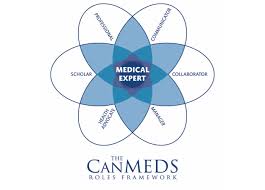
canmeds 1

He talked about the CanMeds framework that physicians had put into practice to see what is expected of a medical expert. This framework has been adopted around the world, where students and medical professionals are graded on the six branches of the model. But the same model has been adopted in Physiotherapy and Occupational Therapy groups as well.

The public expects a doctor to be a medical professional (obviously) but the above six qualities are expected as well.

Communicators. We are judged by other professions and the public on how we communicate. This includes writing reports in response to doctors and other practitioners that we refer to and from. Dr. Parhar also sat in with the professionalism group and spoke with them on how important it was to implement report or communication writing back to doctors.

It is an area that we are not very good at. During discussions later in the day, the feeling was that most thought a report to a doctor had to be complicated and frequent. Dr. Parhar spoke about how much he as a physician appreciates getting communication from RMT’s, but it just needs to be a report at the beginning of treatment and one at the end. Just a report that informs the doctor in areas of treatment and how treatment progressed, so they know what has been done with the patient.

That’s it.

Collaborators. This works with our communication. How are we interacting with the rest of the healthcare team? We can’t work in isolation, we should be communicating with our patients other practitioners and contributing to their healthcare plan.

Manager. Why can’t we be a case manager on behalf of a patient? We can see a recently injured patient 2-3 times a week for an hour at a time. A doctor will see this person once every 4-6 weeks for maybe half an hour. So why aren’t we a piece of this puzzle, or even the primary case managers?

Health Advocate. Access to care is so crucial, especially in a “patient centred” model of care. There is still a difficulty for doctor’s to explain to their patients why Registered Massage Therapy isn’t approved by their insurance company when it is needed. We need to help advocate for the patients because society trusts us as professionals based on our guidelines and standards of care.

Scholar. This is a difficult area for us. There was plenty of discussion throughout the day on research (in fact a guest speaker Dr. Martha Brown-Menard LMT, spoke to us specifically on research) and how important it is. The problem is that research is done at universities and big companies don’t necessarily want to fund research for massage.

As much as we are pushing for evidence based practice, qualitative studies are just as important. But we need to start doing the research if we want to advocate for more resources to back up our profession.

Professionalism. Is Massage Therapy going to continue to have an artistic side to it, or do we start to present ourselves in a more professional manner? Should there be a standardization so that when someone comes in for treatment a person feels like they are dealing with clinicians?

I’m as guilty of this as anyone, I like just going to work in what I’m comfortable in (which is usually cargo shorts and a t-shirt), but would I be more presentable or respected if I made sure to wear a golf shirt instead? While I don’t think this is something that will ever be mandated, it may just be some food for thought when it comes to your own practice.

Listening to all of those points coming from a doctor was more than rewarding. Knowing there are doctors out there that are also advocates for Massage Therapy says that we are at least on the right track.

When I started this blog, the whole intent was to have other therapists collaborate information on how to improve the profession and share knowledge. I was excited when each one of the coaches agreed to be part of it because they were willing to share.

Sitting in a room of other RMT’s that are passionate about their profession and improving it was impressive. It also showed that we have a ways to go in order for our profession to gain more respect. While it is leaps and bounds ahead of where it was 10, 15 or 20 years ago, we can never stop improving. As the CanMeds model increases throughout the world, Massage Therapists need to continue working on being Professionals, Communicators, Collaborators, Scholars, Managers and Health Advocates. As mainstream healthcare continues to develop we need to make Massage Therapy prominent in patient centred care.

No one is going to this for us, it is only through our efforts that we can prove to government and other practitioners that we belong in the public sector and mainstream healthcare. I realize as I write this post that it seems pretty heavy on the education side of things. There was so much more that came out of the discussions that day, it’s just hard to put it all down in one place. If nothing else, I think the discussion was a step in the right direction.

We were asked to bring the excitement that we were all feeling that day back to our colleagues and share in order to keep the momentum going. I hope I have at least managed to do that, although I know it’s just the beginning.