Quality Of Life Improvement For Multiple Sclerosis

Sometimes a condition can scare a therapist.

Just the other day a buddy looked at me and said “if I had someone book in with multiple sclerosis, I wouldn’t have a clue what to do, so I’d just refer out.”

We had specific classes and clinical training at school where we helped people with MS as well as their care-givers.

It’s not really that scary and the patients were always super appreciative.

A little knowledge goes a long way and making sure you understand how a condition is affecting a patient makes a world of difference in helping them.

Of crucial importance is also understanding what the patient expects or needs from a treatment.

What Is MS?

The one thing I remember from college about Multiple Sclerosis was how there was “multiple sclerotic plaques on the brain”.

Turns out my memory didn’t totally fail me.

MS is an autoimmune disease of the central nervous system where the myelin sheath of nerves are attacked, deteriorate and harden. Using an MRI, plaques in the white matter on the brain and spinal cord are seen.

Since the nerves are attacked information cannot be transmitted properly across them, depending on the level of damage. When the nerve sheath is hardening and scar tissue forms it can cause complete disruption of nerve impulses if there is enough scar tissue formed.

There are four types of MS:

  • Clinically Isolated Syndrome (CIS)
    • An attack that lasts for minimum 24 hours, but does is not enough to have a MS diagnosis.
  • Relapse Remitting MS (RRMS)
    • The most common form of MS, where neurologic symptoms are present, but then can have full remission with no symptoms.
  • Primary Progressive MS (PPMS)
    • Worsening neurologic function from onset of symptoms, without remission.
  • Secondary Progressive MS (SPMS)
    • Progressively worse neurologic function that comes on after an initial relapse remitting course of MS.

It usually appears between the ages of 20-40, affecting females twice as much as males.

Recently there have even been elite level athletes diagnosed with MS.

Initial Symptoms are wide and vary from person to person but can include feelings of heavy/weak muscles, abnormal sensations or double vision.

However as the condition progresses, so do the symptoms.

Emotional problems like depression and mood swings, chronic pain, mobility issues, weakness and spasticity are all common problems when a patient has MS.

However the National Multiple Sclerosis Society points out that some secondary issues of concern are a result of inactivity. Issues with bone density, ineffective breathing and muscle wasting can all be a problem, but if the primary symptoms are treated effectively, these secondary concerns can be avoided.

The MS Society Of Canada points out that living a healthy lifestyle including exercise and a healthy diet, getting appropriate sleep and stress management are all important parts of dealing with these primary symptoms.

And lo and behold, they also recommend massage therapy as one of the tools to manage these primary symptoms! Nice to see we’re getting recognized!
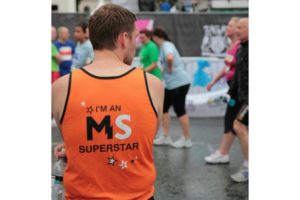
https://flic.kr/p/9UPPd5

Photo by: Rob Faulkner

Massage Therapy And Multiple Sclerosis

When we look at some of those symptoms that were pointed out, there is such a positive effect we should be able to have for a patient with MS who comes to see us.

There has been so much discussion around the biopsychosocial model in massage and I’d be hard pressed to think where this would be more appropriate.

Think of how much life is going to change for someone recently diagnosed with this. No wonder emotional problems like depression and mood swings are mentioned as some primary symptoms for someone with MS.

Thankfully there are things we can do to help.

One study showed the use of yoga and physical therapy improved audiovisual reaction time, anxiety and depression in people with chronic MS (although it is a small study and like everything else I read, more research is necessary).(1)

Part of the interventions used (in addition to yoga, counselling and physiotherapy) were machines that would engage a patients limbs in passive or active resisted movement. So, for those of us who do not have exercise in our scope of practice, having patients move both actively (if possible) and passively on the table can be a help with these patients.

While exercise is important, studies have shown that massage could be more effective than just exercise when the two are compared. In this study the massage group had larger improvements in pain reduction, balance and walking speed compared to the group who engaged in exercise alone. (2)

However the combination of exercise and massage had a greater reduction in pain than those who only took part in an exercise program.

The real goal in providing therapy for people with MS (and any patient really) should be to improve quality of life. One research paper actually pointed out that massage provided a limited amount of improvement in the study patients, but it was hard to tell if the improvement was a result of the massage, the social interaction during the massage or a combination of the two.(3)

There goes that biopsychosocial model rearing its ugly head again!

Like I said, overall our goal will be to improve quality of life. If you have someone come in needing treatment who has MS, find out what their goals for treatment are. Make sure to have them communicate with you throughout the treatment about pressure, especially in areas where they may be experiencing decreased sensation. Massage therapy can have a profound effect for patients with this condition and your demeanor can either improve or decrease that effect. Whether it’s MS or any other condition, remember, you’re treating the person, not the condition. Do a little homework and meet that patient with confidence in knowing what you do works for them. There is no need to refer out just because you’re scared of a particular condition. Even if you’re not sure and you don’t have time before the treatment to do some homework, just ask your patient what’s going on with them and how you can help, I’m sure they’ll let you know.

References:

  1. Chobe S, Bhargav H, Raghuram N, Garner C. Effect of integrated Yoga and Physical therapy on audiovisual reaction time, anxiety and depression in patients with chronic multiple sclerosis: a pilot study. Journal Of Complementary & Integrative Medicine [serial on the Internet]. (2016, Sep), [cited January 23, 2017]; 13(3): 301-309. Available from: SPORTDiscus with Full Text.
  2. Negahban H, Rezaie S, Goharpey S. Massage therapy and exercise therapy in patients with multiple sclerosis: a randomized controlled pilot study. Clinical Rehabilitation [serial on the Internet]. (2013, Dec), [cited January 23, 2017]; 27(12): 1126-1136. Available from: SPORTDiscus with Full Text.
  3. Schroeder B, Doig J, Premkumar K. The effects of massage therapy on multiple sclerosis patients’ quality of life and leg function. Evidence-Based Complementary And Alternative Medicine: Ecam [serial on the Internet]. (2014), [cited January 23, 2017]; 2014640916. Available from: MEDLINE with Full Text.



How Can You Change Client Expectations In Order To Be Most Effective?

As a physical therapist, I face certain expectations when a client first comes to see me for treatment.

When they walk in my treatment room, a few may look around, wondering where the exercise equipment is hidden, as my room is a 9’ X 13” room with a massage table and little else. But most have been prepared in advance that their experience at my clinic, the Pain Relief Center, may be quite different than what they may have experienced in the past with other physical therapists.

How did I prepare them before they walked in my door?

I set the tone before they ever met me, both through the information contained on my website and through the packet of information they downloaded from my website (or I emailed to them prior to their first visit).

I long ago changed my client’s expectations for what physical therapy can look like, as I had already changed that expectation for myself.

People are referred to me due to my skill set; I am quite good at reducing/eliminating pain.

My business name sets that intention and my website reinforces that fact.

My referral sources speak of my skills and clients typically come to see me showing little shock at the altered nature of my physical therapy practice model.

But what about you and your practice; is it time to change the rules so that client expectations are realistic?

Massage therapists make up a good percentage of the folks who take my Foundations in Myofascial Release Seminars and many of these therapists speak to the expectations that their clients hold.

Expectations include; using oil/lotion during sessions, being relatively undressed under a drape sheet, and having the entire body attended to during a session.

These expectations are valid, as this is the mindset of many when they think of massage therapy.

But are your clients (or you!) so rigid that they are not willing to bend these expectations?

If they are coming to you for relief from pain in an isolated area, does the elimination of pain in this area take precedence over the desire/expectation to have the entire body addressed in a single session?

Is it you, the massage therapist, who is feeding these expectations? Are you simply unwilling to change the rules?

Myofascial release (MFR) tends to be considered a “dry modality”, contrasted with wet modalities where a lubricant is used. While there are exceptions to this generalization, most forms of MFR are performed on dry skin. MFR happens to be one of many very good modalities for the relief of pain and the improvement of function.

Your license, as a massage therapist (or PT/OT/SLP), allows you to utilize a wide range of modalities and techniques, all which fall under the category of having a “license to touch”.

My clients come to me to rid themselves of pain, no matter my choice of modalities. If you have skills and tools at your disposal to help meet your client’s goals, it may be up to you to change their expectations.

Education is the key to all of this and it is your duty to educate your clients.

Here are some things you can do to start changing the expectations of your clients:

1. I am a strong advocate of having a website to allow potential clients to find you and learn about you and your practice/goals. I began my do-it-yourself website in 2005 and allowed it to develop over the course of a few years. In 2010 I paid a website designer to craft me a more professional looking site that links together my private practice, my seminars, and my blog.

My website begins to lay out the expectations for my clients, whether they are interested in becoming a client or interested in taking one of my seminars.

If you don’t have a website, get one, even if it a free one-page site provided by the various professional organizations. Your website’s message should not be about what modalities you use or who you trained with; it should be about what you can do for a client.

My original website was a painful attempt at trying to convert the masses into believing that MFR was the greatest modality out there, and I went into great detail discussing why I thought it was so, including old worn out explanations of how fascia is the primary culprit responsible for most pain.

People don’t care about this.

Most, including myself, are somewhat selfish. I care about what you can do for me, not how you will go about doing it. I care that if I have a problem, you are the person to see for this problem. Later, I may ask about how you go about doing this (the modality), but not at the onset. If I cannot find out what you can do for me in the first few seconds of reading your website, I will move on to the next person’s website. What is seen when they first land on your website is key. For more information on this, please check out a post I made titled Above The E-Fold™.

2. If someone is coming to see you for your expertise, then tell/teach them what they will need to do to allow you to be most effective. With MFR, I am best able to work when a client is wearing shorts and a tank top or T-shirt, rather than them being fully clothed or undressed under a drape sheet.

My introductory materials outline this need, as well as why it is important.

I tell them to bring along an appropriate change of clothing to facilitate receiving the maximum benefit from my services. Additionally, I keep a drawer full of shorts and tank tops of various sizes, in case someone forgets their “uniform”.

Educating your clients that having a drape sheet to maneuver around/over their undressed body may not be in their best interest is important to set expectations, both with MFR treatment and similar modalities.

I tell them what I need in order to do my job and best meet their goals and that these are my expectations. If the person is seeing me based on my reputation, etc., they typically have no trouble working within these expectations.

3. Opinions vary widely as to how best accomplish pain relief, as is evident by the large number of named modalities available to each of us as manual therapists.

With the type of myofascial release I practice and teach it is not necessary to treat the entire body or both sides of the body in order to reduce/eliminate an issue. However, if the commonly held expectation is that a client will receive a full-body treatment, then this expectations needs to be addressed before treatment is commenced.

You can actually take care of this issue before you ever meet this person by including the information on your website and new client handouts.

My handouts have a number of purposes.

They collect the basic demographics I need in order to treat a person. They also set the rules in terms of my cancellation policy/No-Show policy.

New clients read and sign a release, stating that they will abide by these rules.

Set your expectations early on, through your website or handouts, so that there are no surprises or disappointments. If someone comes to you for a longstanding issue, neck pain for example, and after you have performed your evaluation, take a moment and ask them how they would like the session to flow.

If the neck is their primary concern, ask if they have any objection with you spending the entire session working the neck issue. If they have issues with this, they need to let you know and not be mad when the session time is up and you have not gotten to the rest of their body.

Set the expectation.

4. I am very punctual with my sessions. I start on-time 99% of the time and I finish promptly at the originally scheduled time. In my new client handouts, I state:

An appointment is a commitment to our work and a contract between us. On rare occasions we may not be able to start on time. This is usually because a treatment is taking slightly longer than expected. For this we ask for your understanding and assure you that you will receive a full treatment. Also be assured that at some point if you need a longer session, you will always be afforded the same consideration. In order for all of this to work, you need to be on time for your appointment. If you arrive late, your session will need to end at its originally scheduled time with the fee equal to the original length of the scheduled session. If you need to cancel, please call as soon as possible so that I can attempt to fill the vacant appointment. A 24-hour notice is required for cancellations to avoid payment of a $50 fee.

We teach people how we wish to be treated, both professionally and personally. I believe in firm, clear boundaries in all aspects of my practice.

I expect you to be on time.

If you are late, I will not extend the session to give you the “extra” time. I expect the full payment, whether or not you received the full session. If I am late starting, you will receive your full session length. Some may feel this is harsh.

I feel that it is about having good boundaries.

5. Be clear with your intentions and always get verbal permission.

At times I will wish to place a hand in areas of the body that may be misconstrued by someone not knowing my intentions.

If I need to place my hand in any area where there may be questions, I will always:

  • Tell them what I am hoping to accomplish
  • Tell them where I will need to place my hand(s).
  • Ask for verbal permission and wait for the reply.
  • I use simple language and layman’s terms. My client may not know what the sacrum or sternum is, so I will both use layman’s terms (tailbone/breast bone) as well as point to the area on myself or them.
  • I speak clearly and with confidence. Client’s easily pick up if you sound shy or timid.

I speak at length to this topic in a blog post (here).

During any of my Foundations in Myofascial Release Seminars, I ask therapists to practice wording these concepts with their lab partners throughout the seminar, in order to take the awkwardness out of the interaction.

“In order to try to reduce the tightness/pain in your lower back, I would like to be able to place a hand directly under your sacrum/tailbone. It is not necessary for me to be directly on your skin. Are you OK with this?”

This interaction becomes quite easy, once you have done it a few times. It takes any ambiguity out of the situation, protecting both you as well as your client.

If you work for someone else, many of these topics may be non-negotiable. But if clients come to you for your expertise, you may have a say in these matters. If that expertise includes MFR, you need to change the rules that your client believes exist. It is in their best interest to change their expectations, if they are interested in being helped by you. Don’t be shy about changing the rules. It may take some time before you are confident enough with MFR (or any other new modality) but act now to change the rules/expectations. It is your practice; treat it as such.

How do you set expectations?

Do you state the “rules” of your practice upfront?

Understanding And Managing Groin Pulls

I felt a little tweak on the inside of my leg, but kept playing anyway.

It was the final game of the tournament that weekend, so I knew I just had to get through the last period.

As the game continued, the pain in my inner thigh was getting worse.

Each time I pushed off and my skate cut into the ice it felt like a shock going up into my groin.

As soon as the game was over, I pulled some ice out of the beer cooler, wrapped it up and put it on the inside of my leg. It helped a little, (or it could have been the beer) but I had never felt something like this before.

The next day I had a snowboard trip booked for a week.

By the time I got up to the chalet, I could barely lift my leg. Going up a flight of stairs was almost impossible.

Just getting up out of a chair was excruciating. I was basically limping for 5 days.

I have never pulled my groin before, but holy was this painful.

Contributing Factors To A Groin Pull

A groin pull is common among athletes, especially in sports where the athlete is required to change directions quickly or where explosive movement is part of the sport.

Hockey and soccer seem to be the sports where a groin strain/pull is most common with athletes, but are also found in fencing, handball, football, cross country skiing, hurdling and high jumping.

A groin strain can be graded into three classifications and can involve any one of the six adductor muscles

There has long been a belief that Janda’s lower cross syndrome played a major role in what contributed to groin strains in athletes. 

In fact I did a case study in college on a marathon runner experiencing hip pain and based a lot of the treatment on this syndrome. But in talking to many of my pain science friends, it appears that this syndrome is not as accurate as we once thought. 

However there are parts to it, which I believe plays a role in an athlete experiencing a groin strain (this is where my pain science friends will probably want to correct me).

Essentially the thought was a muscle imbalance, or strength imbalance between the gluts and adductors and the strength of the gluts was pulling on the adductors, thus causing a groin pull.

Some of the research back then was pointing to this being a specific cause in hockey players (most hockey players have big butts from skating) and this being a major contributor to groin pulls in these athletes, although I couldn’t find any current research to support that, so we’ll just leave it in the past for now.

However there is a strong indication that weak adductors are a major contributor to these injuries. 

One systematic review compared 17 studies and found limited evidence to support the theory of weak adductors but it was dependant on positioning. At 45° during a squeeze test there was strong evidence of adductor weakness. 

A study done on Australian Rules Footballers demonstrated that weak adductors could be a factor in groin injuries. Their adductor muscle strength was tested weekly. Of the seven players that suffered a groin injury (over a two season period), they all demonstrated decreased strength in hip adduction two weeks prior and the week of their injury.(1)

While this is a very small study, it helps to support weak adductors as a possible contributor to groin injuries. 

Some other studies have shown there to be several other risk factors involved. With hockey players there was a greater chance of having a groin strain if you had a previous injury to the same area and less likely to suffer the injury if they had practiced in the off season.

When it came to soccer players, previous injury was also a risk factor but so was limited hip abduction. Groin strains were most common during the action of kicking the ball.

Either way it seems that weak adductors can be one of the contributing factors to suffering a groin strain. 

I also think (and this is strictly opinion) the motion of skating is also a contributor as the legs are continually going into extension, external rotation and abduction placing a greater strain on the adductors, but again, just opinion.

It would also be interesting to see the significance between player positions, if I even tried doing what the goalie in the picture below is doing, I probably wouldn’t walk for a month. 


By Mike Salvucci (Flickr) [CC BY 2.0 (http://creativecommons.org/licenses/by/2.0)], via Wikimedia Commons

Treatment Of Groin Injuries

During the acute stage you are going to follow your R.I.C.E protocol and rest the area.

  • R – rest
  • I – ice
  • C – compression
  • E – elevate

As the healing progresses (keep in mind if walking is difficult the person may be on crutches) manual therapy and exercises can begin, in the acute stages the injury will be too painful (depending on grade) to do much in the way of hands on therapy.

The acute phase should be getting better in about five days. If there is no progress, they should be referred to their doctor to check for other possible injuries like osteitis pubis, myositis ossificans or nerve entrapment.

Once it settles down, then try and determine which muscles specifically are having the issue by doing some manual muscle tests, although it may be tough to determine as it could be a group of muscles, not just one.

There aren’t many research articles I could find that specify exact methods or provide a treatment outline.

One recommends using muscle energy techniques, but it was referring to the sacrum for an anterior rotated innominate because of a positive standing flexion test, but research has since shown us that doesn’t happen.(2)

Another one demonstrated placing tension on the muscle with one hand while the other hand is used to take the leg into abduction and external rotation while the knee is fully extended, for use with chronic injuries.(3)

With the management of strains once the pain of the acute phase is gone, doing some manual therapy along with pain free stretching is recommended. As we have seen, some strengthening is going to have to happen as well. Having the patient begin some strengthening (if it is within your scope of practice) will be crucial in getting over the injury. Doing some balance exercises, lunges or walking up and down stairs pain free are some easy ones to start with. One of our biggest goals is to prevent this from becoming a chronic injury. As we have seen in some of the research, once someone experiences a groin pull it is then easier to re-injure the area again. Although I haven’t pulled my groin since that hockey tournament, I will never forget how painful it was. If I had gone somewhere for manual therapy, there is no way I would have let someone work on it during that first five days. Fortunately it didn’t become a chronic issue. And even though some may disagree, I’m still going to work into my hockey players gluts if they pull their groin!

References

  1. Turk P. IS THERE A RELATIONSHIP BETWEEN HIP ADDUCTOR STRENGTH AND GROIN INJURIES IN AUSTRALIAN FOOTBALL LEAGUE FOOTBALLERS?. Journal Of Australian Strength & Conditioning [serial on the Internet]. (2016, Oct), [cited January 9, 2017]; 24(5): 21-28. Available from: SPORTDiscus with Full Text.
  2. Brumm L, Carrier D, Nogle S, Johnson S. Looking beyond the soft tissue: illustrative case studies of groin injuries. Athletic Therapy Today [serial on the Internet]. (2001, July), [cited January 9, 2017]; 6(4): 24-64. Available from: CINAHL Complete.
  3. Weir A, Veger S, Van de Sande H, Bakker E, de Jonge S, Tol J. A manual therapy technique for chronic adductor-related groin pain in athletes: a case series. Scandinavian Journal Of Medicine & Science In Sports [serial on the Internet]. (2009, Oct), [cited January 9, 2017]; 19(5): 616-620. Available from: SPORTDiscus with Full Text.

Graded Exposure

Graded exposure is a key concept in understanding how to reduce pain caused by movement.It’s a very common sense idea, and one that most people kind of know at some level, because there is profound truth to it.

But it’s also an idea that most people will probably fail to put into practice in a systematic way. Here’s a brief discussion of what it is, why it works and how to do it.

What is graded exposure?

Graded exposure is a process by which you slowly and progressively expose yourself to some form of stress, in order to make you less sensitive to that form of stress.

In the context of movement, it means the progressive introduction of threatening movements, in the right dosage and timing, in a way that makes them less painful. This might happen in one of two ways – through causing a change in the body, or a change in the way the nervous system perceives threats to the body.

Tissue Adaptation – Make Your Body Stronger

There is some physiological truth to the idea that what doesn’t kill you makes you stronger.

According to the SAID principle, the body will adapt to get better at withstanding specific forms of stress, provided they are experienced to a sufficient degree.

For example, when the muscles are stressed enough by lifting weight, this causes micro damage that stimulates changes in muscle physiology. These changes will make the muscles stronger and less likely to get damaged by the same weight in the future.

With this principle in mind, you can get stronger and stronger by progressively overloading your muscles over time.

The trick is to expose yourself to stress in a graded manner – enough to stimulate adaptation, but not enough to cause injury or prevent healing.

The same principle can be applied to rehab injuries, especially overuse injuries like tendonosis.

The difference is that in this context, getting the right timing and dosage is much more difficult, because the likelihood of injury or incomplete recovery is greatly increased. This makes it harder to find the “sweet spot” where you apply enough stress to cause adaptation, but not enough to cause or worsen injury.

A careful and systematic approach is required.

For example, if you are currently experiencing pain in your foot after running a mile, you could try running just short of a mile, and then slowly inching your way upwards in distance, making sure that you are not making the pain worse.

If you succeed, this might be a sign that you are applying enough stress to the tissues to get them to beneficially adapt, but not enough to cause injury or prevent them from healing.

Most clients find this strategy fairly easy to understand, if not to apply.

The more complicated explanation for why graded exposure might reduce pain associated with a particular movement is that it makes the nervous system less threatened by the movement, even though the tissues are not really adapting in any meaningful way.

Nervous System Adaptation – Disassociate Pain And Movement

We experience pain in relation to movement when the nervous system perceives that the movement is threatening to the body.

Like other perceptions, the perception of threat is an interpretation that is subject to change based on a wide variety of information. A program for graded exposure can offer the nervous system new information about a movement that might cause a change in perception.

If you can find a way to perform a currently painful movement at a low enough intensity that it does not hurt, you are sending the nervous system feedback that the movement is safe.

If you do this repeatedly, perhaps the nervous system will start to disassociate the movement from the pain.

This is the same rationale underlying many treatments for anxiety and phobias.

Here’s an analogy to illustrate. If a child wanted to convince his overprotective mother that it was safe to play at the playground, he would first need to show her that he can play without getting hurt.

A good strategy would be to start slowly with the safest activities, and then move to more dangerous ones, all the while showing Mom he is safe from injury or threat.

Hopefully Mom will eventually chill out.

You can go through a similar process of graded exposure to show your nervous system that a particular movement is safe. If running three miles causes panic, try running just one and see if that is acceptable.

Then slowly inch the mileage upward and monitor the response.

Summary: Graded Exposure Sends Good News

A major goal of any program for movement health should be to send as much “good news” to the nervous system as possible about the state of the body, and its ability to withstand the stress of movement.

Whether this is done by making the body stronger, or making the nervous system less concerned about the strength of the body is sometimes irrelevant.

Either way, the formula for movement success is the same.

Start moving how you want to move, make sure you’re not in pain during the process, and then move a little more next time. That’s graded exposure, and it’s how we get better at anything. Like many other ways to improve health, it’s simple but not easy.

Can Massage Therapy Help Scoliosis?

Her text read: “Hey old man, I’m going to invoke my ‘you’re family so I need your professional opinion’ rite”

My cousins’ oldest daughter was diagnosed with scoliosis and was told that spinal fusion surgery was the only option, it was progressing fast.

On a daily basis her pain was a 6-7 out of 10.

She was experiencing a lot of hip pain and had issues raising her arms above her head.

The scoliosis had gone undetected until she started having some TMJ issues and the family chiropractor discovered it.

At the time of diagnosis she said it was a 41/43 curve.

When I asked if they were told the cause, they said it’s usually hereditary but there is no family history, so it may just be a random condition.

In her case it is a curve to the left (levoscoliosis), however the most common is a curve to the right (dextroscoliosis) which is another reason why doctors had chalked it up to a random occurrence.

Types Of Scoliosis And Surgery

There are six different types of scoliosis and most of the time the cause is unknown (as in my cousins case) but can also come on because of a neuromuscular condition or as part of a separate syndrome a person is dealing with.

They will typically present where the spine has “S” curve or a “C” to the right or left side.

In cases of idiopathic (unknown) scoliosis they are grouped into three different categories:

  • Congenital
    • you are born with the condition
  • Early onset
    • occurs between birth and 10 years of age
  • Adolescent idiopathic
    • happens between the ages of 10 and 18

Now when she told me the curve was a 41/43 I didn’t know what that meant, so I reached out to a couple of chiropractor buddies of mine to see how this they come up with that number and what it means.

This is done by using an assessment tool called the “Cobb Angle” and according to clear-institute.org this is how the measurement is done:

Lines are drawn along the top of the superior tilted vertebra and the bottom of the inferior tilted vertebra. Two more lines are drawn at an angle of 90 degrees to these lines, perpendicular so that they intersect. The resulting angle is measured, and the number is expressed in degrees.

The main methods of treatment in these cases is through bracing or surgery.

Bracing is used when the curve is small in children that are still growing.

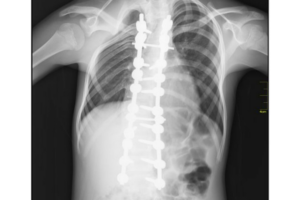
Surgery is recommended when the curve is 45-50 degrees or more and depends on how much growing is left for the child to do. Metal rods are fused to the spine to limit the how far the curve can further develop and the use of bone grafts fuses together with the existing bone to form one unit with the spine.

There are two types of surgery, one is done from the back of the spine and the other is done from the front.

One review of scoliosis surgery showed that idiopathic had an average of 6.3% complications, 0.8% neurologic deficits and a 0.02% mortality rate and encouraged this data to be used in the decision making process before agreeing to surgery. (1)

New developments in surgery have seen the use of growth friendly implants instead of a full spine fusion, which allows the spine to grow while correcting the deformity, however it requires multiple surgeries and in turn more complications. (2)

But is surgery the only solution?

https://upload.wikimedia.org/wikipedia/commons/3/3b/Medical_X-Ray_imaging_AOX02_nevit.jpg

Photo by: © Nevit Dilmen [CC BY-SA 3.0 (http://creativecommons.org/licenses/by-sa/3.0) or GFDL (http://www.gnu.org/copyleft/fdl.html)], via Wikimedia Commons

Scoliosis And Massage Therapy

There is definitely some differing opinions on the best form of treatment, especially as the scoliotic curve progresses.

Some research says the only solution is surgery as it is the most permanent form of intervention and physical therapy will be a constant work in progress.(3)

However there is an argument being made that a more conservative approach that would include observation, scoliosis specific exercises and bracing is effective. The mini review showed that the use of  exercise and proper bracing can reduce a curve larger than 45 degrees in 70% of adolescents which could alter surgery indication to above 50 degrees.(4)

There is a great resource outlining exercise and bracing approach from seven different scoliosis schools and their approach, which you can look at here.

Overall there isn’t a ton of research I could find based on massage therapy and scoliosis, dealing with treatment around the adolescent idiopathic level. However there is strong evidence on the use of massage and reduction in pain with adults who have scoliosis.

We won’t be able to correct a curvature, but providing pain relief and improving quality of life is important to anyone who has this condition. In college we were taught massage should be provided to the concave side of the curve, due to the tightness and tension of the muscles pulling the spine in that direction. Stimulatory techniques were to be applied to the convex side to promote strengthening those muscles to assist in correcting the curve. Overall the use of massage/physical therapy and exercises can be a beneficial treatment which could possibly delay a surgery, or possibly prevent surgery. However as the Scoliosis Association of the UK points out, the need for surgery usually isn’t urgent and the more important consideration is how the child and the family feel moving forward. If we can be a source of pain relief through the use of massage and movement exercises, as well as a source of information for anyone dealing with this, then perhaps we can help improve that quality of life whether the family chooses surgery or not, because no kid should have to live with pain everyday.


References:

  1. Reames D, Smith J, Fu K, Polly D, Ames C, Shaffrey C, et al. Complications in the surgical treatment of 19,360 cases of pediatric scoliosis: a review of the Scoliosis Research Society Morbidity and Mortality database. Spine [serial on the Internet]. (2011, Aug 15), [cited December 18, 2016]; 36(18): 1484-1491. Available from: MEDLINE with Full Text.
  2. Yang S, Andras L, Redding G, Skaggs D. Early-Onset Scoliosis: A Review of History, Current Treatment, and Future Directions. Pediatrics [serial on the Internet]. (2016, Jan), [cited December 18, 2016]; 137(1): Available from: MEDLINE with Full Text.
  3. Greene J, Sallee D. Scoliosis in teenagers and common treatment and intervention methods – a systematic review of SportDiscus and AMED literature. Virginia Journal [serial on the Internet]. (2015, Fall2015), [cited December 18, 2016]; 36(2): 13-18. Available from: SPORTDiscus with Full Text.
  4. Sy N, Bettany-Saltikov J, Moramarco M. Evidence for Conservative Treatment of Adolescent Idiopathic Scoliosis – Update 2015 (Mini-Review). Current Pediatric Reviews [serial on the Internet]. (2016), [cited December 18, 2016]; 12(1): 6-11. Available from: MEDLINE with Full Text.

Can Saline Injections Augment Massage Therapy?

“I’m not going to be able to get a massage for a few weeks because I’m getting saline injections done”.

For some reason I’ve been hearing this a lot lately, mostly from patients who have been in a car accident.

I get the feeling it’s being promoted as a “cure all” when I talk to patients about it, especially for those who are experiencing pain from a complicated issue (ie: car accident) for the first time.

So far I have seen patients who are experiencing chronic pain (a year or two post accident) to those who are only a few weeks/months after, who are giving this a try.

It has been described a few different ways as well, saline injections, sugar injections and nerve blocking but could never make heads or tails as to what was actually going on, or whether it actually works.

Some patients have had the therapy done and I don’t see them again for ages, while others are back within weeks for more massage.

So I figured it was time to take a hard look at what’s happening.

Saline Injections And Prolotherapy

Like most of you I’m sure, the first I heard of saline injections was from the Travell & Simons textbooks we got in school to learn trigger point therapy.

Most of what I remember in those books were images of trigger point injections with referral patterns etc., and as we know our understanding of what trigger points are has changed.

But the use of saline injections is still being used and has developed into further applications called Prolotherapy.

Turns out there are three different types of Prolotherapy:

  1. Growth factor injection: injecting a growth factor (plasma) to stimulate growth of certain cells.
  2. Growth factor stimulation: injecting something in the body that produces growth factors.
  3. Inflammatory prolotherapy: inject something that causes inflammation and tricks the body into thinking there is an injury and begin healing again.

From looking into research and checking things out online, it looks as though Prolotherapy is used more to work on ligaments and tendons (is also being used with osteoarthritis), compared to trigger point therapy which is focusing more on muscle.

So my question is whether these kinds of therapy are actually effective for the patients who are being referred out to have it done?

Well, like so many other things in therapy…it depends.

Low Back Pain And Whiplash

There are frequent statements in the research I could find that mentioned the effectiveness of these treatments as “unclear”, and tough to find any resounding positive studies to prove the effectiveness of injections.

One systematic review showed that in the case of whiplash, symptoms were better when sterile water was used compared to saline and was more effective in the short term (3 months) compared to long term (8 months).

It showed that trigger point injection was successful at reliving symptoms when used as the sole treatment, but could be better used as something to augment additional therapy like stretching. But since there wasn’t an additional study group that did stretching alone, it is hard to determine how much of a difference trigger point injection would make.

One study showed that intracutaneous injections of sterile water was beneficial both in pain reduction and improving function in patients with acute low back pain.

The study ruled out anyone who had any major back injury or condition like fracture, stenosis or osteoporosis as it would be inappropriate. Another study with the same exclusion criteria showed that saline injections are not recommended for patients with chronic low back pain due to nerve issues.

Those with chronic non-specific low back pain there can be a reduction in pain when injections are made into ligaments, but it does not appear to matter if saline or another prolotherapy solution is used.(1)

When an epidural is done to manage spinal pain, a saline injection is shown to have a lack of effectiveness when compared to using local anesthetic alone and when local anesthetic is used in conjunction with steroid. (2)

However research has been done to show that saline injections are equally as effective as conventional drugs for treating low back pain and other myofascial pain syndromes in a hospital emergency room setting.(3)

Now I know this is a lot of different types of low back pain to discuss, but research is showing that sterile water and saline injections are helpful in acute stages of injury, but not as effective in chronic conditions.

Photo by: Army Medicine

Photo by: Army Medicine

Tendinopathy And Arthritis

The best information I could find was for treatment of tennis elbow as far as a tendinopathy.

One study compared the use of a saline injection against a corticosteroid. It showed that in the short term there was better pain reduction with the corticosteroid, but after 24 weeks the saline injections were working better.

In a comparison between corticosteroid, autologous blood injection and saline for tennis elbow, there was no real improvement compared to the placebo saline injections.

When it comes to arthritis, I found a study and a systematic review on the affect of saline injections for knee Osteoarthritis.

The study said that using a saline injection did not significantly reduce pain in the knee compared to a saline placebo. (4)

Whereas the systematic review makes the argument that due to the pain relief shown in the studies, we should be considering the effectiveness of saline injections.

32 studies involving 1705 patients showed improvement in short term knee pain from saline injections. And 19 studies involving 1445 patients showed improvement in long term knee pain.

While saline injections were originally used as a control or placebo in studies, research is starting to challenge that it does have a therapeutic benefit. Most of the studies cited in this post argued that in the acute stages there is a pain relief and functional benefit to using saline injections. While this isn’t something we are going to be doing as massage therapists, it is important for us to know what could be happening with some of our patients. Any one of our patients who is dealing with chronic pain, whiplash, osteoarthritis or a tendinopathy could be referred by their doctor to have some of these treatments done. It is important for us to understand what and how this is done, so we can better support and stay informed with our patients. Remember, one of the studies showed that trigger point injection might be better as a way to augment additional therapy…like maybe massage therapy!?


References:

  1. Yelland M, Glasziou P, Bogduk N, Schluter P, McKernon M. Prolotherapy injections, saline injections, and exercises for chronic low-back pain: a randomized trial. Spine [serial on the Internet]. (2004, Jan 1), [cited December 12, 2016]; 29(1): 9-16. Available from: MEDLINE with Full Text.
  2. Manchikanti L, Nampiaparampil D, Manchikanti K, Falco F, Singh V, Hirsch J, et al. Comparison of the efficacy of saline, local anesthetics, and steroids in epidural and facet joint injections for the management of spinal pain: A systematic review of randomized controlled trials. Surgical Neurology International [serial on the Internet]. (2015, May 7), [cited December 12, 2016]; 6(Suppl 4): S194-S235. Available from: MEDLINE with Full Text.
  3. Bakunas C, Bayona A, Roldan C, Rehrer S, Leoni J, Hu N, Banuelos R/ University of Texas Health Science Center at Houston, Houston, TX

  4. Lundsgaard C, Dufour N, Fallentin E, Winkel P, Gluud C. Intra-articular sodium hyaluronate 2 mL versus physiological saline 20 mL versus physiological saline 2 mL for painful knee osteoarthritis: a randomized clinical trial. Scandinavian Journal Of Rheumatology [serial on the Internet]. (2008, Mar), [cited December 12, 2016]; 37(2): 142-150. Available from: MEDLINE with Full Text.