• Home
  • About
  • Articles
  • Courses
    • Live Courses
    • Online Courses
  • Store
  • Contact
  • Course Login
  • Search
  • Menu Menu
  • Facebook
  • Twitter
  • LinkedIn
  • Instagram
Course Login

Therapeutic Exercise And Inversion Ankle Sprains

July 24, 2017/in Article, First Aid, First Responder, Massage, Massage Clinic, Massage Therapist, Massage Therapy/by Jamie Johnston

When she came in, you could see the pain on her face.

Wincing with each step toward the treatment room, her limp was noticeable as she was protecting the ankle.

As I helped her sit down, of course, my first aid protocols popped into my head first, so I ran through the typical questions:

“What happened?”

“Did you hit your head at all?”

“Did you hear a pop in your ankle?”

“How are your pain levels?”

Fortunately, she didn’t hit her head and there was no “pop.”

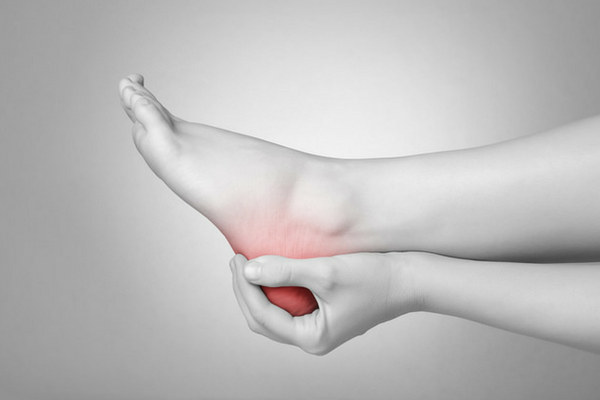
She had just rolled her ankle and had a pretty typical inversion sprain, the swelling was already noticeable. What made it worse for her was the stress and worry of whether she could run as it was her favourite thing to do.

She wanted to get that ankle back to her normal activities ASAP.

Helping Protect The Injury

As I mentioned, the first thing I thought of was the first aid protocols when it comes to an injury.

This particular incident was obviously in the acute stage, so all the RICE protocols are the first thing I thought of. While there has been lots of debate online about using ice and rest, I still believe that in the acute stage it’s the best way to go.

Where I have changed my opinion is how long to use RICE.

In the past, we would use ice and rest for way longer (at least I did) than was probably appropriate. During the inflammation phase, (which is the first 48 hours) it is important to rest and support the tissues involved in the injury but still, keep up with some movement and continue to load the tissue within pain tolerances.

Since most of you probably already know how to rest, ice, and elevate I thought we would go over the compression portion and demonstrate how to properly wrap and inversion sprain, to give it some support and help control swelling over that first 48 hours.

Properly wrapping an ankle like this can give it that little bit of extra support (and confidence) in order to help the patient continue to move and also help with pain management.

Loading The Tissue

More and more over the past few years, we have been hearing and seeing more research on the importance of loading tissues post injury.

I’m sure we’ve all heard the stories about how they get patients up and moving almost immediately after surgeries.

Research is showing that loading the tissue or causing mechanical tension (muscular force) is actually a way to help influence wound healing. As the injury enters into the repair phase we can start to load the tissue even more.

This, of course, depends on pain and weight bearing abilities. If the patient can do full weight bearing pain-free you should be able to load the tissue more than if they can’t do full weight bearing. If they can’t bear full weight, giving the patient something to hold for balance will help decrease the amount of weight we are loading into the tissue and help with a decrease in pain, but still have the ability to move and load the tissue.

Here is an example of how you can begin some weight bearing exercises and load for an inversion sprain.

Once the patient feels more comfortable and pain has decreased, you can then progress them to this kind of exercise in order to load the tissue more:


As the patient continues to progress, here is a 3rd progression you can use to load into the injury more:


It is important to work within your patients pain tolerance when doing any kind of exercise, but one study showed that doing isometric contractions actually helped to decrease pain in patients with a tendinopathy. While an inversion sprain isn’t a tendinopathy, we can use it as a reminder that it is okay to load the tissue early in the healing process. So, in addition to doing some massage therapy, actually loading the tissue will not only help strengthen the area but also assist in decreasing pain for the patient. However you decide to set up your treatment plan, these are movements that can be taught in the clinic and incorporated into your treatment but also given as homecare exercises to help the patient progress. For those of you who don’t have “exercise” in your scope of practice, let’s just call it “therapeutic movement!”

Jamie Johnston

As the creator of the site, I hope you like what you’re reading. I’m a Registered Massage Therapist in Victoria BC, former Massage college clinical supervisor, First Responder instructor, hockey fan and Firefighter. Come hang out on the facebook page, where we can share some ideas about how to improve the perception of the Massage Therapy industry.

  • Author
  • Recent Posts
Jamie Johnston
Follow me
Jamie Johnston
Founder at The MTDC
As the creator of the site, I hope you like what you're reading. I'm a Registered Massage Therapist in Victoria BC, former Massage college clinical supervisor, First Responder instructor, hockey fan and Firefighter. Come hang out on the facebook page, where we can share some ideas about how to improve the perception of the Massage Therapy industry.
Jamie Johnston
Follow me
Latest posts by Jamie Johnston (see all)
  • Podcast Episode #29: Dealing With Burnout - April 11, 2023
  • Podcast Episode #28 With Great Educational Power, Comes Great Educational Responsibility - November 8, 2022
  • Podcast Episode #27 Myofascial Release And CLB, What Does The Evidence Say? - August 30, 2022
Tags: First Aid, First Responder, Massage, Massage Clinic, Massage Therapist, Massage Therapy
Share this entry
  • Share on Twitter
http://themtdc.com/wp-content/uploads/Untitled-design-31.png 400 600 Jamie Johnston http://themtdc.com/wp-content/uploads/logo.svg Jamie Johnston2017-07-24 21:31:422026-04-22 20:26:56Therapeutic Exercise And Inversion Ankle Sprains
You might also like
Osteoporosis And My Mistake
Articles Of The Week November 24, 2019
The Massage Therapist Development InitiativePodcast Episode #27 Myofascial Release And CLB, What Does The Evidence Say?
Articles Of The Week December 3, 2017
Articles Of The Week January 16, 2022
Best manual therapy articles of the week for January 31, 2021Articles of the Week – January 31, 2021
Tips For Writing Amazing Massage Therapy Blog Posts
Articles Of The Week September 26, 2021

Categories

  • Article
  • Business
  • Cardiopulmonary Resuscitation
  • Continuing Education
  • CPR
  • Emergencies
  • First Aid
  • First Responder
  • Massage
  • Massage Clinic
  • Massage Therapist
  • Massage Therapy
  • Mental Health
  • Myofascial Release
  • Nutrition
  • Pain
  • Pain Science
  • podcast
  • Posture
  • PTSD
  • Social Media
  • Sport Massage
  • Success
  • Therapeutic Exercise
  • Uncategorized

Join and stay up-to-date!

Email Marketing by AWeber

Have a solution to a problem within our industry? We want to hear about it!

Learn More

© 2020 – 2026  James Johnston RMT • All Rights Reserved

Jamie Johnston

As the creator of the site, I hope you like what you’re reading. I’m a Registered Massage Therapist in Victoria BC, former Massage college clinical supervisor, First Responder instructor, hockey fan and Firefighter. Come hang out on the facebook page, where we can share some ideas about how to improve the perception of the Massage Therapy industry.

  • Author
  • Recent Posts
Jamie Johnston
Follow me
Jamie Johnston
Founder at The MTDC
As the creator of the site, I hope you like what you're reading. I'm a Registered Massage Therapist in Victoria BC, former Massage college clinical supervisor, First Responder instructor, hockey fan and Firefighter. Come hang out on the facebook page, where we can share some ideas about how to improve the perception of the Massage Therapy industry.
Jamie Johnston
Follow me
Latest posts by Jamie Johnston (see all)
  • Podcast Episode #29: Dealing With Burnout - April 11, 2023
  • Podcast Episode #28 With Great Educational Power, Comes Great Educational Responsibility - November 8, 2022
  • Podcast Episode #27 Myofascial Release And CLB, What Does The Evidence Say? - August 30, 2022
Scroll to top

This site uses cookies. By continuing to browse the site, you are agreeing to our use of cookies.

OK

Cookie and Privacy Settings


How we use cookies

We may request cookies to be set on your device. We use cookies to let us know when you visit our websites, how you interact with us, to enrich your user experience, and to customize your relationship with our website.

Click on the different category headings to find out more. You can also change some of your preferences. Note that blocking some types of cookies may impact your experience on our websites and the services we are able to offer.

Essential Website Cookies

These cookies are strictly necessary to provide you with services available through our website and to use some of its features.

Because these cookies are strictly necessary to deliver the website, refusing them will have impact how our site functions. You always can block or delete cookies by changing your browser settings and force blocking all cookies on this website. But this will always prompt you to accept/refuse cookies when revisiting our site.

We fully respect if you want to refuse cookies but to avoid asking you again and again kindly allow us to store a cookie for that. You are free to opt out any time or opt in for other cookies to get a better experience. If you refuse cookies we will remove all set cookies in our domain.

We provide you with a list of stored cookies on your computer in our domain so you can check what we stored. Due to security reasons we are not able to show or modify cookies from other domains. You can check these in your browser security settings.

Other external services

We also use different external services like Google Webfonts, Google Maps, and external Video providers. Since these providers may collect personal data like your IP address we allow you to block them here. Please be aware that this might heavily reduce the functionality and appearance of our site. Changes will take effect once you reload the page.

Google Webfont Settings:

Google Map Settings:

Google reCaptcha Settings:

Vimeo and Youtube video embeds:

Privacy Policy

You can read about our cookies and privacy settings in detail on our Privacy Policy Page.

Privacy Policy
Accept settingsHide notification only

Clinical Pain Science For The Low Back, Pelvis And Hips

This course will be presented over a zoom meeting.  Details will be sent after you register.

Clinical Pain Science For The Low Back, Pelvis And Hips Remote

  • This page is unsecured. Do not enter a real credit card number! Use this field only for testing purposes.